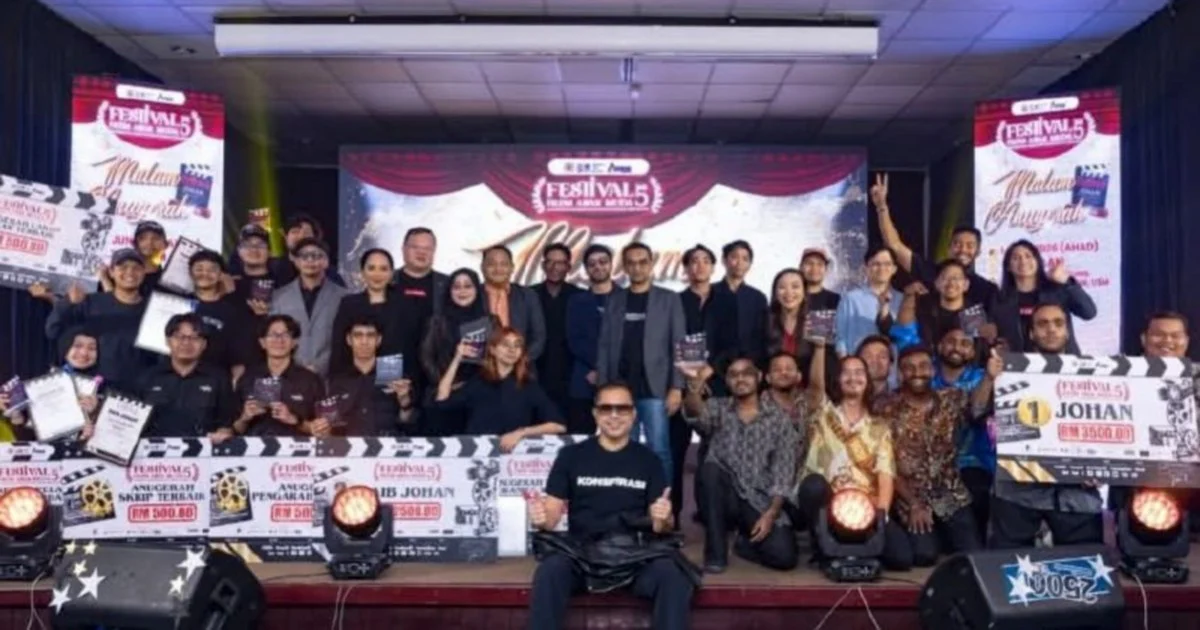
The Malaysian Anti-Corruption Commission has entered into a strategic partnership with Universiti Sains Malaysia to harness the power of film as a tool for promoting integrity and anti-corruption values among Malaysia's younger demographic. The collaboration centres on the 5th Youth Film Festival at USM's Penang campus, representing a deliberate shift in how the enforcement body communicates its message beyond traditional policing and investigation methods.
This initiative reflects a growing recognition within Malaysia's institutional framework that cultural and creative platforms offer more effective channels for shaping civic values than conventional media. Young people, who comprise a significant portion of the electorate and workforce, are increasingly disengaged from traditional governance messaging. By embedding anti-corruption themes within the vibrant medium of film and youth culture, MACC seeks to make ethical conduct and accountability feel relevant and culturally resonant rather than imposed from above.
The collaboration demonstrates that combating corruption requires sustained investment in prevention and cultural change, not merely investigation and prosecution. Through film festivals, students encounter stories and narratives that illustrate the consequences of corrupt behaviour and the positive impact of transparent systems. This narrative-driven approach proves particularly potent because it allows young audiences to explore moral complexity and ethical dilemmas through characters and scenarios, fostering introspection rather than passive instruction.
USM's reputation as a leading research and academic institution provides credibility and intellectual weight to the initiative. The university's role extends beyond merely hosting the festival; it positions the broader academic community as stakeholders in Malaysia's anti-corruption agenda. This institutional alignment sends a powerful signal that integrity matters at Malaysia's premier educational establishments and that young scholars should see anti-corruption advocacy as central to their intellectual and professional identity.
The timing of this collaboration carries particular significance within Malaysia's political context. Public confidence in institutions has been strained by high-profile corruption scandals and perception of selective prosecution. Initiatives like this one attempt to rebuild trust by demonstrating that institutions are adapting their strategies to meet contemporary challenges. By engaging with youth directly through their preferred cultural channels, MACC also counters narratives suggesting that the institution remains disconnected from broader society or insulated from public accountability.
Film festivals specifically offer several advantages as platforms for anti-corruption messaging. Unlike formal seminars or campaigns, festivals attract diverse audiences organically; young people attend because they are interested in cinema, artistic expression, and peer engagement. The social and community dimensions of festival attendance create environments where discussions about ethics and integrity emerge naturally from the screening and discussion of films, rather than feeling like imposed educational content. Furthermore, filmmakers themselves become agents of change when they choose to explore corruption themes, amplifying the message through artistic credibility.
The partnership also acknowledges that Malaysia exists within a competitive regional landscape where institutional legitimacy and public trust directly influence economic performance and foreign investment. Southeast Asian peers, from Indonesia to Thailand, similarly grapple with corruption perceptions that hinder development. By positioning itself as innovative in its approach to youth engagement, MACC contributes to Malaysia's broader effort to distinguish itself as a jurisdiction serious about governance reform. This narrative matters not just domestically but also internationally, where investor confidence and international ratings agencies increasingly factor in governance indicators.
Furthermore, this initiative creates opportunities for young filmmakers to develop their craft while exploring substantive social issues. The festival likely includes competition categories where student and emerging filmmakers can submit original works addressing corruption, integrity, and accountability. This dual benefit—supporting creative talent development while advancing institutional messaging—demonstrates sophisticated understanding of how to align institutional interests with broader social goods. Young filmmakers gain platforms and recognition; institutions gain authentic, artistically compelling content that would be difficult to produce through traditional advertising or public relations channels.
The collaboration also facilitates dialogue between MACC officials and young people in relatively informal settings. Film screenings and subsequent panel discussions create space for questions, concerns, and perspectives to flow in multiple directions. This bilateral communication helps MACC understand how young Malaysians perceive corruption, institutional trustworthiness, and accountability. Such insights prove invaluable for refining messaging strategies and identifying emerging gaps in public awareness or understanding of how corruption affects everyday lives.
Moving forward, the sustainability of such initiatives depends on consistent institutional commitment and genuine engagement rather than one-off appearances or tokenistic participation. Young audiences are sophisticated critics who can discern between authentic institutional commitment to reform and performative gestures designed primarily for public relations benefit. If MACC sustains its involvement with Youth Film Festival and related creative initiatives across multiple years, making measurable adjustments based on feedback, the initiative has potential to meaningfully influence how an entire generation of Malaysians understands and values integrity.
This partnership ultimately reflects a broader maturation in how Malaysian institutions approach anti-corruption work. Recognising that integrity cannot be enforced solely through law or punishment, but must be cultivated culturally and embraced voluntarily, represents important strategic evolution. The Youth Film Festival collaboration demonstrates that MACC and academic partners understand this distinction and are willing to invest in the harder, longer-term work of cultural and values transformation alongside more conventional enforcement mechanisms.


%22%2F%3E%3C%2Fpattern%3E%3C%2Fdefs%3E%3Crect%20width%3D%22100%25%22%20height%3D%22100%25%22%20fill%3D%22url(%23ph2hy9vg)%22%2F%3E%3Crect%20width%3D%22100%25%22%20height%3D%22100%25%22%20fill%3D%22url(%23ph2hy9vp)%22%2F%3E%3Ctext%20x%3D%2250%25%22%20y%3D%2250%25%22%20text-anchor%3D%22middle%22%20dominant-baseline%3D%22central%22%20fill%3D%22rgba(255%2C255%2C255%2C0.95)%22%20font-family%3D%22Georgia%2C%20'Times%20New%20Roman'%2C%20serif%22%20font-weight%3D%22700%22%20font-size%3D%22272%22%20letter-spacing%3D%22-0.02em%22%3EAnwar%3C%2Ftext%3E%3C%2Fsvg%3E)