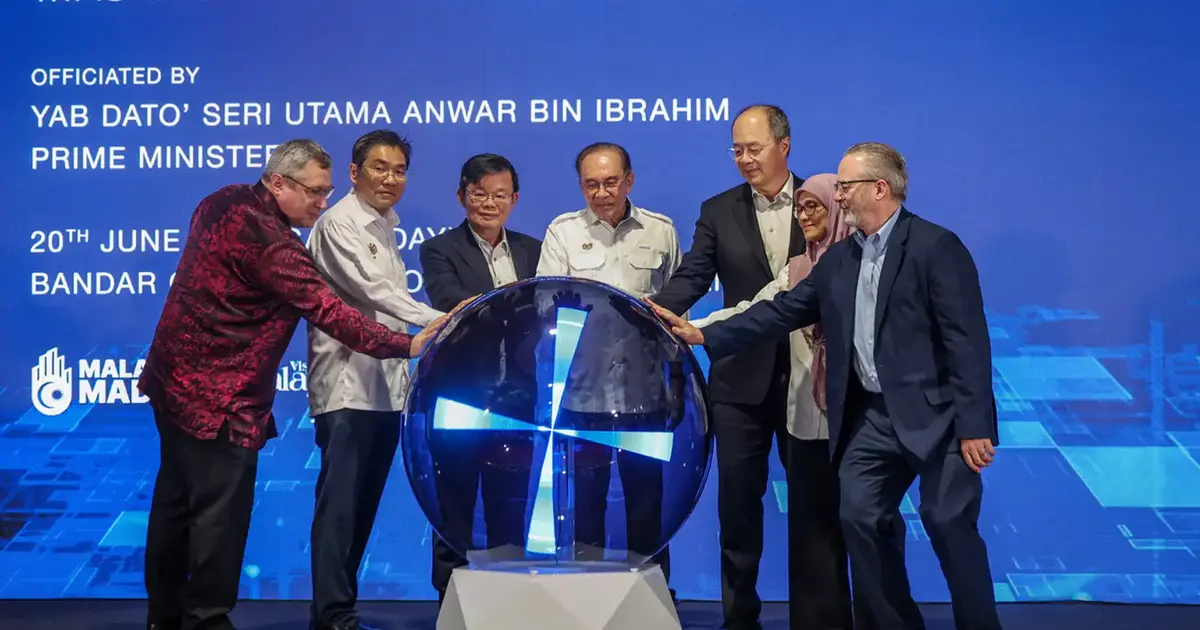
Prime Minister Anwar Ibrahim has moved to fortify the link between Malaysia's semiconductor sector and its higher education institutions by appointing a dedicated adviser, underscoring the government's commitment to leveraging academic research for industrial innovation. The initiative reflects a strategic recognition that Malaysia's position as a regional semiconductor hub depends increasingly on translating university expertise into commercial applications and maintaining the technical talent pipeline essential to competing in global markets.
Anwar has stressed that the appointment carries no additional financial burden for the government, signalling a pragmatic approach to institutional coordination that taps existing resources rather than expanding the state budget. This fiscal constraint represents a realistic acknowledgement of Malaysia's competing spending priorities while demonstrating intent to progress on semiconductor development through administrative efficiency rather than substantial new investment.
The semiconductor industry stands as one of Malaysia's most significant manufacturing sectors, contributing substantially to export earnings and employment, particularly in the Penang and Selangor regions. However, the sector faces mounting pressure from international competition, rising labour costs, and the need for constant technological advancement. Universities hold considerable research capacity in materials science, microelectronics, and embedded systems, yet historically the translation of academic discoveries into industry-ready innovations has remained uneven across the country.
The adviser's role will likely encompass facilitating research partnerships, identifying technology gaps where university expertise could address industry challenges, and streamlining the commercialisation pathway for semiconductor-related innovations emerging from campus laboratories. Such coordination mechanisms have proven effective in other advanced economies, where formalised industry-academia channels accelerate the adoption of cutting-edge techniques and reduce the time required to move from theoretical research to production-ready solutions.
For Malaysian universities, the arrangement offers potential benefits including enhanced funding opportunities, access to real-world application problems that enrich curriculum design, and clearer pathways for researchers seeking to commercialise discoveries. Institutions like Universiti Teknologi Malaysia, Universiti Kebangsaan Malaysia, and Universiti Malaya possess engineering and physical science faculties capable of contributing meaningfully to semiconductor advancement. A structured advisory framework could amplify their current contributions and attract additional private sector investment in research collaboration.
The semiconductor industry benefits equally from closer university engagement, gaining access to emerging talent before graduation, influence over curriculum development to ensure workforce readiness, and lower-risk environments in which to explore experimental technologies before committing to expensive full-scale implementation. For companies operating in Malaysia, the availability of locally trained, research-oriented engineers reduces recruitment expenses and strengthens supply chain resilience by reducing reliance on imported expertise.
This initiative also addresses regional competitive dynamics. Singapore and South Korea have long maintained sophisticated mechanisms for industry-academia integration, resulting in technological advantages that manifest in their production capabilities and product sophistication. Taiwan's semiconductor dominance, meanwhile, owes significantly to the capacity of its universities to sustain world-leading research programmes in chip design and manufacturing processes. Malaysia's appointment of a dedicated adviser represents a modest but meaningful step toward establishing comparable institutional infrastructure.
The timing reflects Malaysia's broader efforts to diversify and upgrade its manufacturing base. The government has prioritised semiconductors within its industrial policy framework, recognising that high-value chip production and design services offer superior returns compared to labour-intensive assembly work increasingly shifting to lower-cost jurisdictions. However, achieving this transition requires sustained innovation and a steady supply of skilled personnel trained in advanced technical disciplines.
International trends underscore the urgency. Global semiconductor supply chains face disruption risks, creating opportunities for diversification away from Taiwan and South Korea. Simultaneously, the race for advanced semiconductors capable of powering artificial intelligence applications and next-generation computing architectures has intensified geopolitical competition. Malaysia, positioned within the strategic Indo-Pacific region and maintaining longstanding manufacturing expertise, could capture increased investment if it demonstrates capacity for continuous technological development.
The adviser's appointment must navigate several practical challenges. Intellectual property arrangements between universities and industry partners often trigger disputes; the adviser will need to help establish frameworks that protect both academic freedom and commercial interests. Additionally, many university researchers lack business development experience, requiring support in translating technical achievements into marketable products. Conversely, industry partners must develop patience with academic timelines, which typically operate on longer cycles than commercial product development schedules.
Successfully deepening industry-university collaboration in semiconductors could generate ripple effects across Malaysia's broader innovation ecosystem. Enhanced research commercialisation in one sector typically strengthens the infrastructure, expertise, and culture of innovation applicable to others. Advances in semiconductor manufacturing processes, materials science, and electrical engineering increasingly find application in renewable energy systems, medical devices, and advanced manufacturing techniques—industries where Malaysia seeks to strengthen its competitive position.
The adviser's effectiveness will ultimately depend on whether the appointment translates into concrete mechanisms—joint research centres, sponsored postgraduate programmes, equipment-sharing arrangements, and streamlined intellectual property licensing. Establishing genuine partnerships requires moving beyond formal coordination toward building trust, ensuring mutual benefit, and creating accountability for results. Malaysia's semiconductor ambitions rest not only on appointing advisers but on translating appointments into sustainable institutional change.

%22%2F%3E%3C%2Fpattern%3E%3C%2Fdefs%3E%3Crect%20width%3D%22100%25%22%20height%3D%22100%25%22%20fill%3D%22url(%23ph2hy9vg)%22%2F%3E%3Crect%20width%3D%22100%25%22%20height%3D%22100%25%22%20fill%3D%22url(%23ph2hy9vp)%22%2F%3E%3Ctext%20x%3D%2250%25%22%20y%3D%2250%25%22%20text-anchor%3D%22middle%22%20dominant-baseline%3D%22central%22%20fill%3D%22rgba(255%2C255%2C255%2C0.95)%22%20font-family%3D%22Georgia%2C%20'Times%20New%20Roman'%2C%20serif%22%20font-weight%3D%22700%22%20font-size%3D%22272%22%20letter-spacing%3D%22-0.02em%22%3EAnwar%3C%2Ftext%3E%3C%2Fsvg%3E)