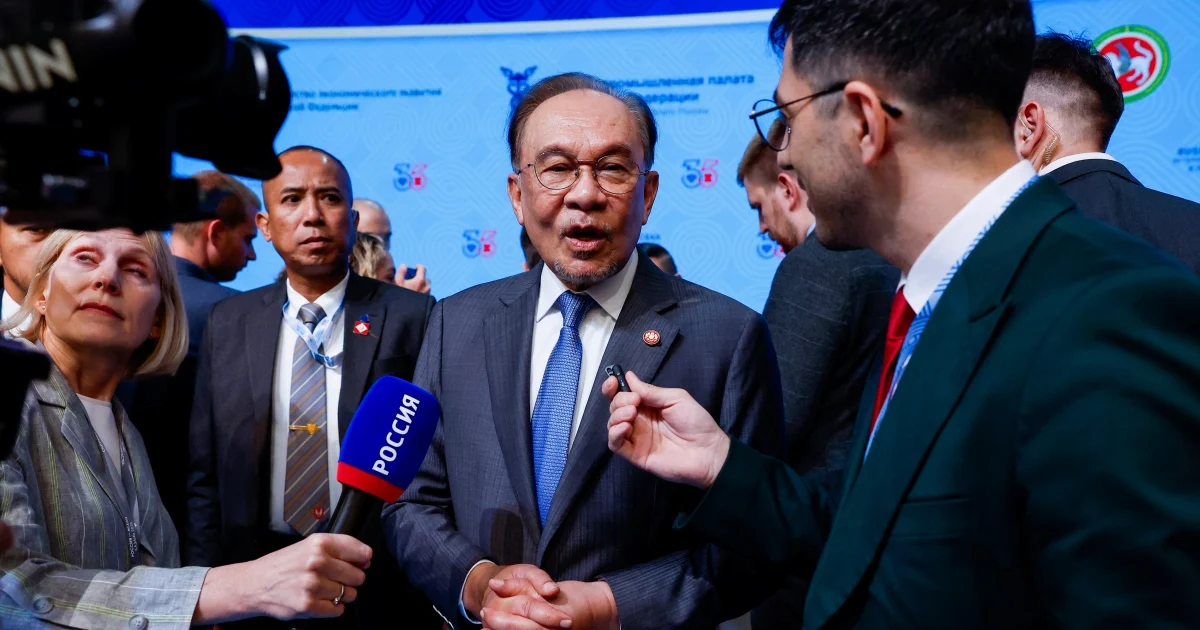
Prime Minister Datuk Seri Anwar Ibrahim has underscored the strategic value of cultural diplomacy in contemporary international relations, revealing during a visit to Kazan that he personally enjoys Russian music and literature. His comments reflect a broader diplomatic philosophy that positions cultural and artistic exchanges as essential counterparts to conventional economic and political engagement between nations.
The Prime Minister's remarks represent a departure from the purely transactional approach to bilateral relations that often dominates policy discussions in Southeast Asia. By elevating cultural appreciation to a prominent place in Malaysia's engagement strategy with Russia, Anwar signals an understanding that soft power and people-to-people connections can lay crucial groundwork for sustained cooperation across multiple domains. This perspective aligns with Malaysia's own cultural heritage and the country's historical openness to diverse artistic traditions.
Anwar's personal enthusiasm for Russian cultural output—whether musical compositions or literary works—demonstrates a willingness by Malaysia's political leadership to engage authentically with other civilizations on their own terms. Rather than viewing Russia purely through an economic or geopolitical lens, the Prime Minister's appreciation for its artistic contributions suggests a more holistic and humanistic approach to foreign relations. This stance carries particular relevance for Southeast Asian nations seeking to develop multifaceted partnerships without becoming overly dependent on any single dimension of bilateral engagement.
The timing and location of these remarks in Kazan, a major cultural and educational center in Russia's Volga region, adds symbolic weight to the message. Kazan's status as a hub of Russian intellectual and artistic life makes it an apt venue for emphasizing the importance of cultural exchange. The choice of location suggests deliberate messaging that Malaysia views Russia not merely as a commercial or strategic partner, but as a civilization with which substantive cultural dialogue is possible and desirable.
For Malaysian audiences, Anwar's comments invite reflection on how the country balances its own rich multicultural heritage with engagement toward other global cultures. Malaysia's population encompasses diverse traditions—Malay, Chinese, Indian, and indigenous—each contributing distinct artistic and literary traditions. The Prime Minister's openness to Russian culture models the kind of cross-cultural appreciation that has historically characterized Malaysian society at its best, though such appreciation often remains confined to domestic contexts rather than extending to international diplomacy.
The emphasis on cultural cooperation carries practical implications for Malaysia's relationship with Russia. Cultural exchanges, including educational scholarships, artist residencies, academic collaborations, and literary translations, can create sustained ties that persist even during periods of political tension or economic fluctuation. These connections generate constituencies within both societies with genuine interest in deepening bilateral relations, creating organic support for government-level cooperation.
Russian literature and music occupy particularly significant positions in global culture. From the novels of Dostoevsky and Tolstoy to the compositions of Tchaikovsky and Shostakovich, Russian artistic contributions have influenced creative traditions worldwide. For Anwar to publicly acknowledge his engagement with these works positions Malaysia as a nation that recognizes and respects the depth of Russian cultural achievement. This recognition, in turn, facilitates the kind of mutual respect essential for productive diplomatic relationships.
For Southeast Asia more broadly, Anwar's approach offers a model for how regional powers might engage with major global actors. Rather than defaulting to zero-sum frameworks where engagement with one power necessitates distance from others, Malaysia under Anwar's leadership appears comfortable pursuing multidirectional relationships that encompass economic, political, cultural, and social dimensions. This flexibility serves Malaysia's interests by preventing alignment traps while maintaining access to diverse partnerships.
The integration of cultural appreciation into diplomatic messaging also reflects evolving understandings of national interest. Traditional definitions centered on territorial security and economic advantage, but contemporary strategic thinking increasingly recognizes that stable, resilient relationships require bonds extending beyond material calculations. Cultural familiarity breeds understanding, reduces misperceptions, and creates space for productive dialogue even amid disagreements on specific issues.
Malaysia's own experience as a multicultural society makes its leadership well-positioned to advocate for such approaches internationally. Having navigated the complexities of maintaining social harmony among diverse communities, Malaysian policymakers possess practical wisdom about the value of cultural respect and appreciation. Exporting this model through diplomatic practice enhances Malaysia's soft power while supporting genuine cross-cultural understanding at the government level.
The remarks also suggest that Malaysia intends to develop relationships with Russia that transcend any single agenda or crisis. Rather than engaging primarily when specific negotiations demand it, the emphasis on cultural exchange indicates interest in building institutional and personal connections that provide foundation for long-term engagement. Educational partnerships, for instance, can generate cohorts of professionals in each country with firsthand knowledge of the other.
For Malaysian artists, musicians, scholars, and students, official elevation of cultural diplomacy opens potential pathways for engagement with Russia. Increased bilateral interest in cultural exchange can translate into tangible opportunities for Malaysian creatives to study, perform, and collaborate across borders. Such individual-level connections ultimately strengthen the fabric of bilateral relations far more effectively than formal agreements negotiated in government offices.
Anwar Ibrahim's candid expression of personal interest in Russian culture—a statement that might seem minor in isolation—thus carries significance as indicator of Malaysia's broader diplomatic orientation. It suggests a leadership willing to engage Russia, and by extension other major powers, as complete civilizations rather than merely strategic assets. This approach, grounded in genuine cultural appreciation, offers potential for building partnerships that prove resilient across changing global circumstances.

%22%2F%3E%3C%2Fpattern%3E%3C%2Fdefs%3E%3Crect%20width%3D%22100%25%22%20height%3D%22100%25%22%20fill%3D%22url(%23ph2hy9vg)%22%2F%3E%3Crect%20width%3D%22100%25%22%20height%3D%22100%25%22%20fill%3D%22url(%23ph2hy9vp)%22%2F%3E%3Ctext%20x%3D%2250%25%22%20y%3D%2250%25%22%20text-anchor%3D%22middle%22%20dominant-baseline%3D%22central%22%20fill%3D%22rgba(255%2C255%2C255%2C0.95)%22%20font-family%3D%22Georgia%2C%20'Times%20New%20Roman'%2C%20serif%22%20font-weight%3D%22700%22%20font-size%3D%22272%22%20letter-spacing%3D%22-0.02em%22%3EAnwar%3C%2Ftext%3E%3C%2Fsvg%3E)