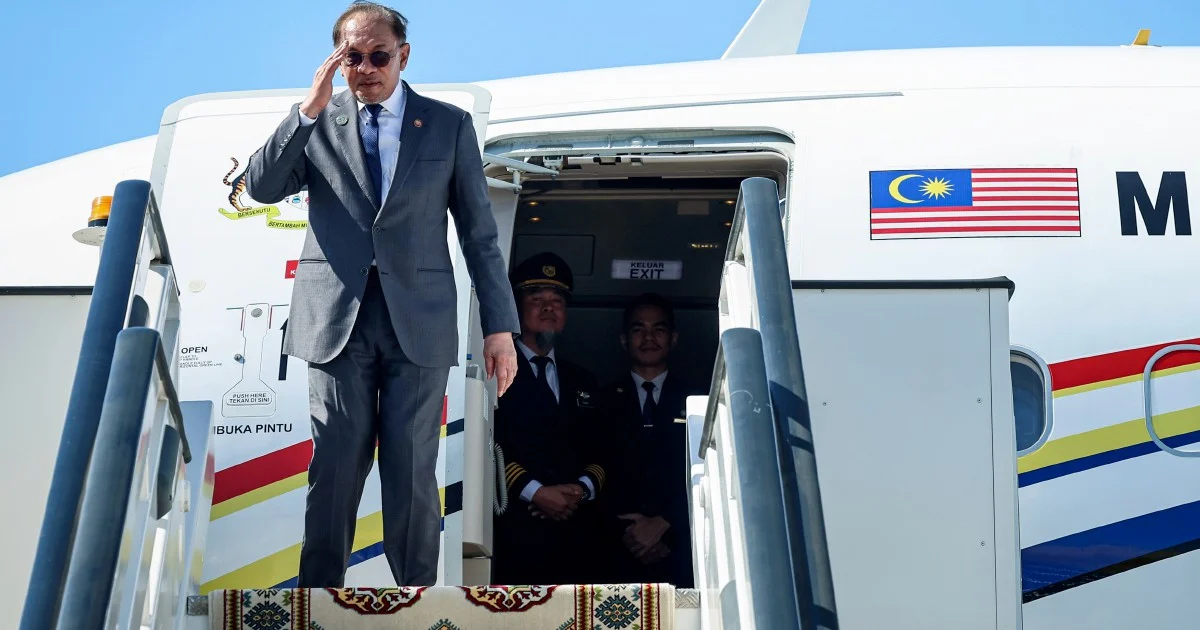
Prime Minister Datuk Seri Anwar Ibrahim touched down in Penang today after wrapping up an official diplomatic mission to Turkmenistan, marking the continuation of his packed schedule balancing international relations with domestic engagement. His arrival in the northern state signals the government's commitment to maintaining a visible presence across Malaysia's key commercial and cultural hubs while advancing economic development initiatives on multiple fronts simultaneously.
The prime minister's rapid transition from Central Asia to the Penang shore underscores the demanding nature of Malaysia's top political office, where leaders must navigate between bolstering regional partnerships and addressing local stakeholder concerns. Turkmenistan, situated along crucial energy and trade corridors connecting Europe and Asia, represents an important node in Malaysia's broader engagement with Muslim-majority nations and Central Asian markets. The bilateral discussions likely focused on areas of mutual interest, though official details from the Central Asian leg remain limited.
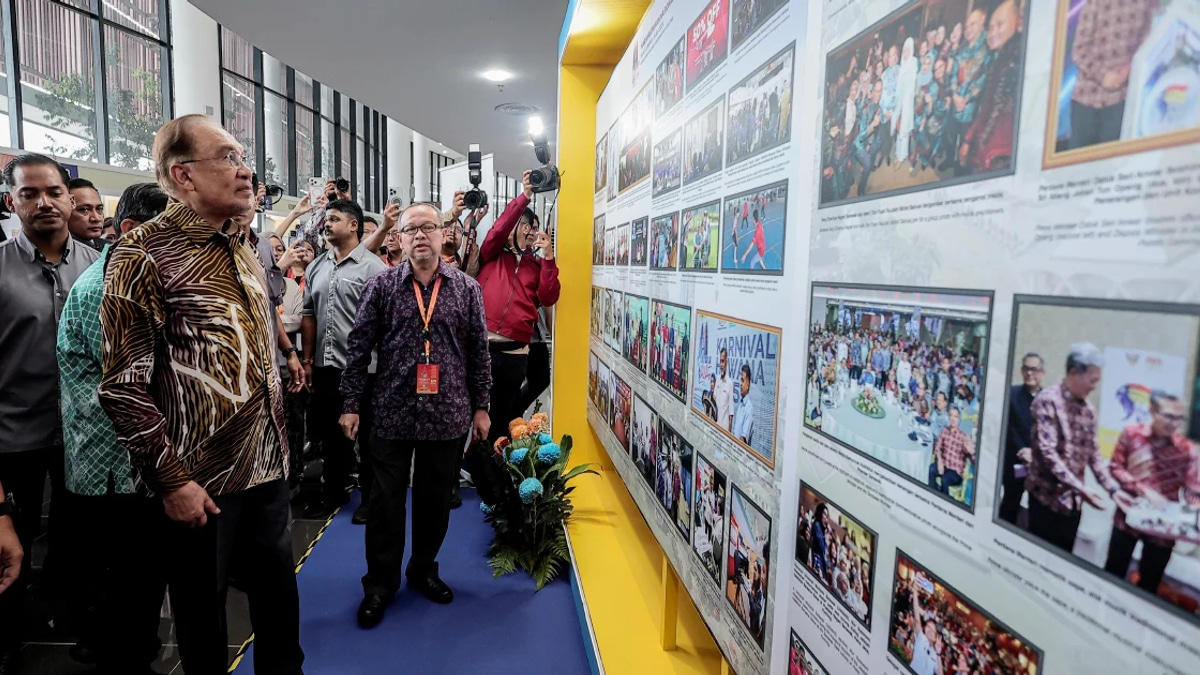
In Penang, Anwar's immediate priorities include presiding over the National Journalists' Day (Hawana) 2026 grand finale, an event that carries symbolic importance for the administration's relationship with the fourth estate. Hawana serves as an annual occasion to celebrate journalism's role in Malaysian democracy while providing a platform for dialogue between government officials and media practitioners. The timing of the prime minister's personal attendance at the finale—rather than delegating the responsibility—suggests the administration views press freedom and media engagement as sufficiently central to its governance narrative to warrant top-level representation.
The significance of holding this event in Penang extends beyond ceremonial considerations. The state has long positioned itself as a progressive economic hub and cultural centre, home to substantial media operations and a vibrant intellectual community. By bringing the national journalists' celebration to the northern region, the government acknowledges Penang's role in shaping national discourse while reinforcing the notion that Putrajaya's policy priorities encompass all Malaysian regions rather than concentrating exclusively on the federal capital and surrounding areas. This geographic distribution of major national events serves as a subtle instrument of inclusive governance communication.
Beyond the journalism celebration, Anwar's Penang itinerary includes participation in investment promotion activities, indicating a dual focus on attracting foreign capital and showcasing Malaysia's economic potential to both domestic and international audiences. Such forums typically gather business leaders, investors, and development authorities to discuss infrastructure projects, sector-specific opportunities, and the regulatory environment facing companies considering Malaysia as a base for regional operations. Penang's established position as a manufacturing and technology hub makes it an ideal venue for channelling investment discussions toward tangible economic outcomes.
The clustering of these events during a single visit reflects efficient scheduling but also demonstrates how modern governance requires constant navigation between diplomatic obligations, media relations, and economic promotion. The fact that Anwar transitioned directly from Turkmenistan to these Penang commitments, rather than returning to Kuala Lumpur first, suggests he views the continuity of engagement as more important than the conventional hierarchical centring of all activities around the federal capital. This approach can either enhance perceptions of distributed leadership or, conversely, create impressions that the seat of government remains subordinate in the prime minister's actual operational priorities.
Turkmenistan's position as a gas-rich nation with significant hydrocarbon reserves makes it strategically relevant for Malaysia's energy security considerations, particularly as regional economies seek alternative fuel sources and supply chain resilience. While Malaysia's own energy profile differs substantially from Central Asia's export-dependent model, potential cooperation in energy technology, trading frameworks, or infrastructure development could materialise through the bilateral relationship. The specific outcomes of Anwar's Turkmenistan discussions remain to be articulated through official statements.
For Malaysian business communities and investors monitoring the prime minister's movements, his engagement in Penang's investment forums sends important signals about sectoral priorities and regional development trajectories. Government leaders' active participation in such forums typically translates into accelerated decision-making on pending projects and clearer policy direction for private sector actors. Companies considering expansion or new ventures often interpret high-level attendance at investment events as indicating genuine government commitment to removing regulatory bottlenecks and supporting business growth.
The convergence of diplomatic work, media engagement, and economic promotion within Anwar's current schedule illustrates the multidimensional nature of contemporary prime ministerial responsibilities. Rather than viewing these as separate functions, the administration appears to treat them as interconnected elements of a broader national development and positioning strategy. How effectively these various threads integrate—whether Turkmenistan partnerships eventually feed into Penang-based economic expansion, or whether media engagement translates into more constructive government-press relations—will ultimately shape assessments of this period's policy coherence and execution.

%22%2F%3E%3C%2Fpattern%3E%3C%2Fdefs%3E%3Crect%20width%3D%22100%25%22%20height%3D%22100%25%22%20fill%3D%22url(%23ph2hy9vg)%22%2F%3E%3Crect%20width%3D%22100%25%22%20height%3D%22100%25%22%20fill%3D%22url(%23ph2hy9vp)%22%2F%3E%3Ctext%20x%3D%2250%25%22%20y%3D%2250%25%22%20text-anchor%3D%22middle%22%20dominant-baseline%3D%22central%22%20fill%3D%22rgba(255%2C255%2C255%2C0.95)%22%20font-family%3D%22Georgia%2C%20'Times%20New%20Roman'%2C%20serif%22%20font-weight%3D%22700%22%20font-size%3D%22272%22%20letter-spacing%3D%22-0.02em%22%3EAnwar%3C%2Ftext%3E%3C%2Fsvg%3E)