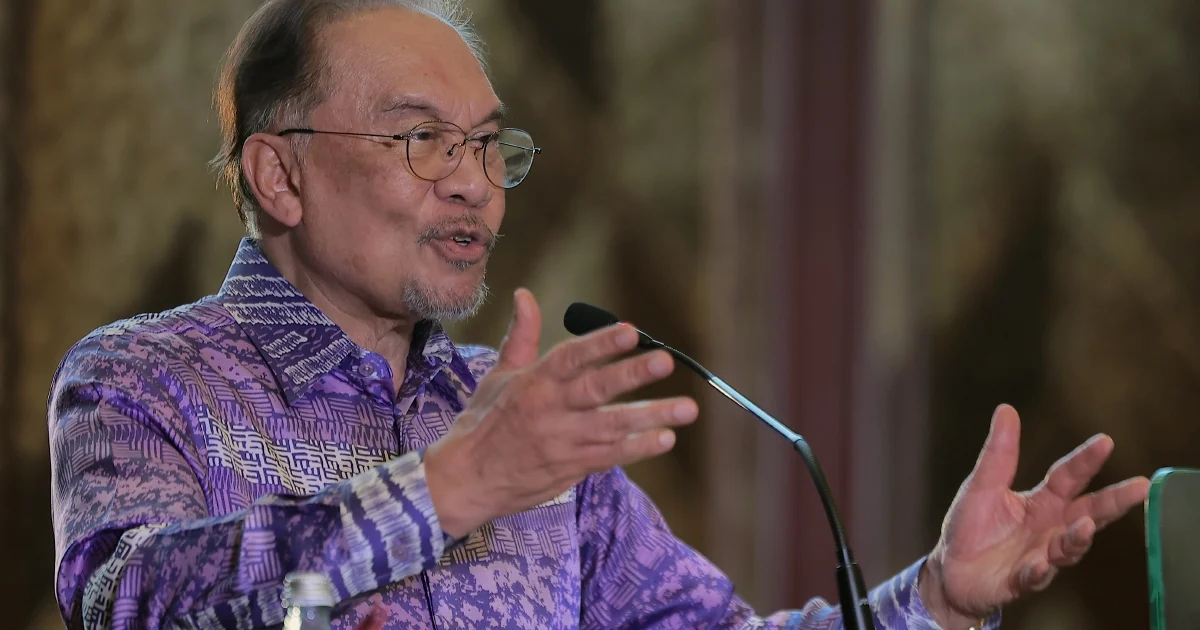
Prime Minister Datuk Seri Anwar Ibrahim is set to undertake a two-day working visit to Kazan beginning June 17, where he will hold substantive discussions with Rais of the Republic of Tatarstan Rustam Minnikhanov. The engagement comes as Malaysia looks to consolidate its diplomatic footprint in Russia's regions beyond Moscow, signalling a broader strategy to deepen bilateral relations at multiple institutional levels.
Kazan, the capital of Tatarstan, has emerged as an important economic and cultural hub in the Volga region. The choice of venue underscores Malaysia's commitment to engaging with Russia not merely through its federal apparatus but through meaningful interaction with key regional players. Tatarstan, as one of Russia's wealthier and more strategically positioned republics, holds considerable influence over resource management, investment flows, and cultural exchange programmes that could benefit Malaysian interests across multiple sectors.
The timing of the visit reflects Malaysia's strategic positioning within the broader Asian geopolitical landscape. As a senior envoy noted, the discussions are designed to strengthen not only bilateral Malaysia-Russia relations but also to advance Asean-Russia cooperation frameworks. This dual-track approach demonstrates how bilateral visits increasingly serve as platforms for advancing regional bloc interests, particularly in countering Western pressure and exploring alternative partnership architectures in an increasingly multipolar world order.
Rustam Minnikhanov's role as Rais makes him a crucial interlocutor for any foreign leader seeking to understand Russia's regional dynamics and economic priorities. His tenure has seen Tatarstan develop significant expertise in technology, petrochemicals, and manufacturing sectors where Malaysian companies have demonstrated growing interest. The meetings are likely to explore concrete opportunities for joint ventures, technology transfer agreements, and people-to-people exchanges that could translate diplomatic goodwill into tangible economic outcomes.
Malaysia's engagement with Russia has traditionally focused on energy cooperation, defence partnerships, and increasingly, on diversifying geopolitical alignments away from traditional Western-centric frameworks. The Kazan visit provides an occasion to explore how Malaysian expertise in Islamic finance, halal certification, and palm oil production might intersect with Tatarstan's economic development strategies. Such sectoral conversations often yield more durable partnerships than grand geopolitical pronouncements, creating constituencies within both nations invested in sustained bilateral cooperation.
From an Asean perspective, the visit reinforces the bloc's efforts to maintain strategic autonomy and develop deeper engagement with major powers beyond the Western alliance system. Malaysia's proactive approach to Russia, particularly through regional engagement, positions Asean as a non-aligned force capable of managing relationships across competing power blocs. This approach has particular resonance in Southeast Asia, where countries have historically balanced great power competition to maximise their own development advantages and strategic flexibility.
The two-day format suggests substantive engagement rather than ceremonial courtesy calls. Such visits typically involve multiple rounds of discussions covering trade, investment, educational exchanges, tourism, and diplomatic coordination on international platforms. Officials from both sides usually prepare comprehensive agendas addressing outstanding issues, identifying new collaboration opportunities, and establishing mechanisms for regular ministerial-level interaction that sustains momentum between senior leadership engagements.
Russia's Far East and regional development strategies have increasingly turned attention toward Asia-Pacific partners as Western sanctions limit traditional European markets. Tatarstan, positioned at this intersection of Europe and Asia, serves as a natural testing ground for Russian-Asian cooperation models. Malaysian participation in such frameworks positions the country as a serious player in Moscow's Asian pivot strategy, potentially unlocking access to Russian governmental support for Malaysian companies seeking to invest or operate in the region.
The diplomatic messaging from Malaysian officials emphasizing both bilateral and multilateral dimensions reflects careful calibration of messaging to various audiences. For Malaysian domestic consumption, the visit demonstrates proactive foreign policy and economic opportunity-seeking. For Asean, it signals bloc-wide commitment to strategic autonomy. For Russia, it communicates Malaysia's willingness to develop ties beyond petroleum and defence, into broader economic and cultural domains.
Looking forward, such visits establish the relationships and understandings that facilitate multilateral cooperation at forums like the United Nations, BRICS-adjacent discussions, and regional security dialogues where Malaysia and Russia increasingly find common cause. The Kazan meeting thus represents one nodal point in an expanding web of bilateral engagements that collectively reshape Malaysia's international positioning and Asean's strategic autonomy in an era of competing great power strategies.


%22%2F%3E%3C%2Fpattern%3E%3C%2Fdefs%3E%3Crect%20width%3D%22100%25%22%20height%3D%22100%25%22%20fill%3D%22url(%23ph2hy9vg)%22%2F%3E%3Crect%20width%3D%22100%25%22%20height%3D%22100%25%22%20fill%3D%22url(%23ph2hy9vp)%22%2F%3E%3Ctext%20x%3D%2250%25%22%20y%3D%2250%25%22%20text-anchor%3D%22middle%22%20dominant-baseline%3D%22central%22%20fill%3D%22rgba(255%2C255%2C255%2C0.95)%22%20font-family%3D%22Georgia%2C%20'Times%20New%20Roman'%2C%20serif%22%20font-weight%3D%22700%22%20font-size%3D%22272%22%20letter-spacing%3D%22-0.02em%22%3EAnwar%3C%2Ftext%3E%3C%2Fsvg%3E)