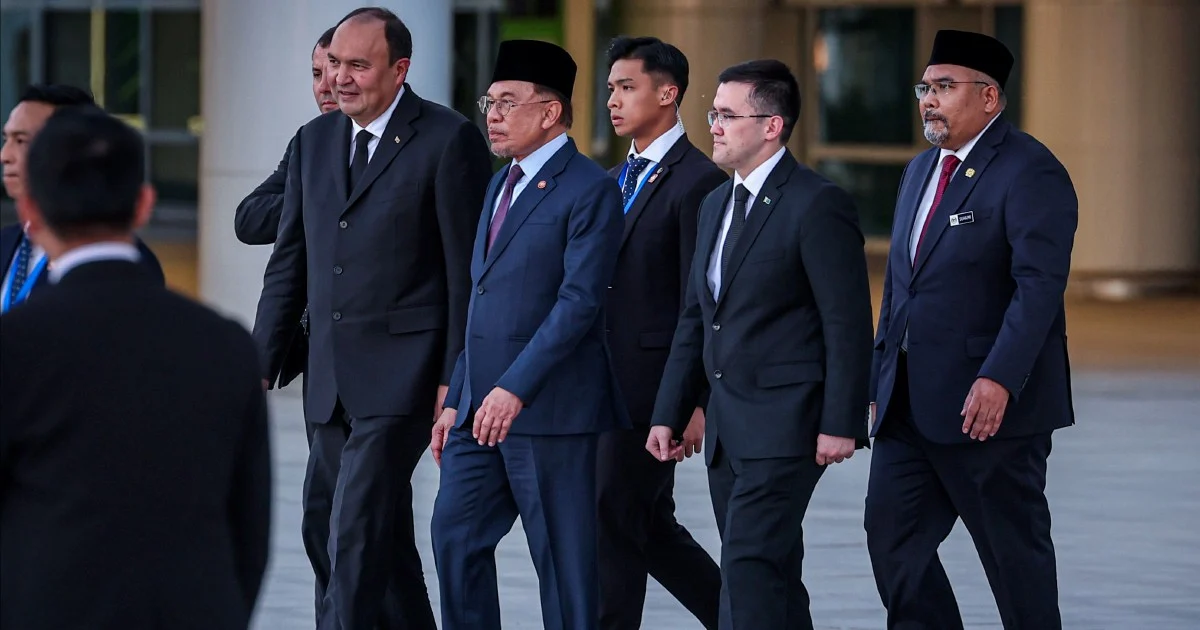
Prime Minister Datuk Seri Anwar Ibrahim is wrapping up his official mission to Turkmenistan with a packed schedule of senior-level meetings designed to unlock fresh opportunities for Malaysian businesses in the energy-rich Central Asian republic. The final day of his diplomatic visit to the Caspian Sea nation signals Kuala Lumpur's growing interest in expanding its footprint beyond traditional Southeast Asian markets into emerging economies with untapped commercial potential.
Turkmenistan, positioned strategically along the eastern shore of the Caspian Sea, represents a gateway for Malaysian companies seeking to access markets across Central Asia and beyond. The country's substantial hydrocarbon reserves and ongoing infrastructure development projects create avenues for collaboration in sectors ranging from energy to construction, telecommunications, and financial services. For Malaysia, a nation heavily dependent on international trade, cultivating ties with resource-rich nations in Central Asia offers diversification benefits that can insulate the economy from regional market fluctuations.
The timing of Anwar's visit reflects a broader Malaysian foreign policy pivot toward building relationships with non-aligned nations and emerging economies. Turkmenistan's neutral foreign policy stance and its position as a bridge between Europe and Asia make it an attractive partner for Malaysia's strategic interests. Beyond immediate commercial gains, establishing stronger relations with Turkmenistan can position Malaysia as a trusted intermediary in Central Asian affairs, potentially enhancing the country's diplomatic influence on the global stage.
During the concluding day of talks, Malaysian and Turkmen officials are expected to explore concrete mechanisms for deepening bilateral engagement. These discussions likely encompass potential joint ventures, technology transfer arrangements, and collaborative frameworks that could benefit Malaysian exporters seeking entry into Central Asian markets. The presence of business delegations accompanying Anwar underscores the mission's focus on translating diplomatic goodwill into tangible commercial outcomes.
Turkmenistan's economy, heavily reliant on natural gas and oil exports, presents particular interest for Malaysian companies in the energy sector. However, opportunities extend well beyond hydrocarbons. Malaysian expertise in palm oil refining, manufacturing, financial technology, and Islamic banking could find receptive audiences in Turkmenistan's developing marketplace. Conversely, Malaysian investors might benefit from procurement opportunities in the country's expanding infrastructure development programmes, particularly in transportation and logistics.
The diplomatic engagement also highlights Malaysia's commitment to strengthening ties across the Muslim world and developing nations broadly. While Turkmenistan is predominantly Muslim, its secular governance model and multi-ethnic composition mirror Malaysia's own approach to religious and cultural pluralism, creating common ground for mutual understanding and cooperation. Such alignment on governance principles can facilitate smoother business negotiations and longer-term partnership stability.
From a geopolitical perspective, Malaysia's outreach to Central Asia comes at a moment when major powers are intensifying their competition for influence in the region. By establishing robust bilateral relationships with countries like Turkmenistan, Malaysia can maintain its non-aligned positioning while ensuring Malaysian interests are represented in an increasingly multipolar world. This approach allows Kuala Lumpur to pursue commercial advantages without becoming entangled in great power rivalries that characterise modern international relations.
The visit also provides an opportunity to address infrastructure and logistical challenges that have historically limited trade flows between Southeast Asia and Central Asia. Improved maritime connections via the Caspian Sea, enhanced air freight routes, and streamlined customs procedures could significantly reduce transaction costs for Malaysian exporters, making the region more commercially attractive. Establishing such frameworks during high-level visits can accelerate implementation of practical trade facilitation measures.
Financial services represent another promising avenue for collaboration. Malaysia's advanced Islamic finance sector, ranked globally as a leader in Sharia-compliant banking and investment products, could address Turkmenistan's growing demand for financial innovation while respecting religious and cultural preferences. Similarly, Malaysian fintech companies might explore opportunities in digital payment systems and financial inclusion initiatives that could benefit Turkmenistan's underbanked populations.
The diplomatic mission underscores Malaysia's recognition that economic growth increasingly depends on accessing diverse markets and forming strategic partnerships beyond immediate geographic proximity. Central Asia, with its combined population of over 70 million and growing purchasing power, represents a frontier market for Malaysian businesses willing to invest in understanding local preferences and regulatory environments. Prime Minister Anwar's personal engagement signals that Kuala Lumpur views this relationship as important enough to merit top-level attention.
Looking forward, the outcome of these high-level discussions may establish foundations for regular ministerial exchanges, business forums, and educational partnerships. Such institutional mechanisms help sustain momentum in bilateral relations beyond individual diplomatic visits, creating predictability and confidence that encourages private sector investment from both nations. Success in translating diplomatic overtures into sustained commercial relationships will ultimately determine whether this visit catalyses lasting benefits for Malaysian enterprises seeking growth opportunities beyond traditional markets.

%22%2F%3E%3C%2Fpattern%3E%3C%2Fdefs%3E%3Crect%20width%3D%22100%25%22%20height%3D%22100%25%22%20fill%3D%22url(%23ph2hy9vg)%22%2F%3E%3Crect%20width%3D%22100%25%22%20height%3D%22100%25%22%20fill%3D%22url(%23ph2hy9vp)%22%2F%3E%3Ctext%20x%3D%2250%25%22%20y%3D%2250%25%22%20text-anchor%3D%22middle%22%20dominant-baseline%3D%22central%22%20fill%3D%22rgba(255%2C255%2C255%2C0.95)%22%20font-family%3D%22Georgia%2C%20'Times%20New%20Roman'%2C%20serif%22%20font-weight%3D%22700%22%20font-size%3D%22272%22%20letter-spacing%3D%22-0.02em%22%3EAnwar%3C%2Ftext%3E%3C%2Fsvg%3E)