Prime Minister Anwar Ibrahim will unveil the full complement of 56 Pakatan Harapan candidates for the 16th Johor State Election this evening, formally closing out the coalition's candidate selection process just days before nominations open. The announcement ceremony takes place at 8 pm at Bukit Gambir Extreme Park field here, bringing together PH's top tier of leadership to present what the coalition frames as a slate dedicated to integrity-driven governance and sustainable development of Malaysia's southern anchor state.
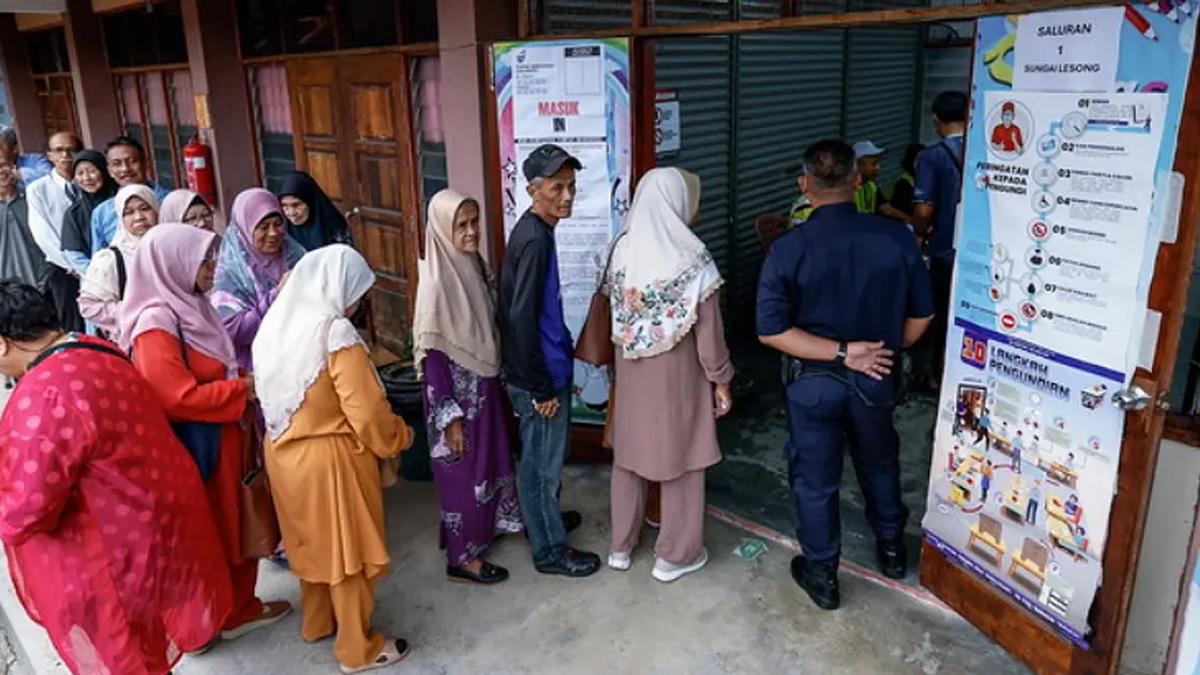
The occasion marks a significant moment in Johor's electoral calendar, with the timeline moving swiftly toward actual polling. The Election Commission has already fixed June 27 as nomination day, allowing candidates to formally register their intention to contest. Early voting is set for July 7, giving a five-day window before the main election day on July 11. This condensed schedule means the coalition's candidate announcement effectively launches the intensive phase of campaigning, allowing PH machinery to mobilise resources around specific faces and campaign messages across the 56 state seats up for grabs.
Pakatan Harapan has already begun rolling out candidates through its component parties over recent weeks. The DAP, the coalition's largest Chinese-majority party, has already named five candidates spanning diverse constituencies and demographic profiles. These include lawyer Chu Poh Yee contesting Mengkibol, Nor Zulaila Abd Ghani, a private secretary to the Deputy Finance Minister, running in Tiram, and Lee Wern Yiing, the DAPSY chief, seeking the Johor Jaya seat. The coalition has also fielded former incumbent Wong Bor Yang in Senai and Mohamad Shafwan Ani, a special assistant to the Kulai Member of Parliament, in Bukit Permai. PKR, the party of Anwar himself, has put forward Arthur Chiong Sen Sern to defend the Bukit Batu state seat.
The diversity of these candidates—spanning professions, age groups, and communal backgrounds—reflects a deliberate strategy by PH to present itself as an inclusive alternative to incumbent administrations. By fielding professionals alongside party operatives, and by ensuring representation across different demographic segments, the coalition positions itself as drawing talent from civil society rather than relying solely on party loyalists. This approach carries particular resonance in Johor, a state where urban-rural dynamics, generational shifts, and communal sensitivities remain potent electoral factors.
Tonight's event will draw senior figures from across the PH coalition structure. DAP secretary-general Anthony Loke, a high-profile figure in Malaysian opposition politics, will be present alongside Amanah president Mohamad Sabu, representing one of the coalition's Malay-Muslim anchors. The presence of such figures signals the national importance PH attaches to the Johor contest, even as state-level issues dominate local discourse. For Johor voters assessing which direction to take the state, the turnout of top federal leadership provides implicit messaging about PH's commitment to the race.
In public messaging ahead of the announcement, Anwar has framed the election around governance quality and public welfare. Through social media posts yesterday, the Prime Minister articulated that Johor requires leadership grounded in integrity, credibility, and genuine commitment to advancing the state's progress and improving citizens' living standards. This framing attempts to elevate the contest beyond transactional politics, positioning it as a choice between competing visions of what good governance looks like. For voters fatigued by personalised politics or concerned about corruption and accountability, such messaging carries weight, though its electoral impact will ultimately depend on whether PH's candidates can embed these principles into their ground campaigns.
Johor's electoral landscape carries strategic weight within Malaysian federalism. As the nation's most populous state after Selangor and a major economic hub anchoring the southern corridor, Johor's political complexion influences national power balances. A strong PH showing would boost the coalition's federal standing and provide Anwar with a state-level power base in the south, complementing existing strongholds in Selangor and Penang. Conversely, a disappointing result would hand ammunition to critics questioning PH's electoral viability beyond its traditional heartlands. The full candidate slate being unveiled tonight thus represents not merely a state election roster, but a gambit in the larger narrative of Malaysian political realignment.
The 56-seat state assembly has seen significant demographic and economic shifts since the last election. Urbanisation continues reshaping constituencies, younger voters now comprise a larger share of the electorate, and economic pressures around cost of living have sharpened voter focus on bread-and-butter governance. Candidates fielded by PH will need to address these currents, whether through promises of infrastructure investment, social safety nets, or economic opportunity creation. The quality and locatedness of these candidates—whether they have deep community roots or are parachuted in—will influence their capacity to connect these broader PH themes to specific local contexts.
The announcement tonight concludes weeks of internal coalition negotiations around seat allocation and candidate selection. PH's three-party structure—DAP, PKR, and Amanah—requires balancing representation across these groups while maximising competitive positioning against both the incumbent Barisan Nasional and the Perikatan Nasional bloc that has gained traction in parts of the Malay-Muslim electorate. These internal calculations, settled by tonight, will define PH's fighting capacity in what shapes as a three-cornered contest in many constituencies. The full slate revelation will allow analysts and rival campaigns to assess PH's strategic bets, identifying which seats the coalition considers winnable and which it may be conceding.
For Malaysian observers tracking the coalition's evolution and capacity, tonight's event offers a window into PH's organisational health and strategic thinking. The ability to field candidates across 56 seats, with apparent coordination among component parties, demonstrates the coalition retains functional capacity despite periodic tensions. Yet candidate quality, party unity in ground campaigns, and voter reception remain separate questions from the mere act of candidate announcement. The weeks ahead will test whether the slate unveiled tonight can translate numbers and credentials into actual electoral support, or whether PH faces headwinds in converting candidate announcements into seats won.

%22%2F%3E%3C%2Fpattern%3E%3C%2Fdefs%3E%3Crect%20width%3D%22100%25%22%20height%3D%22100%25%22%20fill%3D%22url(%23phz7hyg)%22%2F%3E%3Crect%20width%3D%22100%25%22%20height%3D%22100%25%22%20fill%3D%22url(%23phz7hyp)%22%2F%3E%3Ctext%20x%3D%2250%25%22%20y%3D%2250%25%22%20text-anchor%3D%22middle%22%20dominant-baseline%3D%22central%22%20fill%3D%22rgba(255%2C255%2C255%2C0.95)%22%20font-family%3D%22Georgia%2C%20'Times%20New%20Roman'%2C%20serif%22%20font-weight%3D%22700%22%20font-size%3D%22272%22%20letter-spacing%3D%22-0.02em%22%3EAnwar%3C%2Ftext%3E%3C%2Fsvg%3E)