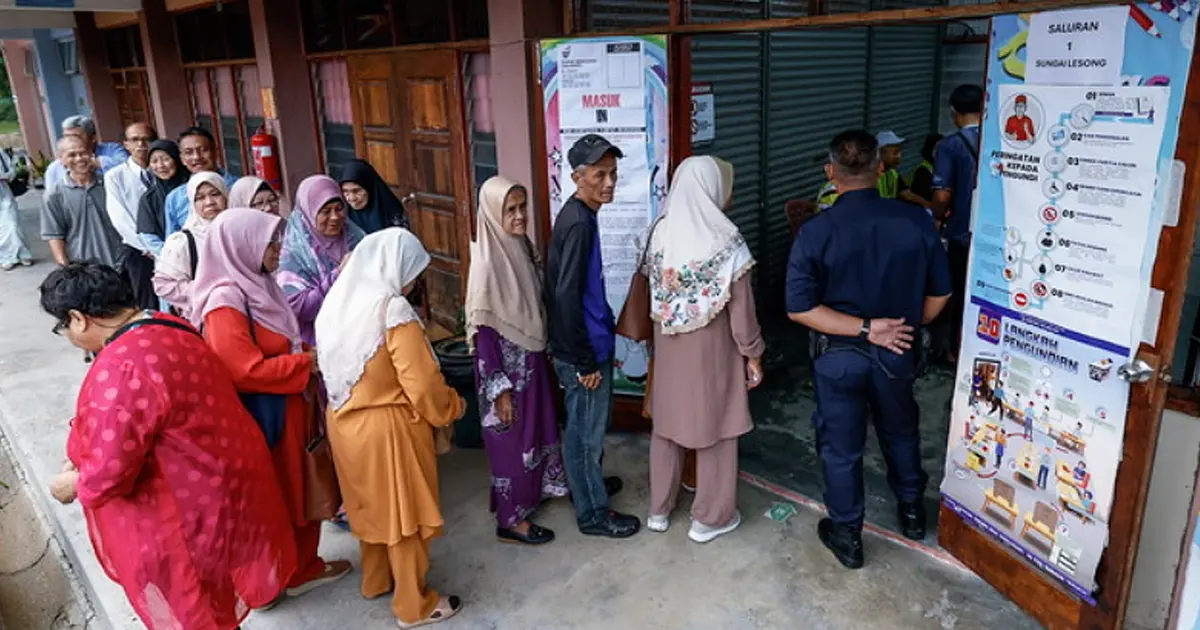
The persistent debate surrounding 3R issues risks sapping political momentum among Malay voters through accumulated emotional exhaustion, according to Awang Azman Pawi, an analyst at Universiti Malaya, raising fresh concerns about how Malaysia's political landscape may evolve in coming years. The observation reflects growing anxiety within academic and political circles that endless rehearsals of identity-based discourse, while symbolically significant to certain constituencies, may overshadow the practical governance challenges that increasingly dominate household conversations across the country.
Awang Azman's assessment arrives amid a complex political environment where multiple parties compete for Malay voter affection by mobilizing rhetoric around the three Rs—religion, royalty, and race—issues that have traditionally formed the bedrock of Malay-Muslim political identity in Malaysia. However, the proliferation of this messaging, particularly when amplified through social media and partisan news channels, creates a paradox: while initially compelling, the relentless repetition of emotionally charged arguments can eventually diminish their persuasive power and leave voters feeling drained rather than energized.
The concept of emotional fatigue operates distinctly from political apathy. Voters experiencing this phenomenon remain engaged with the political process but become progressively skeptical of grand narratives unsupported by concrete results. They retain their capacity for political passion yet redirect it toward immediate, material concerns affecting their daily existence. This shift represents a subtle but significant realignment in voting priorities that parties may underestimate at their peril.
Cost-of-living pressures have intensified dramatically across Malaysia, with households grappling with elevated food prices, transportation expenses, and rental burdens that consume increasingly larger portions of family budgets. These tangible economic anxieties have begun overshadowing symbolic and identity-based political messaging, particularly among younger Malay voters who inherit the cultural attachments of their elders but prioritize financial stability for themselves and their children. When political discourse fails to address these material hardships directly and substantively, voters perceive a disconnect between political rhetoric and lived reality.
According to Awang Azman's framework, any political party seeking to maintain or expand its Malay voter base must ultimately ground its legitimacy in demonstrable governance outcomes rather than ideological posturing. This assessment does not diminish the importance of the 3Rs within Malaysia's political economy—religion, royal institution, and Malay-Muslim communal interests remain deeply embedded in the constitutional and social fabric. Rather, it suggests that these elements function most effectively when integrated into broader policy agendas addressing immediate constituent needs.
The distinction between symbolic and substantive politics becomes increasingly consequential as Malaysia navigates persistent economic headwinds and demographic shifts. Parties that position themselves as reliable stewards of tangible improvements—whether through targeted subsidies, wage growth, housing accessibility, or healthcare affordability—cultivate durable voter loyalty grounded in material interest rather than emotional investment alone. Conversely, those relying predominantly on identity-based appeals without corresponding policy delivery risk squandering political capital accumulated through cultural resonance.
Malaysia's political history demonstrates that periods of sustained Malay voter mobilization around 3R themes have indeed produced significant electoral outcomes. Yet these mobilizations have typically succeeded when coupled with credible promises or actual delivery on material improvements for Malay-Muslim constituents. The colonial-era Alliance formula, which dominated twentieth-century Malaysian politics, succeeded partly because it connected communal representation to concrete economic advancement for Malays through affirmative action mechanisms and resource distribution frameworks.
Current political competition among Malay-focused parties risks fragmenting the electorate precisely because each contender claims superior commitment to religious, royal, and racial causes while offering competing visions of how these principles translate into policy. This multiplication of similar appeals creates redundancy—voters hear comparable rhetoric from multiple sources and struggle to distinguish substantive policy differences. The resulting saturation may contribute to the emotional fatigue Awang Azman describes, wherein voters feel overwhelmed by the volume and similarity of messaging without discerning clear distinctions in proposed solutions.
The implications for Malaysian politics extend beyond immediate electoral cycles. Should Malay voter fatigue intensify, it could generate openings for political alternatives that emphasize pragmatic governance, cross-communal coalition-building, or non-traditional political messaging. This scenario would fundamentally reshape Malaysia's political economy, as Malay-based parties have historically anchored the political system. Alternatively, parties might respond by integrating materialist policy agendas more thoroughly into campaigns, effectively rebalancing the ratio between symbolic and substantive political communication.
Regional perspectives offer relevant context: across Southeast Asia, voters have increasingly punished parties perceived as prioritizing ideological consistency over practical service delivery. Thailand's political instability partly reflects voter disillusionment when competing factions emphasize institutional or identity disputes while street-level governance deteriorates. Similarly, the Philippines has witnessed periodic shifts away from traditional patronage networks when voters prioritize transparent administration and anti-corruption commitments. Malaysia, with its more institutionalized party system and educated electorate, may be approaching a comparable inflection point.
Awang Azman's warning ultimately underscores a fundamental political reality: sustained voter engagement requires parties to maintain credible connections between their ideological commitments and measurable improvements in constituent welfare. For Malaysian parties courting Malay voters, this necessitates demonstrating how commitment to religion, royal institutions, and Malay community interests translates into policies that address cost-of-living pressures, employment opportunities, and quality-of-life enhancements. Absent this connection, even culturally resonant messaging risks depleting rather than replenishing political legitimacy.

%22%2F%3E%3C%2Fpattern%3E%3C%2Fdefs%3E%3Crect%20width%3D%22100%25%22%20height%3D%22100%25%22%20fill%3D%22url(%23phk8ncg)%22%2F%3E%3Crect%20width%3D%22100%25%22%20height%3D%22100%25%22%20fill%3D%22url(%23phk8ncp)%22%2F%3E%3Ctext%20x%3D%2250%25%22%20y%3D%2250%25%22%20text-anchor%3D%22middle%22%20dominant-baseline%3D%22central%22%20fill%3D%22rgba(255%2C255%2C255%2C0.95)%22%20font-family%3D%22Georgia%2C%20'Times%20New%20Roman'%2C%20serif%22%20font-weight%3D%22700%22%20font-size%3D%22320%22%20letter-spacing%3D%22-0.02em%22%3EKing%3C%2Ftext%3E%3C%2Fsvg%3E)