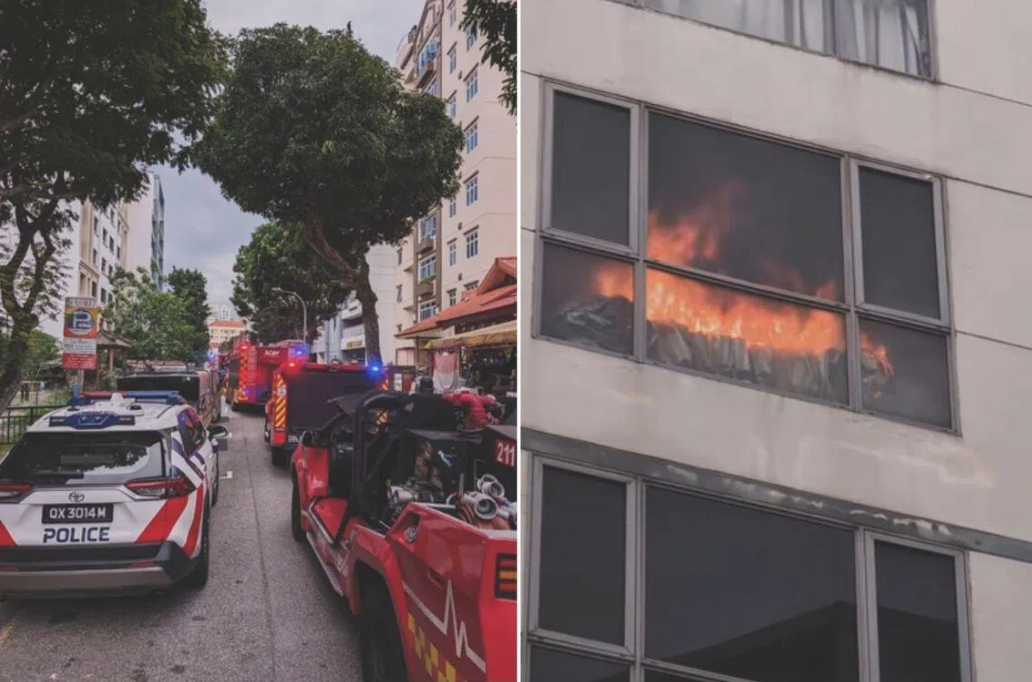
Five residents of Casa Aerata condominium in Geylang, Singapore, were safely evacuated on Sunday afternoon after a power-assisted bicycle battery caught fire while charging unattended in a seventh-floor unit. The Singapore Civil Defence Force responded to the emergency at 9 Lorong 26 Geylang at 5.35pm and extinguished the blaze using a hosereel and compressed air foam backpack. No injuries resulted from the incident, though the fire posed a significant risk to neighbouring households in the multi-unit residential building.
The SCDF's preliminary investigation determined that the fire originated from the battery's electrical system, a finding that underscores the hazards associated with charging active mobility devices indoors without proper supervision. The battery was left unattended in the living room while connected to a power source, a practice that authorities now view as a critical fire risk factor in residential settings. The rapid spread of heat was sufficient to cause a seventh-floor window to shatter from thermal stress, demonstrating the intensity of the blaze before emergency responders contained it.
The incident drew attention from local leadership, with Member of Parliament for Bishan-Toa Payoh GRC Cai Yinzhou arriving at the scene after observing smoke and hearing emergency sirens. He took immediate action to clear the area directly below the burning unit, anticipating potential hazards from the compromised window structure. His presence highlighted the seriousness with which community leaders treat such fire emergencies, particularly in high-density residential areas where risks extend beyond a single unit.
This fire is the latest in a troubling trend affecting Singapore's urban housing landscape. According to SCDF data released in February, active mobility devices—including power-assisted bicycles, personal mobility devices and mobility aids—were involved in 49 electrical fires at residential premises in 2025. While this represents a decrease from 67 incidents in 2024, the overall context remains concerning, as a substantial portion of residential electrical fires stem from these increasingly popular transportation and mobility solutions.
Within that broader category, personal mobility device fires have actually increased, rising from 25 cases in 2024 to 31 in 2025, suggesting that the shift downward in overall active mobility device fires may be misleading without deeper analysis. The total of 304 electrical residential fires in 2025 indicates that active mobility devices account for approximately one in every nine residential electrical fires, a proportion that demands serious attention from residents and policymakers alike.
Authorities have issued clear guidance to prevent similar incidents. The SCDF strongly advises against purchasing or using non-original batteries for active mobility devices, as counterfeit or third-party batteries may lack essential safety features and quality controls. This recommendation addresses a significant blind spot for many users who might select cheaper alternatives without understanding the fire risks involved. The surge in counterfeit battery markets across Southeast Asia has compounded the challenge, as consumers in developing markets often cannot distinguish between legitimate and dangerous substitutes.
Charging practices themselves require fundamental behavioural change. The SCDF explicitly recommends against extended or overnight charging of power-assisted bicycle and personal mobility device batteries, a practice that many residents adopt for convenience without recognising the cumulative thermal stress placed on battery cells. Unattended charging dramatically increases response times if problems develop, leaving fires to spread unchecked before occupants or neighbours detect smoke or flames.
For Malaysian residents and businesses, the Singapore incident carries important lessons as active mobility adoption accelerates across Southeast Asia. Malaysia's own regulatory framework for active mobility devices remains less stringent than Singapore's, and charging safety standards vary significantly between manufacturers and retailers. The Casa Aerata incident demonstrates that fires involving these devices can escalate rapidly in multi-unit residential buildings, putting vulnerable populations at risk and potentially triggering wider infrastructure concerns in densely packed urban housing.
The incident also reveals gaps in user awareness that extend beyond Malaysia's borders. Many consumers purchase power-assisted bicycles and personal mobility devices without receiving comprehensive safety instruction regarding battery management, charging environments, and maintenance protocols. Retailers rarely emphasise that living rooms and bedrooms represent unsuitable charging locations due to proximity to flammable materials and limited ventilation. The psychological tendency to treat such devices as casual consumer goods, rather than equipment containing high-energy battery systems, contributes to dangerous charging habits becoming normalised.
Building management and residents' committees in Malaysian condominiums and apartment complexes would benefit from developing explicit policies governing where and how active mobility device batteries may be charged. Common areas should be evaluated for fire safety before residents are permitted to establish charging stations. Individual units should encourage residents to designate outdoor or dedicated spaces with proper ventilation for charging operations, moving away from living areas where fires could trap occupants or spread to adjacent units.
The intersection of technological adoption and residential safety represents an ongoing challenge for urban Southeast Asia. As e-bikes, e-scooters and personal mobility devices become mainstream transportation solutions, infrastructure and safety standards have lagged behind market growth. Insurance providers, property developers and local authorities must collaborate to establish charging standards that protect residents while supporting the legitimate benefits these devices provide for mobility and sustainability goals.
Singapore's response, emphasising public awareness and clear safety protocols, offers a template for neighbouring jurisdictions. Malaysia's fire and rescue services might consider similar public campaigns highlighting the specific risks of unattended charging in residential settings. Building inspectors and fire safety officers should incorporate active mobility device storage and charging into their assessment protocols. Until consumers, manufacturers, retailers and regulators align on comprehensive safety standards, incidents like the Casa Aerata fire will likely continue occurring across the region.

%22%2F%3E%3C%2Fpattern%3E%3C%2Fdefs%3E%3Crect%20width%3D%22100%25%22%20height%3D%22100%25%22%20fill%3D%22url(%23phk8ncg)%22%2F%3E%3Crect%20width%3D%22100%25%22%20height%3D%22100%25%22%20fill%3D%22url(%23phk8ncp)%22%2F%3E%3Ctext%20x%3D%2250%25%22%20y%3D%2250%25%22%20text-anchor%3D%22middle%22%20dominant-baseline%3D%22central%22%20fill%3D%22rgba(255%2C255%2C255%2C0.95)%22%20font-family%3D%22Georgia%2C%20'Times%20New%20Roman'%2C%20serif%22%20font-weight%3D%22700%22%20font-size%3D%22320%22%20letter-spacing%3D%22-0.02em%22%3EKing%3C%2Ftext%3E%3C%2Fsvg%3E)