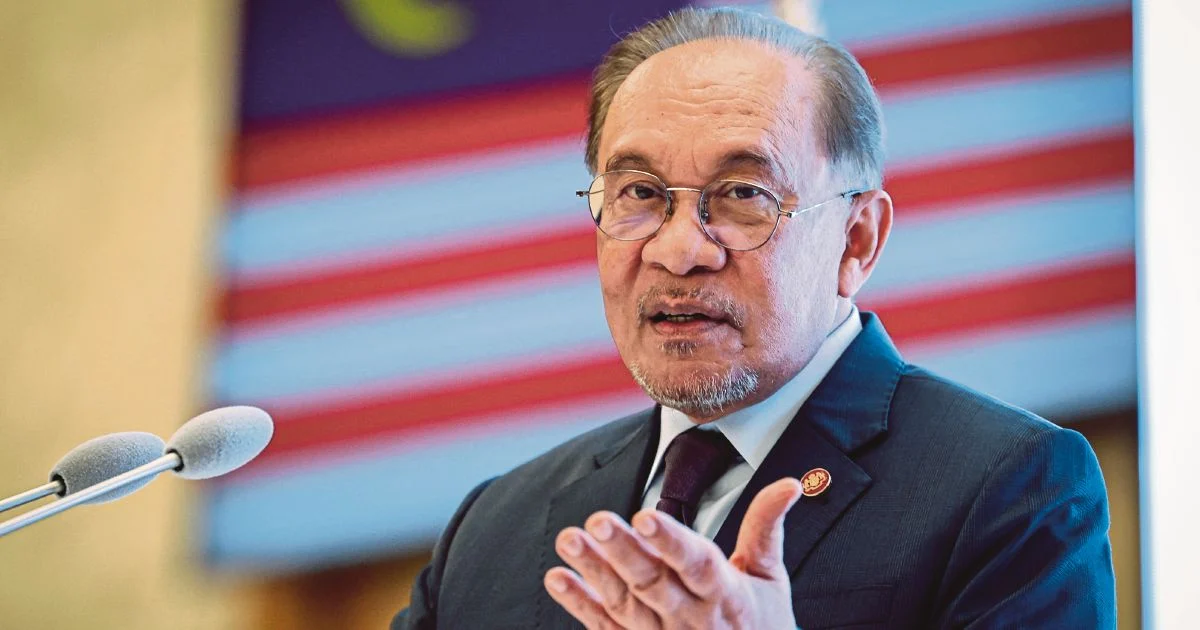
Prime Minister Datuk Seri Anwar Ibrahim framed Turkmenistan's decision to grant Petroliam Nasional Bhd (Petronas) a stake in one of the world's largest gas fields as a powerful endorsement of Malaysia's standing on the global stage. Speaking in Batu Kawan, Anwar characterised the agreement as evidence that international investors and governments now view Malaysia as a nation of stability, cohesion, and proven economic management capabilities.
The Turkmenistan opportunity arrives at a significant moment for Malaysia's national oil and gas company, which has faced mounting competitive pressures in the global energy sector over recent years. By securing involvement in such a substantial asset, Petronas positions itself to benefit from expanding demand for liquified natural gas across Asia-Pacific markets, where energy consumption continues to accelerate despite the global energy transition. The field represents one of the planet's most significant untapped hydrocarbon reserves, making the stake strategically valuable for Petronas's long-term portfolio.
Anwar's remarks reflect a broader Malaysian government narrative about the nation's recovery following years of political turbulence. The statement suggests that diplomatic relationships and international perceptions have shifted in Malaysia's favour, particularly as concerns about governance quality have eased among foreign investors. This perception carries tangible consequences—companies making multi-billion-dollar commitments in the energy sector typically conduct exhaustive due diligence on political risk, currency stability, regulatory consistency, and the predictability of business conditions before committing capital.
The Petronas appointment signals confidence in Malaysia's institutional frameworks and the competence of its state enterprises to manage complex, technologically demanding projects in contested international markets. Turkmenistan, which operates a tightly controlled economy with limited foreign investment, would have conducted rigorous vetting of potential partners. The decision to include Petronas alongside other international operators suggests Malaysian management capacity measured up against global competitors in attracting such a partnership.
For Malaysia's economy, the development carries implications extending beyond energy sector dynamics. Successful execution of major offshore projects typically generates employment for skilled workers, technology transfer opportunities, and service sector demand. Engineering firms, fabrication yards, logistics providers, and consulting businesses in Malaysia often benefit from large-scale resource projects through supply chain participation and service provision. International visibility from managing significant infrastructure also enhances Malaysia's reputation as a venue for serious industrial operations.
The deal also reflects shifting geopolitical calculations in Central Asia and the broader Indo-Pacific region. Malaysia's willingness to engage with diverse partners, including former Soviet republics, reinforces its positioning as a non-aligned nation pursuing economic opportunities across ideological and geographical lines. This approach contrasts with the polarisation characterising some international relationships and underscores Malaysia's diplomatic flexibility in navigating complex global alignments.
Petronas has long pursued an international expansion strategy, recognizing that Malaysia's domestic reserves have finite lifespans. Investments in foreign gas fields extend the company's earnings horizon and reduce dependence on domestic hydrocarbon depletion. By maintaining upstream operations globally, Petronas sustains a knowledge base in exploration and production that would atrophy if confined solely to domestic operations. The Turkmenistan involvement thus serves Petronas's institutional longevity alongside immediate commercial returns.
For Southeast Asian observers, the deal demonstrates that Malaysian entities can compete successfully for significant assets against multinational oil and gas titans operating at the frontier of global energy exploration. This achievement carries symbolic weight, affirming that regional companies possess the financial firepower, technical expertise, and operational credibility to partner meaningfully with international operators on major infrastructure. Such success stories matter for regional confidence and for younger companies assessing their own international ambitions.
The energy landscape itself provides context for understanding the deal's importance. Global oil majors have progressively retreated from conventional fossil fuel investments in response to climate pressures and shareholder demands for energy transition alignment. This exodus creates openings for National Oil Companies from developing nations to acquire stakes previously controlled by Western petroleum giants. Petronas's Turkmenistan involvement reflects this rebalancing of power within the energy industry, allowing Malaysian capital and expertise to assume roles historically reserved for major Western producers.
Turkmenistan's vast gas reserves, centred on the Caspian Sea, have long attracted international investment despite the nation's politically restrictive environment. Accessing these resources demands patient capital willing to engage with unconventional partners and navigate regulatory systems opaque to outsiders. Petronas's reputation for managing international portfolios in complex jurisdictions likely proved decisive in its selection as a partner. The company's experience in Asia-Pacific markets, particularly its historical involvement in Southeast Asian and South Pacific gas projects, provided reference points for assessing its credibility.
Looking forward, the success of this partnership will substantially influence Malaysia's attractiveness to similar opportunities. Flawed execution or disputes would diminish Petronas's competitive position for future projects; conversely, professional delivery enhances the company's standing for subsequent international ventures. This mechanism creates powerful incentives for excellent performance and reinforces the linkage between national reputation and corporate success.
For Malaysian policymakers and business executives, Anwar's framing of this achievement emphasises how restored international confidence translates into concrete commercial advantages. The underlying message suggests that addressing governance concerns and projecting political stability produces tangible returns in the form of international partnerships and capital access. This observation carries implications for how Malaysia invests in institutional quality and how stakeholders across government and business sectors recognise that political maturity and economic opportunity remain intimately connected.


%22%2F%3E%3C%2Fpattern%3E%3C%2Fdefs%3E%3Crect%20width%3D%22100%25%22%20height%3D%22100%25%22%20fill%3D%22url(%23ph2hy9vg)%22%2F%3E%3Crect%20width%3D%22100%25%22%20height%3D%22100%25%22%20fill%3D%22url(%23ph2hy9vp)%22%2F%3E%3Ctext%20x%3D%2250%25%22%20y%3D%2250%25%22%20text-anchor%3D%22middle%22%20dominant-baseline%3D%22central%22%20fill%3D%22rgba(255%2C255%2C255%2C0.95)%22%20font-family%3D%22Georgia%2C%20'Times%20New%20Roman'%2C%20serif%22%20font-weight%3D%22700%22%20font-size%3D%22272%22%20letter-spacing%3D%22-0.02em%22%3EAnwar%3C%2Ftext%3E%3C%2Fsvg%3E)