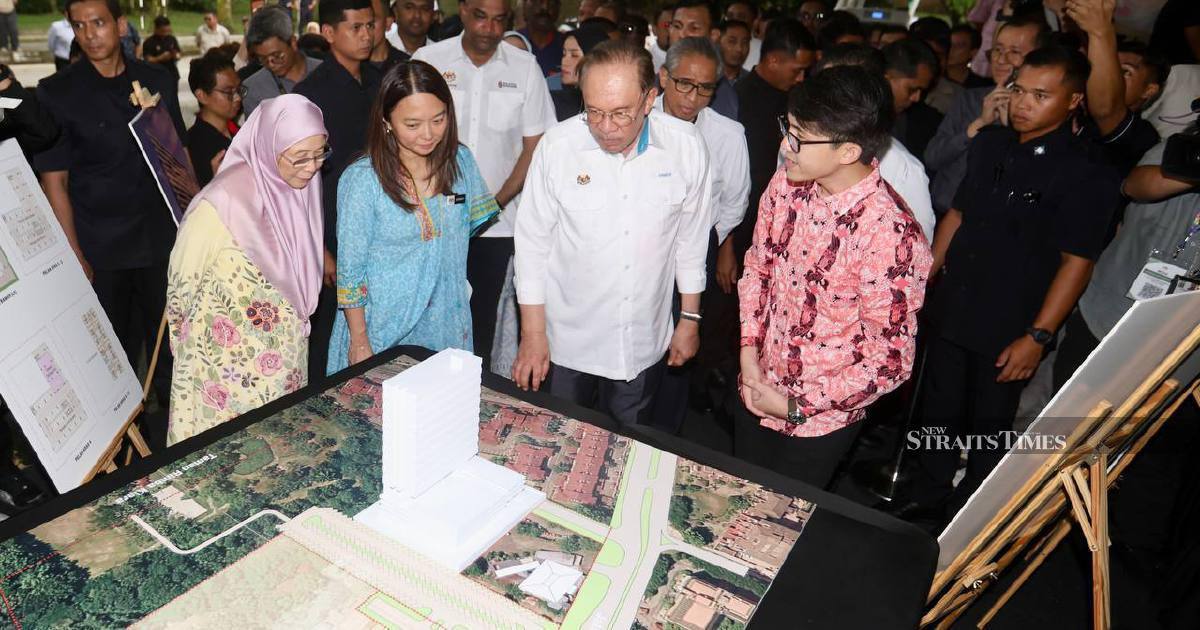
Prime Minister Datuk Seri Anwar Ibrahim has pushed back against criticism that Malaysia's development initiatives marginalise the urban poor, asserting that his administration maintains a steadfast commitment to protecting their fundamental rights and improving their quality of life. In remarks addressing mounting concerns about displacement and inequality in rapid urbanisation, Anwar emphasised that the government's policy framework explicitly safeguards vulnerable communities whilst pursuing infrastructure and economic advancement across the nation.
The Bukit Kiara project has become a focal point in this debate, with Anwar positioning it as tangible evidence of the government's dedication to balancing development with social responsibility. The initiative represents a broader commitment to ensuring that the urban poor are not merely acknowledged in policy documents but meaningfully included in the benefits that come from modernisation and urban renewal. This framing reflects a calculated political response to growing grassroots anxiety about whose interests are truly served when major development projects reshape neighbourhoods and city landscapes.
Malaysia's urban poor populations face mounting pressures from rising living costs, housing shortages, and competition for limited social services. For years, rapid development has often been accompanied by concerns that lower-income communities are displaced without adequate compensation or alternative provisions. Anwar's emphatic statements signal an attempt to recalibrate public perception of how federal policy weighs development against the needs of Malaysia's most economically vulnerable citizens.
The Bukit Kiara project serves multiple purposes in this political messaging. Beyond its immediate infrastructural value, it functions as a symbol of the government's willingness to act decisively on urban development whilst simultaneously protecting residents' interests. By highlighting this specific initiative, Anwar appeals to communities concerned about their future whilst also demonstrating to the business and development sectors that progress can proceed without abandoning social safeguards.
Context matters significantly here. Malaysia's urban areas have experienced considerable transformation over recent decades, with mixed results for lower-income residents. While some communities have benefited from improved infrastructure and economic opportunities, others have experienced displacement, rising rents, and erosion of traditional community structures. The government faces genuine pressure to demonstrate that development policies serve broad-based interests rather than narrow commercial or elite concerns.
Anwar's intervention reflects awareness that urban poor communities represent a substantial voting bloc with legitimate grievances. Political leaders cannot afford to be seen as indifferent to their concerns, particularly as inflation and cost-of-living pressures intensify across Malaysia. By publicly reaffirming commitments to this demographic, the government signals that it has internalised criticism about past development patterns and is course-correcting toward more inclusive approaches.
The specific mechanisms through which the Bukit Kiara project protects urban poor rights remain important to examine. Whether protections involve compensation schemes, relocation assistance, priority access to development benefits, or other measures will determine the project's actual impact on vulnerable populations. The credibility of Anwar's assurances rests ultimately on whether announced protections translate into concrete improvements in living standards and economic security for affected residents.
Regionally, Malaysia's approach carries implications for other Southeast Asian nations grappling with similar urbanisation challenges. As cities across the region expand rapidly, questions about equitable development become increasingly urgent. Malaysia's policy positions, when effectively implemented, can serve as models for governments balancing growth with social equity. Conversely, failure to deliver on commitments would reinforce scepticism about whether development-focused governments genuinely prioritise vulnerable populations.
The government's messaging strategy also reflects broader global discourse about inclusive development. International development agencies and civil society organisations have increasingly emphasised that sustainable urbanisation requires protecting and integrating lower-income communities rather than displacing them. Anwar's public emphasis on urban poor rights aligns Malaysia's rhetoric with these international standards, potentially enhancing the country's reputation for responsible governance.
Moving forward, the government faces the challenge of translating rhetorical commitments into measurable outcomes. Urban poor communities will assess whether Bukit Kiara and similar projects actually improve their economic circumstances, housing security, and access to quality services. Long-term political credibility depends on demonstrated success in executing these initiatives rather than merely announcing them. For Malaysia's urban vulnerable populations, the true test lies not in government statements but in whether their lived conditions genuinely improve as promised development proceeds across the nation's cities.


%22%2F%3E%3C%2Fpattern%3E%3C%2Fdefs%3E%3Crect%20width%3D%22100%25%22%20height%3D%22100%25%22%20fill%3D%22url(%23ph2hy9vg)%22%2F%3E%3Crect%20width%3D%22100%25%22%20height%3D%22100%25%22%20fill%3D%22url(%23ph2hy9vp)%22%2F%3E%3Ctext%20x%3D%2250%25%22%20y%3D%2250%25%22%20text-anchor%3D%22middle%22%20dominant-baseline%3D%22central%22%20fill%3D%22rgba(255%2C255%2C255%2C0.95)%22%20font-family%3D%22Georgia%2C%20'Times%20New%20Roman'%2C%20serif%22%20font-weight%3D%22700%22%20font-size%3D%22272%22%20letter-spacing%3D%22-0.02em%22%3EAnwar%3C%2Ftext%3E%3C%2Fsvg%3E)