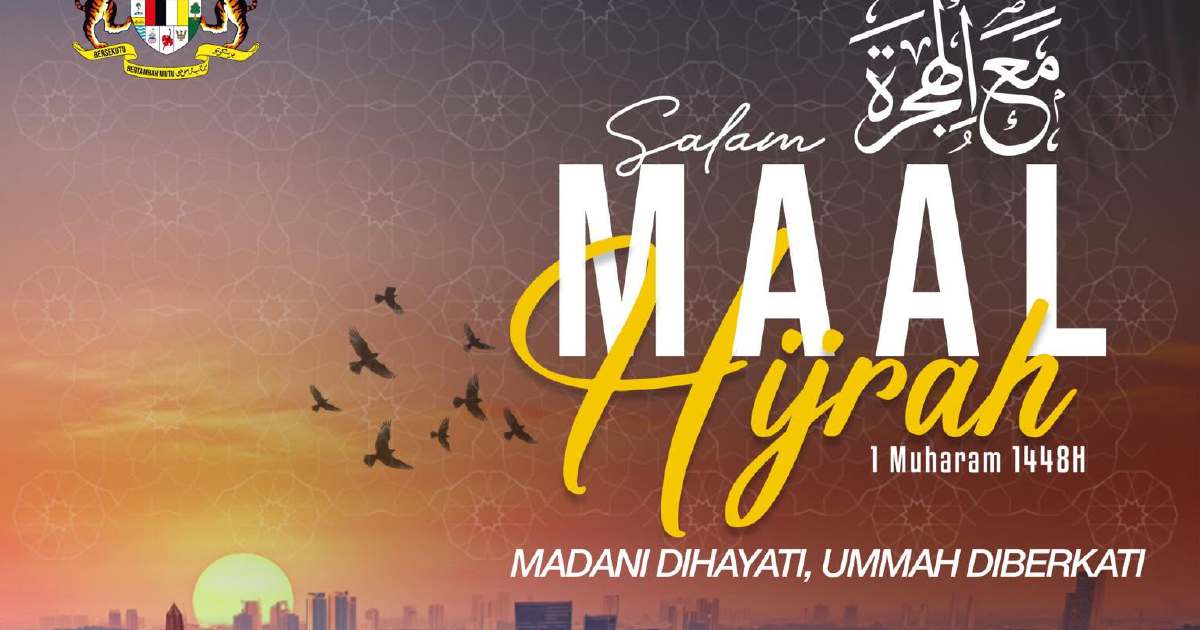
Prime Minister Datuk Seri Anwar Ibrahim has renewed his call for Malaysians across all communities to embrace the foundational principles embodied in the concept of Hijrah, positioning the spiritual and moral migration as a framework for addressing contemporary national challenges. The Premier's appeal extends beyond religious interpretation to encompass broader ideals of truth-seeking, economic advancement, and the establishment of secure living conditions as universal aspirations that transcend sectarian boundaries.
The invocation of Hijrah as a rallying concept represents a significant rhetorical shift in how Malaysia's leadership frames national development. Historically, the term has carried predominantly Islamic connotations, yet Anwar's framing suggests an attempt to recontextualise it as a unifying principle applicable to the nation's plural society. By emphasising truth, prosperity, and security—values with secular resonance—the Prime Minister appears to be crafting a narrative that bridges religious and civic responsibilities within the Malaysian framework.
For Malaysian readers familiar with the political landscape, this messaging carries particular weight given Anwar's long history navigating Islamic discourse within a multi-religious nation. His tenure as Minister of Agriculture and Prime Minister has consistently reflected attempts to ground policy discussions in values that hold meaning across religious and ethnic communities. The emphasis on truth resonates especially at a moment when Malaysian public discourse has grappled with misinformation, polarisation, and questions about institutional accountability.
The prosperity dimension addresses Malaysia's ongoing economic concerns. Following years of pandemic disruption, inflationary pressures, and global economic headwinds, the nation has faced stagnant wage growth and rising cost of living. By anchoring prosperity within a Hijrah framework, Anwar connects economic recovery to deeper moral and spiritual foundations rather than presenting it purely as a technical policy challenge. This approach acknowledges that Malaysians increasingly seek meaning and purpose alongside material improvement.
Security, the third pillar in Anwar's invocation, encompasses both physical safety and the broader sense of social stability that underpins economic activity and community trust. Malaysia has experienced periodic concerns regarding crime rates, communal tensions, and cybersecurity threats. The inclusion of security within the Hijrah concept suggests that the Prime Minister views comprehensive national safety as inseparable from spiritual and moral renewal.
The timing of this appeal warrants consideration within Malaysia's current political context. The nation continues consolidating its governance following the formation of the Unity Government in late 2022, an arrangement that required significant cooperation across previously opposed political blocs. The fragility of these arrangements underscores the need for overarching principles that might bind diverse political and social interests together. By framing national purpose through Hijrah—a concept with deep resonance in Malaysian Islamic tradition—Anwar may be seeking to transcend partisan divisions and appeal to fundamental national values.
For regional observers, Anwar's messaging also carries significance in how Malaysia positions itself within Southeast Asia. The region contains diverse Islamic communities alongside other religious populations, and Malaysia's approach to navigating religious identity and national identity influences regional dynamics. An inclusive interpretation of Islamic concepts, when articulated by a Prime Minister, shapes how neighbouring nations and international observers perceive Malaysia's commitment to religious pluralism and secular governance.
The invocation of Hijrah also addresses generational concerns within Malaysian society. Younger Malaysians, particularly those concerned with social justice, economic opportunity, and institutional integrity, have expressed growing frustration with political gridlock and perceived corruption. The appeal to truth-seeking echoes their demands for transparency and accountability, while the emphasis on prosperity addresses their material aspirations. By channelling these concerns through a framework rooted in Islamic heritage, Anwar attempts to validate these aspirations within a culturally resonant language.
Implementing this vision presents practical challenges. While rhetorical appeals to shared values carry symbolic weight, translating them into concrete governance outcomes requires sustained policy focus. Truth requires independent institutions and freedom of information; prosperity demands sound economic management, infrastructure investment, and human capital development; security necessitates effective law enforcement, judicial independence, and community cohesion programmes. The gap between inspiring rhetoric and institutional delivery represents a persistent challenge for Malaysian governance.
The reception of Anwar's Hijrah appeal across Malaysia's diverse communities will likely vary. While many Muslims may find the concept spiritually compelling, non-Muslim Malaysians may require clearer articulation of how Islamic-rooted concepts translate into inclusive policy frameworks that protect minority interests and recognise plural pathways to truth, prosperity, and security. The Prime Minister's challenge lies in maintaining this concept's mobilising power while ensuring it genuinely reflects Malaysia's multicultural reality rather than functioning as coded language for majoritarian interests.
Moving forward, observers will assess whether Anwar's Hijrah appeal functions primarily as inspirational messaging or whether it catalyses substantive institutional reform. Malaysia's success in addressing corruption, strengthening the rule of law, reducing inequality, and enhancing public safety will ultimately determine whether this spiritual and moral framework translates into the concrete improvements Malaysians seek. The nation's trajectory in the coming years will reveal whether Hijrah becomes a guiding principle for genuine national transformation or remains a rhetorical gesture in Malaysia's ongoing journey toward inclusive development.

%22%2F%3E%3C%2Fpattern%3E%3C%2Fdefs%3E%3Crect%20width%3D%22100%25%22%20height%3D%22100%25%22%20fill%3D%22url(%23ph2hy9vg)%22%2F%3E%3Crect%20width%3D%22100%25%22%20height%3D%22100%25%22%20fill%3D%22url(%23ph2hy9vp)%22%2F%3E%3Ctext%20x%3D%2250%25%22%20y%3D%2250%25%22%20text-anchor%3D%22middle%22%20dominant-baseline%3D%22central%22%20fill%3D%22rgba(255%2C255%2C255%2C0.95)%22%20font-family%3D%22Georgia%2C%20'Times%20New%20Roman'%2C%20serif%22%20font-weight%3D%22700%22%20font-size%3D%22272%22%20letter-spacing%3D%22-0.02em%22%3EAnwar%3C%2Ftext%3E%3C%2Fsvg%3E)