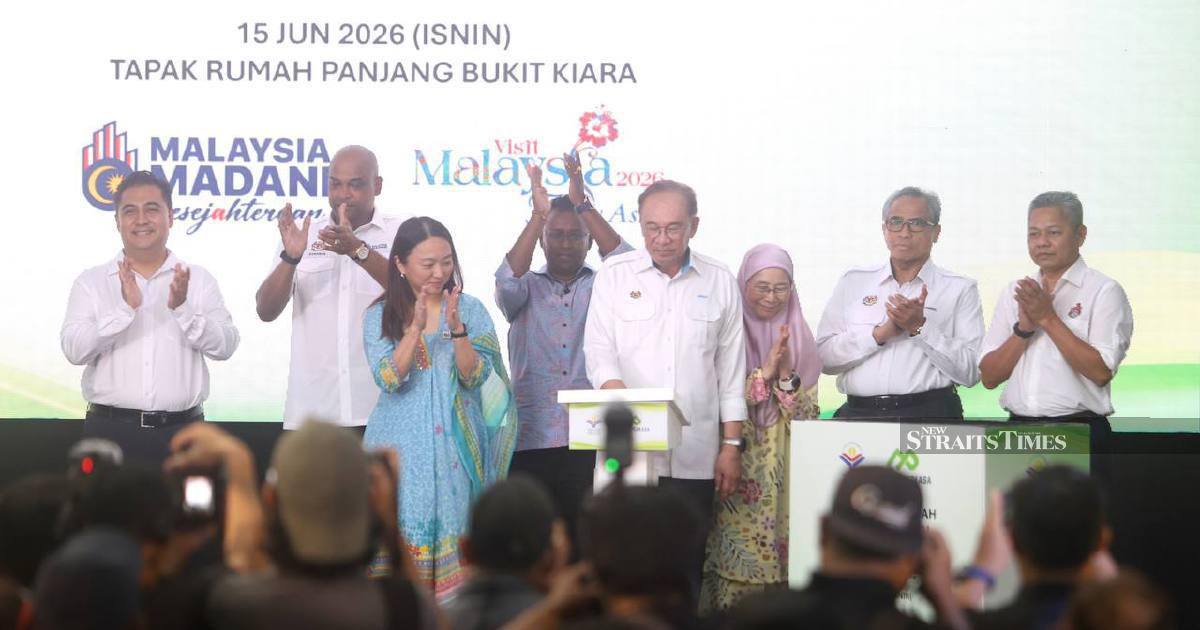
Prime Minister Datuk Seri Anwar Ibrahim has issued a fresh warning about the dangers of racially charged political messaging, urging the Malaysian public to resist campaigns that seek to fracture the country's fragile multicultural consensus. Speaking from Kuala Lumpur, the Prime Minister emphasised that divisive rhetoric targeting specific ethnic communities carries tangible social costs that extend far beyond the political arena in which such tensions are deliberately cultivated.
Anwar's intervention reflects an ongoing preoccupation within Malaysia's political establishment with the persistent temptation among certain factions to mobilise voters through appeals to communal identity rather than programmatic governance. The Prime Minister's stance signals an implicit critique of opposition politicians and hardline voices within ruling coalitions who periodically invoke sensitive racial matters to consolidate support among particular demographic constituencies. His comments underscore frustration within government circles at what officials view as irresponsible rhetoric that undermines national cohesion and social stability.
The remarks arrive amid a political landscape where identity-based messaging continues to shape electoral competition across Malaysia's diverse constituencies. Since independence, racial and religious divisions have periodically erupted into serious social conflict, creating deep institutional and psychological scars that remain relevant to contemporary politics. This historical backdrop means that contemporary leaders face considerable responsibility when discussing sensitive communal matters, a burden that Anwar appeared to emphasise in his latest intervention.
Anwar's warning carries particular weight given Malaysia's constitutional framework, which enshrines protections for Bumiputera rights and Islam's special position while simultaneously guaranteeing minority religious freedoms and non-Bumiputera economic participation. This delicate constitutional settlement has enabled decades of relative intercommunal peace, though it remains perpetually vulnerable to political actors who benefit from amplifying grievances. The Prime Minister's position suggests frustration that this hard-won equilibrium continues to face pressure from populist political movements.
For Malaysian voters, Anwar's exhortation implies a broader meditation on political responsibility and the collective consequences of individual voting choices. When citizens support candidates or parties that explicitly campaign on divisive racial platforms, the Prime Minister suggests, they indirectly contribute to a broader corrosion of social trust and communal harmony. This framing attempts to shift accountability from political leaders alone to the electorate, implying that voters bear responsibility for demanding ethical standards from their representatives.
The economic dimensions of racial division remain underexplored in Malaysia's political discourse but form an implicit backdrop to Anwar's concerns. When political tensions spike, foreign investor confidence often declines, commerce suffers disruption, and talented professionals increasingly emigrate seeking more stable environments. A middle-class professional encountering racial tensions may face reduced career opportunities or personal security concerns, while small business communities lose consumer purchasing power when communal relationships deteriorate. Anwar's warning gesture toward these tangible costs without always articulating them explicitly.
Regionally, Malaysia's experience carries lessons for Southeast Asian neighbours similarly navigating multiethnic governance in democratic contexts. Thailand's Buddhist majority has grappled with southern Muslim insurgency partly rooted in majority majoritarian impulses, while Indonesia faces persistent challenges managing Javanese-centric politics against regional aspirations. Singapore's model of strictly enforced multiculturalism through institutional design offers a contrasting approach. Malaysia's political leaders like Anwar occupy a middle position, appealing to voters' better instincts rather than implementing constitutional restrictions on political speech, making their rhetorical efforts crucial to maintaining stability.
Anwar's intervention also reflects broader concerns within his administration about maintaining the Pakatan Harapan coalition's electoral viability heading toward future elections. While the coalition contains significant non-Bumiputera support, its stability depends partly on retaining Bumiputera voters who might otherwise migrate toward more explicitly Bumiputera-centric alternatives. The Prime Minister's caution against divisive rhetoric thus serves a dual function, simultaneously advancing principled arguments about national harmony while consolidating his coalition's positioning as a responsible steward of Malaysia's constitutional settlement.
The challenge facing Anwar and similar moderate voices lies in achieving substantive policy victories that address genuine grievances within specific communities without triggering backlash from others. When government policies appear to favour particular groups, opposition politicians gain ammunition to claim discrimination, creating political incentives to amplify rather than dampen community sensitivities. Anwar's rhetorical approach attempts to create space for such differentiated policymaking while discouraging the inflammatory language that transforms legitimate policy disagreements into zero-sum ethnic conflicts.
Civil society organisations focusing on intercommunal dialogue have welcomed such statements from senior political figures, viewing them as essential counterweights to more inflammatory rhetoric emanating from various quarters. However, observers note that Prime Ministerial exhortations alone prove insufficient to arrest deepening polarisation absent concrete policy interventions addressing the economic anxieties and security concerns that fuel communal resentment. Anwar's words require reinforcement through institutional action, whether that involves reviewing divisive educational curricula, moderating inflammatory media coverage, or demonstrating equitable policy implementation across communities.
The sustainability of Anwar's moderate approach ultimately depends on the broader political environment and his administration's success in delivering tangible improvements in living standards, employment opportunities, and educational access across demographic boundaries. Should economic conditions deteriorate significantly or governance failures become apparent, the political incentive structures that currently reward divisive rhetoric could intensify despite Prime Ministerial warnings. Malaysia's multicultural stability thus remains contingent on material conditions and institutional performance rather than rhetorical appeals alone.

%22%2F%3E%3C%2Fpattern%3E%3C%2Fdefs%3E%3Crect%20width%3D%22100%25%22%20height%3D%22100%25%22%20fill%3D%22url(%23ph2hy9vg)%22%2F%3E%3Crect%20width%3D%22100%25%22%20height%3D%22100%25%22%20fill%3D%22url(%23ph2hy9vp)%22%2F%3E%3Ctext%20x%3D%2250%25%22%20y%3D%2250%25%22%20text-anchor%3D%22middle%22%20dominant-baseline%3D%22central%22%20fill%3D%22rgba(255%2C255%2C255%2C0.95)%22%20font-family%3D%22Georgia%2C%20'Times%20New%20Roman'%2C%20serif%22%20font-weight%3D%22700%22%20font-size%3D%22272%22%20letter-spacing%3D%22-0.02em%22%3EAnwar%3C%2Ftext%3E%3C%2Fsvg%3E)