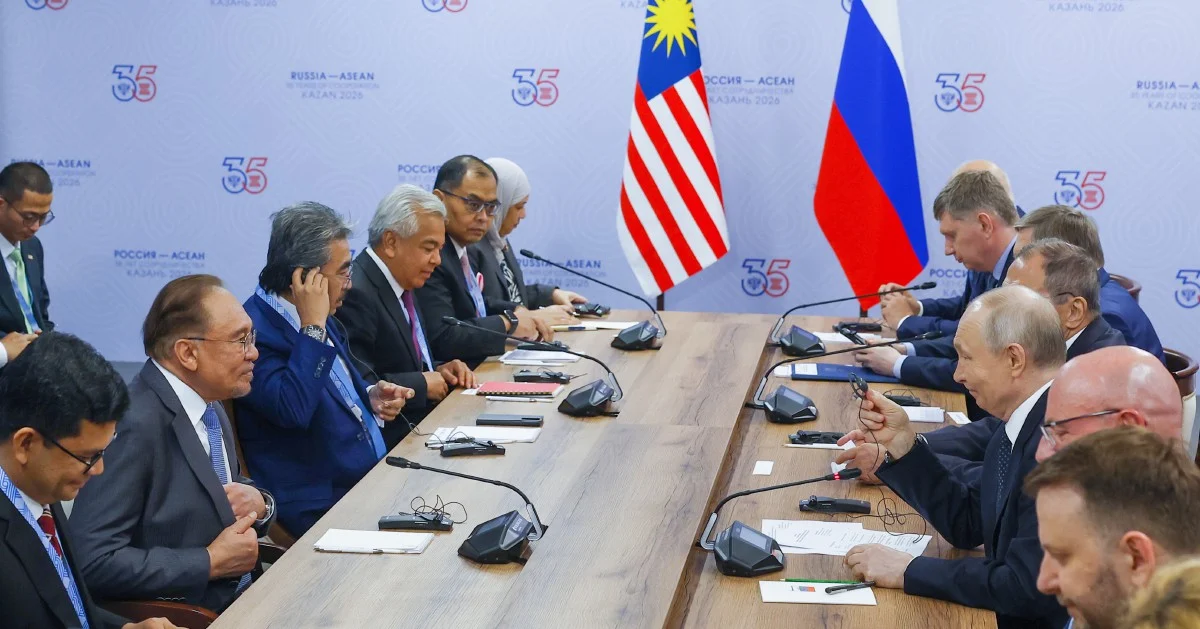
Prime Minister Datuk Seri Anwar Ibrahim has expressed his appreciation to Russian President Vladimir Putin for Russia's commitment to deepening energy cooperation with Malaysia, particularly through state-owned oil and gas giant Petroliam Nasional Bhd (Petronas). The acknowledgment came during high-level discussions that underscore the growing strategic importance both nations place on expanding their partnership in the hydrocarbon sector, a cornerstone of Malaysia's economic interests.
The exchange reflects a broader realignment in Malaysia's international energy diplomacy, as Kuala Lumpur seeks to diversify its partnerships beyond traditional Western markets and strengthen ties with key players in the Asia-Pacific and Eurasian regions. Energy cooperation has become increasingly central to Malaysia's foreign policy agenda, particularly given the country's significance as a major liquefied natural gas exporter and its continued reliance on hydrocarbons for fiscal revenues and economic growth.
Russia's endorsement of closer energy ties with Malaysia carries particular weight given Moscow's substantial influence in global energy markets and its experience in managing complex international oil and gas infrastructure projects. The backing signals Russian willingness to engage constructively with Southeast Asian nations on energy matters despite geopolitical tensions elsewhere, demonstrating that economic pragmatism can create avenues for cooperation even amid broader international friction.
For Petronas specifically, Russian support opens potential pathways for collaboration on liquefied natural gas projects, upstream exploration partnerships, and technology transfer arrangements that could enhance Malaysia's competitive position in global energy markets. The state-owned enterprise has long pursued international partnerships to maintain its technological edge and secure long-term market access, making Russian endorsement strategically valuable for its operational roadmap.
The timing of this diplomatic gesture carries implications for Malaysia's position within evolving geopolitical structures. By cultivating stronger ties with Russia in the energy sector, Malaysia reinforces its identity as a non-aligned nation capable of maintaining productive relationships across diverse international actors. This approach aligns with Malaysia's traditional foreign policy orientation of engaging multiple powers rather than locking into exclusive arrangements, a principle that has served the country well in navigating complex regional dynamics.
Energy cooperation between the two nations also offers benefits extending beyond commercial transactions. Joint ventures and technical partnerships could facilitate knowledge exchange, create employment opportunities for Malaysian professionals in the energy sector, and strengthen institutional connections between Malaysian and Russian companies. Such people-to-people linkages, forged through business relationships, contribute to broader cultural and diplomatic understanding.
Malaysia's energy sector faces mounting pressures to transition toward sustainability while maintaining economic viability, a tension that international partnerships can help navigate. Russian expertise in managing vast energy infrastructure and developing challenging reserves could prove valuable as Malaysia balances its hydrocarbon economy with growing pressures for environmental responsibility. Collaboration on research and development related to energy efficiency and carbon management might emerge as cooperation deepens.
The broader Southeast Asian context amplifies the significance of this energy diplomacy. Regional peers including Vietnam, Indonesia, and Thailand are similarly pursuing diversified energy partnerships, seeking to secure reliable supply chains and attract investment capital. Malaysia's success in engaging major energy powers like Russia enhances its standing within ASEAN as a nation capable of leveraging geopolitical opportunities for tangible economic benefit.
Russia's openness to supporting Malaysia's energy aspirations also reflects its own strategic calculus regarding Asia-Pacific engagement. As Western sanctions limit Russia's traditional European markets, developing robust energy relationships with Asian nations becomes increasingly critical for maintaining market share and geopolitical relevance. Malaysia, with its strategic location along major shipping routes and its position as an influential Southeast Asian voice, represents an valuable partner in Russia's broader pivot toward Asia.
The articulation of appreciation by Prime Minister Anwar demonstrates Malaysia's diplomatic sophistication in public acknowledgment of strategic partnerships. By publicly thanking Putin, Anwar signals to both domestic audiences and international observers that Malaysia values energy cooperation with Russia and intends to pursue it actively. Such public endorsements carry weight in international relations, establishing clear political support that facilitates business-level negotiations and institutional collaboration.
Looking forward, the energy cooperation framework between Malaysia and Russia is likely to evolve along multiple dimensions. Beyond oil and gas extraction and trade, opportunities may emerge in liquefied natural gas marketing arrangements, joint ventures in third-country energy projects, and participation in international energy governance institutions. The foundation laid through this diplomatic exchange creates space for expanding the relationship's scope and depth.
For Malaysian policymakers, maintaining Russia's constructive engagement serves long-term national interests by preserving optionality and preventing excessive dependence on any single set of partners. As global energy markets undergo structural transformation driven by technological change and climate considerations, Malaysia benefits from maintaining access to diverse perspectives and capabilities. Russia's technical expertise and market presence remain valuable assets in this evolving landscape.

%22%2F%3E%3C%2Fpattern%3E%3C%2Fdefs%3E%3Crect%20width%3D%22100%25%22%20height%3D%22100%25%22%20fill%3D%22url(%23ph2hy9vg)%22%2F%3E%3Crect%20width%3D%22100%25%22%20height%3D%22100%25%22%20fill%3D%22url(%23ph2hy9vp)%22%2F%3E%3Ctext%20x%3D%2250%25%22%20y%3D%2250%25%22%20text-anchor%3D%22middle%22%20dominant-baseline%3D%22central%22%20fill%3D%22rgba(255%2C255%2C255%2C0.95)%22%20font-family%3D%22Georgia%2C%20'Times%20New%20Roman'%2C%20serif%22%20font-weight%3D%22700%22%20font-size%3D%22272%22%20letter-spacing%3D%22-0.02em%22%3EAnwar%3C%2Ftext%3E%3C%2Fsvg%3E)