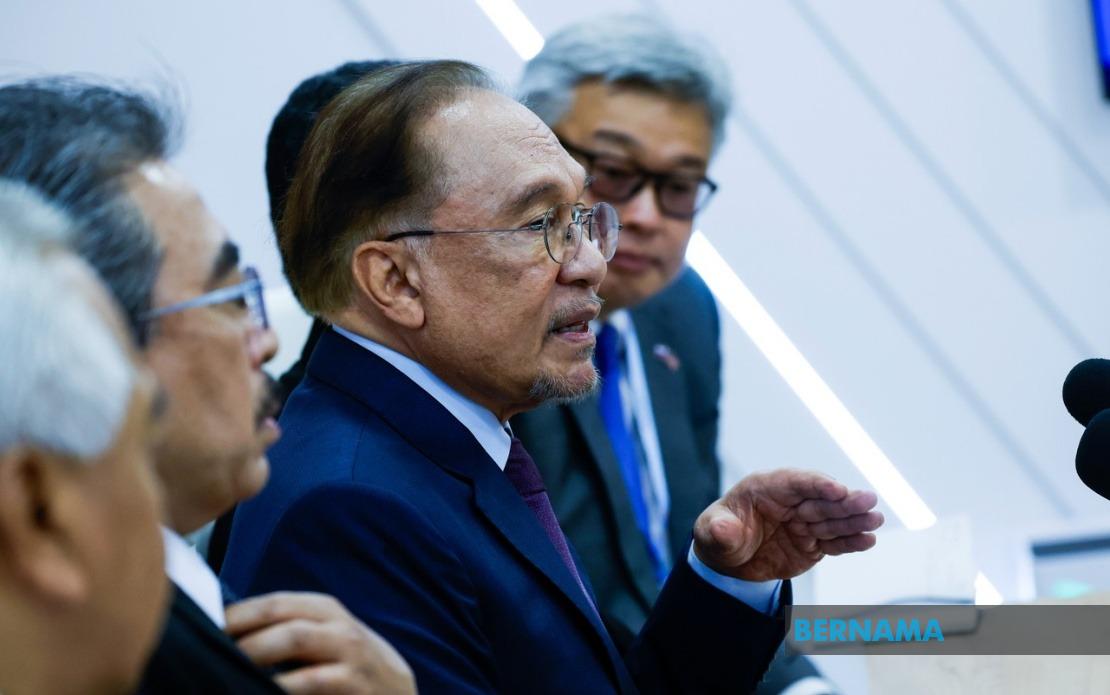
Prime Minister Datuk Seri Anwar Ibrahim has returned from Kazan with a substantial diplomatic achievement, having secured Russia's commitment to supply Malaysia with long-term petrol, oil, and gas arrangements that represent a marked departure from the country's previous reliance on shorter-term annual or seasonal supply agreements. The two-day working visit to the ASEAN-Russia Commemorative Summit culminated in both nations pledging to deepen cooperation across energy security, trade, investment, tourism, and technology sectors, positioning the bilateral relationship at a critical juncture amid regional economic recalibration.
The significance of the energy commitment lies not merely in securing supplies but in establishing structural frameworks that insulate Malaysia from volatile global energy markets. Rather than negotiating deals year-to-year or season-by-season, the long-term agreement framework promises stability and predictability—crucial factors as Malaysia navigates supply chain uncertainties exacerbated by geopolitical tensions and fluctuating commodity prices. Anwar indicated during his closing press conference that the groundwork for these arrangements had largely been completed, with company representatives already present in Kazan and draft agreements in final review stages awaiting formal signatures.
The specifics of implementation suggest the process is remarkably advanced. According to Anwar, the core principles underpinning the long-term energy cooperation have already secured approval, and the remaining work involves delegation review and contractual finalisation. Upon Malaysia's return, officials will accelerate completion of the formalities, a timeline that reflects both nations' mutual commitment to expediting the process. This pragmatic approach indicates that bureaucratic impediments have been largely resolved, leaving only the procedural mechanics of formal execution.
The energy collaboration extends beyond crude supply into more sophisticated sectors including downstream activities, refining, and petrochemicals. During bilateral discussions with Rais of the Republic of Tatarstan Rustam Minnikhanov, Anwar emphasised these downstream opportunities, recognising Tatarstan's significance as one of Russia's foremost oil-producing regions. This multifaceted approach to energy cooperation offers Malaysian interests opportunities to develop integrated energy value chains rather than remaining solely as import-dependent consumers, potentially yielding greater economic returns and technical expertise transfer.
The visit occurs against a backdrop of strategic energy diversification for Malaysia. The country is consciously seeking to broaden its energy supplier base and reduce dependence on traditional sources, responding to the unpredictable global landscape where geopolitical frictions, supply disruptions, and price volatility have become structural features rather than temporary anomalies. By cultivating deep energy partnerships with Russia—a major global supplier commanding substantial reserves—Malaysia diminishes its vulnerability to supply shocks emanating from regions prone to political instability.
Beyond energy, Anwar articulated a broader vision for Malaysia's international economic engagement, advocating for bolder and more proactive approaches toward emerging economic partners. He specifically cautioned against excessive caution constraining Malaysia's international economic relationships, suggesting that past conservatism may have cost the nation opportunities in dynamic markets. This philosophical reorientation carries implications for how Malaysia calibrates its economic statecraft, potentially signalling willingness to expand engagement with nations previously subject to regulatory or political hesitation.
Transportation infrastructure improvements featured prominently in discussions, with Anwar calling for visa-free travel arrangements and direct flight routes between Malaysia and Russia. These relatively modest initiatives address practical barriers to people-to-people exchange and tourism flows. Enhanced connectivity would facilitate business relationships, educational exchanges, and cultural understanding while boosting visitor arrivals to both nations. For Malaysia's tourism sector, accessing the substantial Russian travel market represents meaningful economic potential, particularly given the geographic distance that currently constrains interaction volumes.
At the regional level, the finalisation of the ASEAN-Russia Strategic Programme on Trade and Investment Cooperation 2026-2035 assumes considerable importance. This decade-long framework positions ASEAN as a collective entity strengthening institutional ties with Russia across multiple sectors, creating predictability for investors and traders spanning all ten member states. The 2024 trade figures—totalling US$18.1 billion between ASEAN and Russia, with Russian foreign direct investment reaching RM367.90 million—suggest existing engagement remains modest relative to potential, indicating substantial room for expansion through structured cooperation frameworks.
Malaysia's own bilateral trade with Russia, valued at RM8.72 billion in 2025, reflects the ninth-largest trading partnership among European nations, but relative rankings obscure absolute potential. Malaysian exports to Russia concentrate in electrical and electronic products, machinery, equipment, and processed foods—relatively mature product categories—while imports comprise petroleum products, minerals, and chemicals. This composition suggests deeper value-chain integration and technology partnership could unlock more sophisticated trade patterns and manufacturing opportunities.
Anwar's characterisation of cooperation potential as "enormous" extends across sectors including cybersecurity, agriculture, digital technology, scientific research, and higher education. The breadth of proposed collaboration indicates both nations perceive mutual advantage across diverse domains rather than viewing the relationship through a narrowly sectoral lens. This comprehensive approach to bilateral relations reduces vulnerability to fluctuations in single sectors and creates resilience through diversified interdependence.
The visit also touched on West Asian geopolitics, with Anwar expressing optimism that potential United States-Iran peace agreements could stabilise the region and improve regional security conditions. This perspective reflects Malaysia's traditional balancing role in regional affairs, seeking to encourage conflict de-escalation rather than alignment with particular power blocs. The connection between potential Middle Eastern peace and energy security is implicit but significant—regional stability directly influences oil market conditions and supply reliability affecting Malaysian interests.
Anwar's onward travel to Turkmenistan for a two-day official visit underscores that the Kazan visit represents one component of a broader Central Asian energy diplomacy campaign. Turkmenistan, possessing the world's fourth-largest natural gas reserves, represents an alternate energy partner offering complementary supply capabilities to those negotiated in Russia. This sequential approach to engagement suggests a deliberate strategy to develop multiple long-term energy relationships across the former Soviet space, creating resilient supply architectures unlikely to collapse should bilateral difficulties emerge with individual suppliers.
The overall diplomatic mission reflects Malaysia's recognition that energy security underpins economic development and geopolitical stability. By moving beyond transactional annual negotiations toward structural multi-year frameworks, Malaysia positions itself as a serious, long-term partner capable of supporting Russian producers' investment decisions and capacity planning. Simultaneously, Malaysia gains the counterparty reliability necessary for its own industrial planning and economic security, a mutually reinforcing arrangement that typically produces durable relationships less susceptible to political disruption than short-term contracts.

%22%2F%3E%3C%2Fpattern%3E%3C%2Fdefs%3E%3Crect%20width%3D%22100%25%22%20height%3D%22100%25%22%20fill%3D%22url(%23ph2hy9vg)%22%2F%3E%3Crect%20width%3D%22100%25%22%20height%3D%22100%25%22%20fill%3D%22url(%23ph2hy9vp)%22%2F%3E%3Ctext%20x%3D%2250%25%22%20y%3D%2250%25%22%20text-anchor%3D%22middle%22%20dominant-baseline%3D%22central%22%20fill%3D%22rgba(255%2C255%2C255%2C0.95)%22%20font-family%3D%22Georgia%2C%20'Times%20New%20Roman'%2C%20serif%22%20font-weight%3D%22700%22%20font-size%3D%22272%22%20letter-spacing%3D%22-0.02em%22%3EAnwar%3C%2Ftext%3E%3C%2Fsvg%3E)