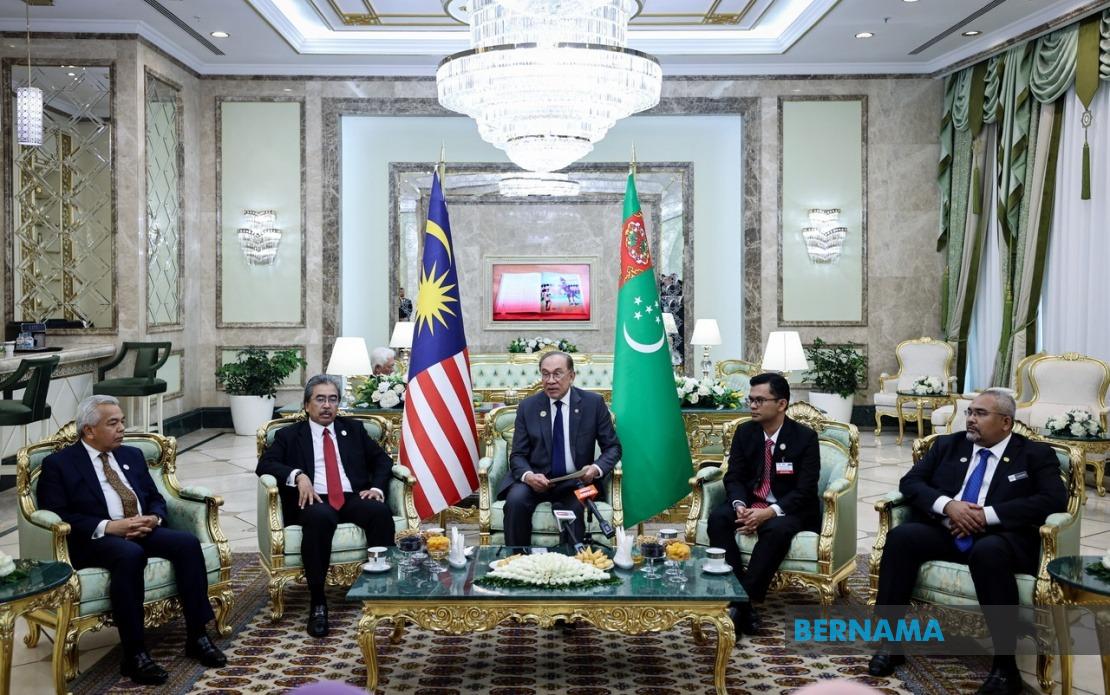
Prime Minister Datuk Seri Anwar Ibrahim has concluded his inaugural official visit to Turkmenistan since taking office as Malaysia's 10th prime minister, characterizing the two-day mission as instrumental in fortifying diplomatic relations and broadening the scope of strategic partnership between Kuala Lumpur and Ashgabat. The visit, which commenced on June 18 and concluded this week, took place at the personal invitation of Turkmenistan President Serdar Berdimuhamedov, underscoring the significance both nations place on deepening their engagement.
In reflecting on the visit's outcomes, Anwar emphasized that the delegation had successfully achieved its core objectives while simultaneously inaugurating what he termed a new chapter in bilateral cooperation. The timing of this first official visit carries particular weight, arriving nearly two years into his tenure as prime minister and signaling Malaysia's renewed focus on strengthening ties with Central Asian nations. This engagement reflects broader Malaysian foreign policy initiatives aimed at diversifying international partnerships beyond traditional Southeast Asian and Western spheres.
The energy sector emerged as a central pillar of discussions during the visit, with both delegations recognizing the substantial untapped potential for collaboration in this critical domain. Turkmenistan, home to some of the world's largest natural gas reserves, represents a strategic resource partner for Malaysia as the nation navigates evolving global energy markets and seeks to secure long-term supply diversification. The identification of energy cooperation as a primary area for expansion suggests concrete pathways toward potential joint ventures, technology partnerships, and infrastructure development initiatives that could benefit both economies.
Anwar's delegation comprised a carefully selected ministerial contingent reflecting Malaysia's multifaceted engagement approach. Minister of Investment, Trade and Industry Datuk Seri Johari Abdul Ghani's participation signals the commercial and investment dimensions of the visit, while Economy Minister Akmal Nasrullah Mohd Nasir's involvement underscores the macroeconomic implications of the bilateral relationship. The inclusion of officials from the Prime Minister's Office and Foreign Ministry, alongside representatives from PETRONAS, Malaysia's national oil and gas corporation, indicates that discussions traversed both governmental and corporate levels, potentially opening channels for direct business-to-business engagements.
PETRONAS's participation in the delegation warrants particular attention, given the national oil company's role as Malaysia's primary vehicle for international energy sector negotiations and investments. The presence of PETRONAS officials suggests that preliminary discussions regarding potential joint exploration, production, or trading arrangements may have taken place, though formal announcements regarding specific projects typically follow further technical and commercial evaluations. Such involvement reflects how Malaysia leverages state-owned enterprises to advance national economic interests in strategic sectors.
Turkmenistan's geographic positioning along historical Silk Road routes and its role as a bridge between Europe, Asia, and the Middle East makes it geopolitically significant for Malaysia's broader strategic outlook. Strengthening ties with Central Asian nations helps Malaysia maintain balanced relationships across different regions and reduces dependency on any single geographical sphere for critical resources and partnerships. This approach aligns with Malaysia's established diplomatic principle of maintaining equidistant and mutually beneficial relationships with diverse international partners.
The warm reception extended by President Serdar Berdimuhamedov and Turkmenistan's leadership demonstrates their receptiveness to elevated bilateral engagement with Malaysia. Anwar's public acknowledgment of this hospitality, conveyed through a Facebook post addressing both governments and supporting institutions, reflects the ceremonial importance such state visits carry in contemporary diplomacy. The explicit mention of security personnel and media representatives underscores how modern diplomatic missions require careful orchestration across multiple stakeholder groups to project national interests effectively.
For Malaysian stakeholders, the visit opens possibilities for enhanced commercial opportunities beyond energy. The broadening of bilateral cooperation across areas of mutual interest could eventually encompass trade in other sectors, educational exchanges, cultural cooperation, and people-to-people connectivity. Turkmenistan's developing economy may present opportunities for Malaysian companies in manufacturing, technology, and service sectors, while Malaysian expertise in financial services and regional commerce could support Turkmen economic diversification efforts.
The significance of this being Anwar's first official visit to Turkmenistan since becoming prime minister cannot be understated. High-level inaugural visits typically signal political commitment and prioritization, suggesting that Malaysia views Central Asian engagement as strategically important to its medium and long-term foreign policy trajectory. This positioning may influence how other Southeast Asian nations approach their own Central Asian diplomacy, potentially catalyzing increased regional engagement with the broader Asian continent.
Moving forward, the tangible outcomes of this visit will likely manifest in subsequent months through formal agreements, working group formations, and exploratory business missions. The opening of this new chapter, as Anwar described it, suggests that both governments have committed to translating diplomatic goodwill into concrete mechanisms for sustained cooperation. For Malaysia, such engagement with energy-rich Central Asian nations represents a prudent strategy for securing long-term resource security while simultaneously expanding the nation's diplomatic footprint and international influence.
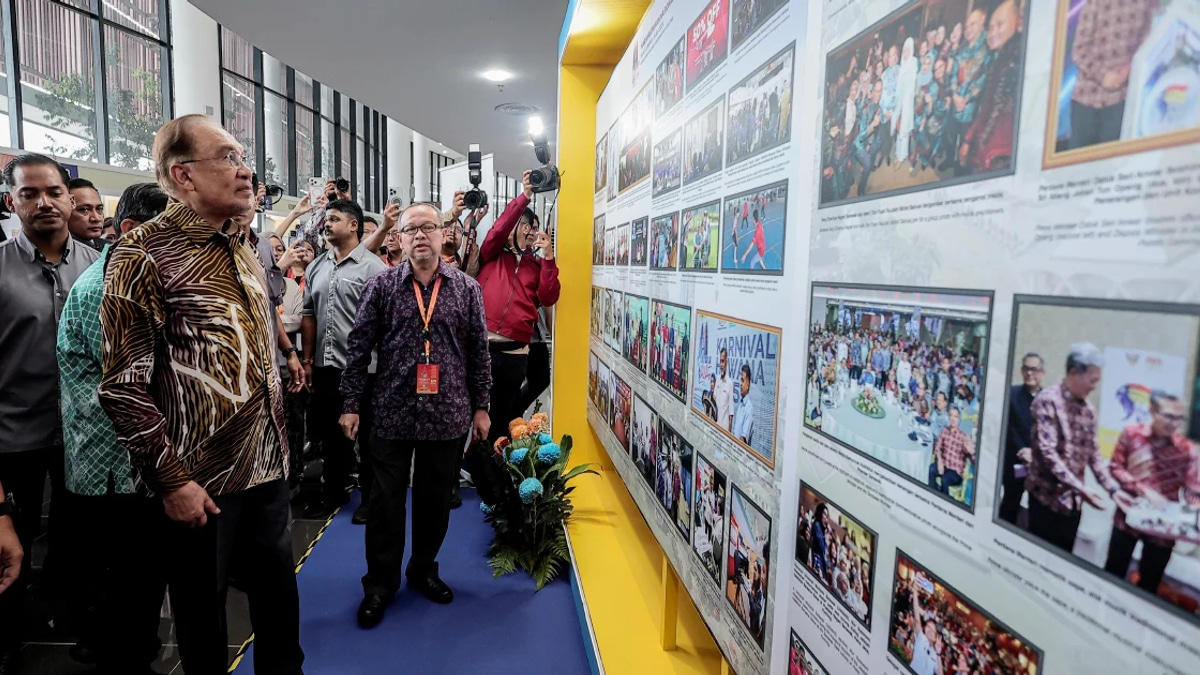

%22%2F%3E%3C%2Fpattern%3E%3C%2Fdefs%3E%3Crect%20width%3D%22100%25%22%20height%3D%22100%25%22%20fill%3D%22url(%23ph2hy9vg)%22%2F%3E%3Crect%20width%3D%22100%25%22%20height%3D%22100%25%22%20fill%3D%22url(%23ph2hy9vp)%22%2F%3E%3Ctext%20x%3D%2250%25%22%20y%3D%2250%25%22%20text-anchor%3D%22middle%22%20dominant-baseline%3D%22central%22%20fill%3D%22rgba(255%2C255%2C255%2C0.95)%22%20font-family%3D%22Georgia%2C%20'Times%20New%20Roman'%2C%20serif%22%20font-weight%3D%22700%22%20font-size%3D%22272%22%20letter-spacing%3D%22-0.02em%22%3EAnwar%3C%2Ftext%3E%3C%2Fsvg%3E)