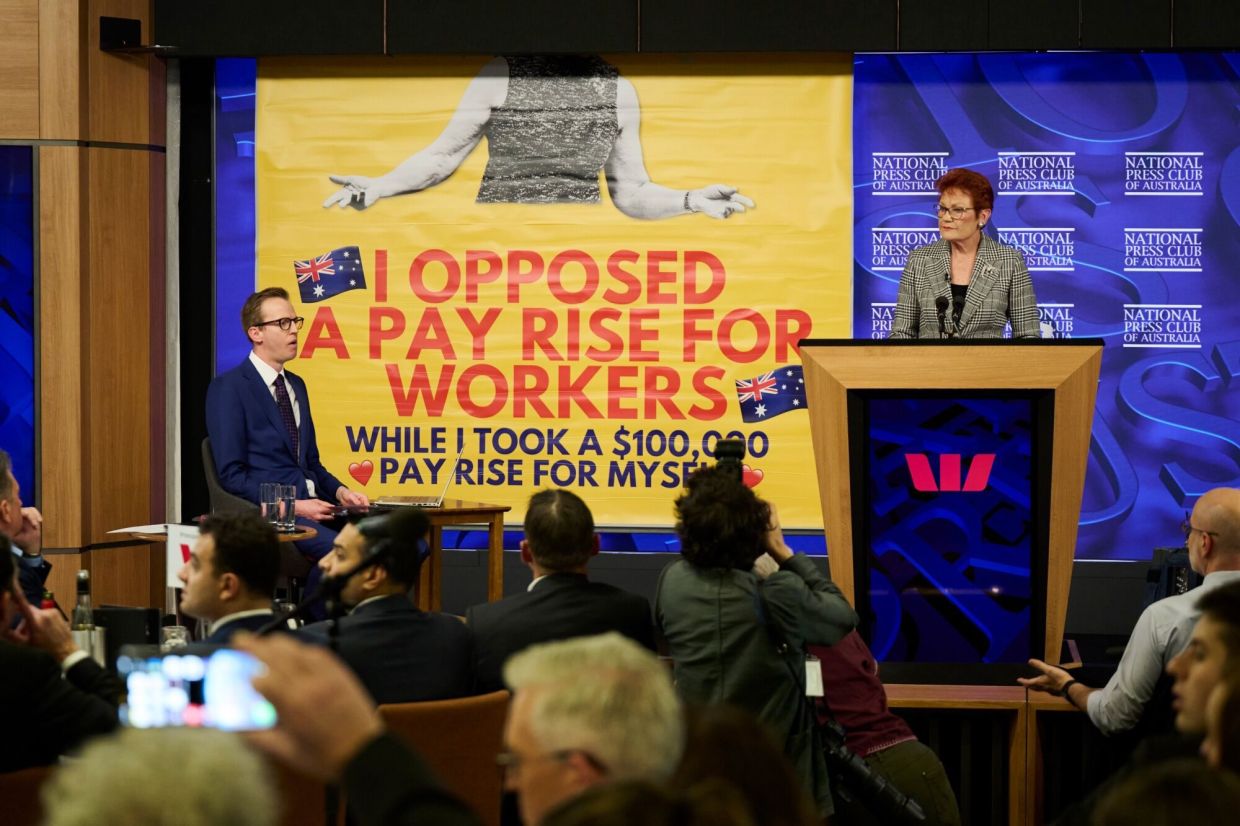
Pauline Hanson, the polarising leader of Australia's One Nation party, has made a bold statement challenging three decades of national multicultural policy by declaring that Australia must become a monocultural society. Speaking at the National Press Club in Canberra on Wednesday, Hanson articulated a vision of cultural homogeneity that starkly contrasts with the country's established approach to diversity and integration. Her remarks represent a significant moment in Australian political discourse, marking her first appearance at the prominent venue during her three-decade political career and underscoring the growing influence of her party's hardline positions.
The core of Hanson's argument centred on a fundamental distinction between race and culture. While acknowledging that Australia is and will remain a multiracial nation, she insisted that cultural unity represents an essential prerequisite for national cohesion. "We are a multiracial society, but we must be monocultural," she stated. "Australians must live under the one cultural umbrella." This framing attempts to distinguish her position from accusations of racial exclusion, instead positioning it as a matter of cultural integration and assimilation into what she presents as a unifying Australian identity.
Hanson directly attributed Australia's severe housing affordability crisis to what she characterised as excessive immigration levels. Rather than examining structural issues in the property market, supply constraints, or investment patterns that economists typically cite, she presented population growth through migration as the primary culprit driving housing unaffordability across major Australian cities. This narrative has resonated with voters struggling with skyrocketing property prices and rental costs, particularly younger Australians facing barriers to homeownership.
The speech also contained explicit references to religious and cultural concerns, with Hanson pledging to restrict entry to individuals originating from regions she described as "immersed in extremism like radical Islam." This language reflects broader anxieties about religious diversity and security that have periodically surfaced in Australian political debates, though such formulations have been criticised by civil liberties advocates and multiculturalism proponents as discriminatory and counterproductive to integration.
One Nation's electoral surge represents a significant political development in Australia. The party has experienced accelerating momentum in opinion polling over the preceding twelve months, with particular gains following the collapse of voter support for the centre-right Coalition government in May of the previous year. This trajectory indicates substantial dissatisfaction with the major parties and their approaches to economic management and social policy among segments of the Australian electorate.
The timing of Hanson's speech coincided with acute economic pressures affecting Australian households. Persistent inflation, climbing interest rates, and dramatically elevated fuel costs—exacerbated by geopolitical tensions involving Iran—have created a environment of financial stress for many Australians. One Nation has effectively channelled this discontent into support, with Hanson herself attributing these challenges to immigration policy and the costs associated with green energy initiatives. This framing provides simple explanations for complex economic phenomena, offering voters identifiable targets for their economic frustration.
Prime Minister Anthony Albanese's Labor government has attempted to address some of these immediate pressures through targeted interventions. The administration implemented a temporary reduction in fuel excise to provide relief at the petrol pump and has pursued broader tax reform initiatives intended to improve housing affordability. These measures reflect an acknowledgment that economic conditions have deteriorated sufficiently to require government action, though debate continues regarding their adequacy and effectiveness.
Albanese has explicitly diagnosed the political challenge confronting his government as stemming from underlying economic dysfunction. He has characterised the rise of populism and what he terms "simplistic grievance-based politics" as symptomatic responses to an economy that has ceased delivering broadly distributed prosperity and security. This analysis suggests that One Nation's ascendancy reflects not merely cultural resentment but deeper structural economic dissatisfaction among voters who perceive themselves as disadvantaged by prevailing conditions.
For Southeast Asian observers, Hanson's monocultural prescription carries particular significance given the region's own diversity and the substantial Australian presence across Malaysia, Singapore, and neighbouring countries. Australia's historical trajectory toward multiculturalism has positioned it as a regional model for managing diversity, and any sustained movement away from this approach would signal shifting attitudes toward cross-cultural engagement. The economic grievances underpinning One Nation's rise—housing affordability, cost of living pressures, wage stagnation—also resonate across the region, suggesting that populist movements employing similar strategies may find receptive audiences elsewhere in Asia-Pacific.
The substance of Hanson's multiculturalism critique merits scrutiny. Academics and policy analysts have consistently demonstrated that multicultural societies can and do function effectively when appropriate integration frameworks exist. The conflation of multiculturalism with inadequate housing supply represents a logical leap unsupported by comparative evidence, as numerous monocultural societies face identical affordability challenges. Nevertheless, the emotional resonance of her message among voters experiencing genuine hardship demonstrates the political potency of narratives attributing complex problems to identifiable external sources.
The contrast between Hanson's prescriptive approach and Albanese's diagnostic framework highlights a fundamental political debate occurring in Australia. Where One Nation offers cultural homogenisation as a remedy for economic dysfunction, the Labor government maintains that structural economic reforms represent the appropriate response. The outcome of this contest will shape not only Australian policy but may also influence regional discussions about immigration, integration, and the relationship between cultural diversity and economic prosperity across Southeast Asia.

%22%2F%3E%3C%2Fpattern%3E%3C%2Fdefs%3E%3Crect%20width%3D%22100%25%22%20height%3D%22100%25%22%20fill%3D%22url(%23ph2hy9vg)%22%2F%3E%3Crect%20width%3D%22100%25%22%20height%3D%22100%25%22%20fill%3D%22url(%23ph2hy9vp)%22%2F%3E%3Ctext%20x%3D%2250%25%22%20y%3D%2250%25%22%20text-anchor%3D%22middle%22%20dominant-baseline%3D%22central%22%20fill%3D%22rgba(255%2C255%2C255%2C0.95)%22%20font-family%3D%22Georgia%2C%20'Times%20New%20Roman'%2C%20serif%22%20font-weight%3D%22700%22%20font-size%3D%22272%22%20letter-spacing%3D%22-0.02em%22%3EAnwar%3C%2Ftext%3E%3C%2Fsvg%3E)