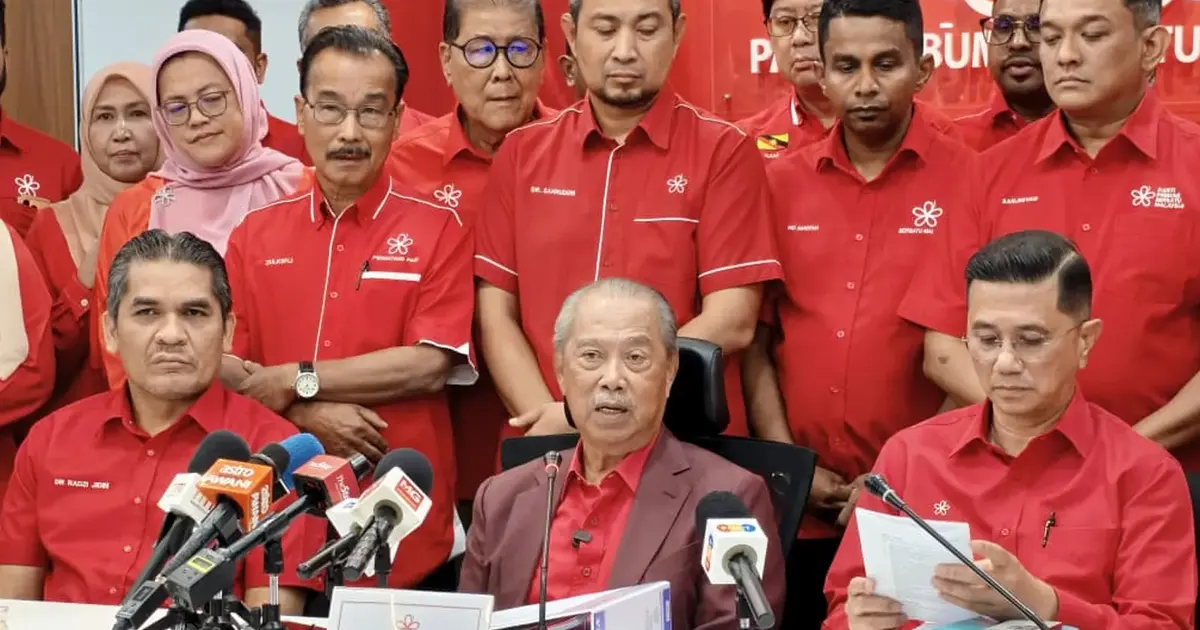
Bersatu has reinforced its position as a core member of the Perikatan Nasional (PN) coalition, with party president Muhyiddin Yassin declaring that the party intends to maintain its partnership within the alliance. The announcement comes as Malaysia's political landscape continues to experience shifts and realignments, with various coalition partners reassessing their strategic positions.
Muhyiddin's statement anchors Bersatu's continued participation in PN on what he describes as grassroots acceptance of the coalition among the general public. This framing is significant, as it suggests that the party leadership views public sentiment as a primary justification for remaining within the broader political structure rather than pursuing alternative alliances or configurations.
The Perikatan Nasional coalition, which emerged as a significant political force in recent years, brings together multiple parties with differing ideological orientations. Bersatu's sustained presence within this framework indicates that party leadership believes the coalition offers the most viable pathway for achieving its political and policy objectives in the current climate.
For Malaysian observers, Bersatu's confirmation of loyalty to PN carries implications for the stability of federal politics. Coalition stability depends heavily on member parties maintaining their commitments, particularly larger components with substantial parliamentary representation. Any departure by Bersatu would necessarily recalibrate the balance of power in Parliament and influence negotiations over key legislative priorities.
The statement also reflects underlying calculations about electoral prospects and governance capabilities. Political coalitions in Malaysia are typically formed around shared interests or complementary constituencies, and Bersatu's assessment appears to be that PN remains the configuration most likely to serve its members' interests going forward. This calculus can shift rapidly if circumstances change, including shifts in public opinion, internal party dynamics, or broader political developments.
Muhyiddin's emphasis on public acceptance warrants closer examination, particularly given the volatile nature of Malaysian political preferences. Public opinion polling has historically shown significant variation depending on methodology, timing, and the specific issues being measured. The party president's confidence in claiming public support for PN's continued operation suggests internal polling or feedback mechanisms informing this assessment.
Regionally, Bersatu's commitment to PN contributes to a broader picture of Southeast Asian coalition politics, where parties regularly negotiate complex multi-partner arrangements. Malaysia's experience with coalition governance offers lessons for neighbouring countries grappling with similar complexity, particularly regarding how parties balance ideological consistency with pragmatic coalition management.
The broader political context includes ongoing debates over governance, economic policy, and institutional reform. Bersatu's sustained engagement within PN suggests the party believes it can advance its agenda more effectively within this alliance than through alternative arrangements. This includes influence over cabinet positions, legislative priorities, and administrative appointments.
Tensions within multi-party coalitions are commonplace, and PN has experienced internal disagreements on various policy matters and strategic decisions. Bersatu's reaffirmation indicates that despite any such disagreements, the party leadership views the benefits of continued membership as outweighing the costs of potential withdrawal or realignment.
For Malaysian voters and observers tracking political developments, clarity on coalition commitments matters considerably. Electoral campaigns and policy debates function more coherently when voters understand which parties will likely govern together and what policy platforms they collectively represent. Bersatu's statement provides some clarity on this front, at least for the immediate political cycle.
The economic dimensions of coalition participation should not be overlooked. Control over government spending, development projects, and ministerial portfolios carries tangible financial implications for parties and their supporters. Bersatu's continued involvement in PN ensures the party maintains access to such resources and decision-making power.
Looking forward, Bersatu's commitment to PN appears conditional on continued public acceptance, as Muhyiddin framed it. This suggests the party retains the flexibility to reassess its position should public sentiment shift substantially or should internal coalition dynamics deteriorate to the point where the alliance becomes untenable. Political commitments in Malaysia are generally contingent on circumstances, and all major parties maintain the implicit option of reconsidering alignments if conditions warrant.
The statement ultimately reflects the complexity of modern Malaysian politics, where stable governance requires multiple parties to manage competing interests while maintaining sufficient unity to function effectively in Parliament and at state levels. Bersatu's reaffirmation of its PN membership is one piece in this larger puzzle, signalling to coalition partners, potential rivals, and the electorate that the party sees value in its current political positioning.


%22%2F%3E%3C%2Fpattern%3E%3C%2Fdefs%3E%3Crect%20width%3D%22100%25%22%20height%3D%22100%25%22%20fill%3D%22url(%23ph2hy9vg)%22%2F%3E%3Crect%20width%3D%22100%25%22%20height%3D%22100%25%22%20fill%3D%22url(%23ph2hy9vp)%22%2F%3E%3Ctext%20x%3D%2250%25%22%20y%3D%2250%25%22%20text-anchor%3D%22middle%22%20dominant-baseline%3D%22central%22%20fill%3D%22rgba(255%2C255%2C255%2C0.95)%22%20font-family%3D%22Georgia%2C%20'Times%20New%20Roman'%2C%20serif%22%20font-weight%3D%22700%22%20font-size%3D%22272%22%20letter-spacing%3D%22-0.02em%22%3EAnwar%3C%2Ftext%3E%3C%2Fsvg%3E)