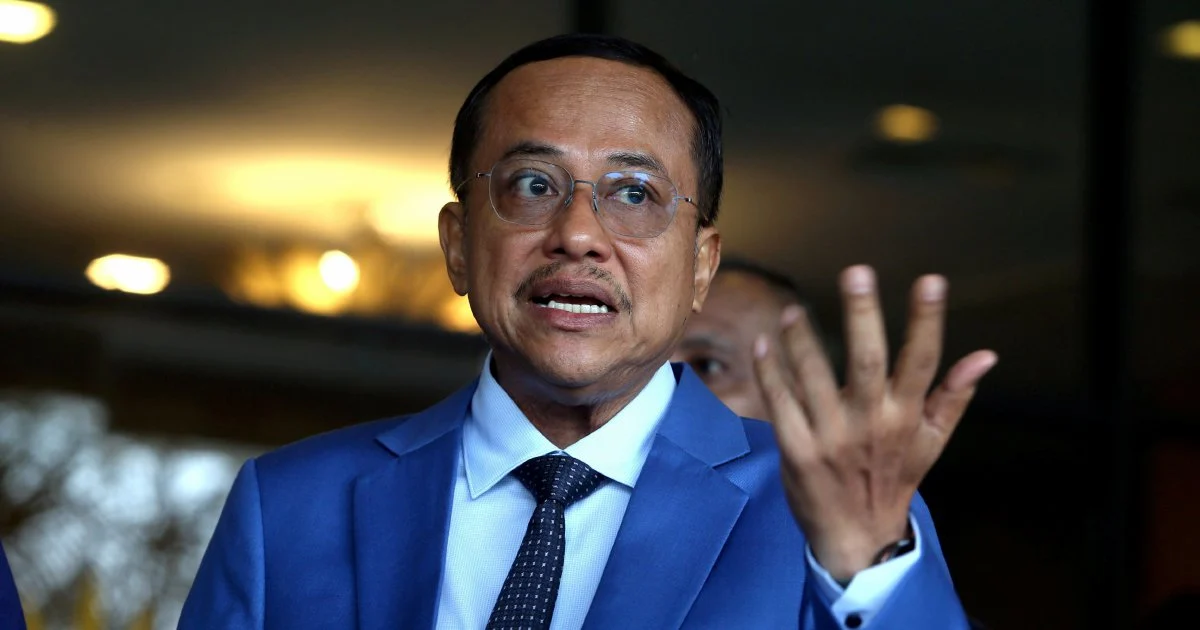
The Perikatan Nasional coalition faces renewed internal tensions as Bersatu escalates criticism of its chairman's stewardship during a period of significant strain within the opposition bloc. Datuk Tun Faisal Ismail Aziz, speaking in his capacity as Bersatu's information chief, has levelled serious allegations at Datuk Seri Dr Ahmad Samsuri Mokhtar regarding his performance as coalition leader, suggesting a fundamental misunderstanding or deliberate neglect of his responsibilities to the broader PN framework.
The timing of this public rebuke underscores deepening fractures within the opposition alliance at a moment when internal cohesion would typically be prized. By openly questioning whether the PN chairman has lost sight of his mandate to oversee the coalition's interests, Bersatu has signalled that patience with existing leadership is wearing thin. The accusation that Samsuri appears to have conflated his role as PN chairman with his position within Pas—his original party—suggests that coalition decision-making may be skewed toward individual party interests rather than the collective good of the opposition partnership.
This dispute carries particular significance for Malaysia's political landscape, where opposition coalitions have historically struggled to maintain unity. Perikatan Nasional represents one of two major opposition groupings, competing with Pakatan Harapan for the authority to present a credible alternative government. Internal divisions of this nature risk undermining PN's electoral prospects and its ability to function as a coherent political force in parliamentary dynamics. When coalition partners resort to public accusations of incompetence, the underlying institutional weakness becomes visible to voters and potential allies alike.
For Malaysian observers, the trajectory of this conflict matters considerably. Opposition strength often depends on demonstrated capability to manage internal differences discreetly while presenting unified policy positions externally. The fact that Bersatu's information chief felt compelled to air grievances publicly rather than resolve them through private channels indicates that conventional dispute-resolution mechanisms within PN may have broken down or proved ineffective. This could suggest either a genuine crisis of leadership or a calculated move by Bersatu to position itself as the more serious custodian of coalition responsibilities.
The characterisation of Samsuri's leadership as "irresponsible" represents a sharp escalation in rhetoric. Information chiefs do not typically deploy such language without approval from party higher-ups, meaning Bersatu's leadership has chosen this moment to apply pressure on the coalition chairman. The specific accusation—that he has neglected his duty to act in capacity as coalition chief—is less about personality and more about structural failure. If the PN chairman is perceived as prioritising Pas's internal matters over coalition governance, then the coalition itself becomes subordinate to individual parties, a state of affairs that weakens collective decision-making.
Southeast Asian political analysts recognise patterns in such coalitional stress. When smaller partners within alliances begin publicly attacking the chairman, it often signals a broader competition for influence within the bloc. Bersatu, itself born from internal Umno defections, may be staking a claim for greater voice in PN's direction. The pressure campaign could be designed to either reform Samsuri's approach or create conditions for his replacement with a figure more amenable to Bersatu's strategic vision.
The substance of governance within opposition coalitions frequently escapes public attention until crises emerge. Coalition chairmen typically manage competing interests among member parties, broker compromises on policy, and ensure that the collective entity functions effectively. If Samsuri has genuinely failed at these tasks, then PN's operational capacity is compromised. Conversely, if this is primarily a factional power play, it suggests deeper ideological or strategic disagreements among PN members that public accusations alone will not resolve.
Regional implications should not be overlooked. Southeast Asia's political actors observe Malaysian opposition dynamics closely. If PN degenerates into internal recrimination, it affects regional perceptions of Malaysian democratic institutions and opposition viability. Foreign investors and analysts who monitor political stability note when major opposition coalitions demonstrate organisational dysfunction. This particular conflict thus extends beyond domestic party politics into broader assessments of Malaysia's political system.
The coming weeks will test whether this confrontation remains rhetorical or escalates into concrete challenges to PN's structure. Resolution pathways range from Samsuri adjusting his leadership approach to address Bersatu's concerns, to mediation by senior figures, or ultimately to leadership changes. Each scenario carries different implications for opposition unity and the coalition's positioning ahead of future electoral contests. What remains clear is that Perikatan Nasional can no longer claim seamless internal harmony, and that revelation alone shifts the political calculus for all participants.


%22%2F%3E%3C%2Fpattern%3E%3C%2Fdefs%3E%3Crect%20width%3D%22100%25%22%20height%3D%22100%25%22%20fill%3D%22url(%23ph2hy9vg)%22%2F%3E%3Crect%20width%3D%22100%25%22%20height%3D%22100%25%22%20fill%3D%22url(%23ph2hy9vp)%22%2F%3E%3Ctext%20x%3D%2250%25%22%20y%3D%2250%25%22%20text-anchor%3D%22middle%22%20dominant-baseline%3D%22central%22%20fill%3D%22rgba(255%2C255%2C255%2C0.95)%22%20font-family%3D%22Georgia%2C%20'Times%20New%20Roman'%2C%20serif%22%20font-weight%3D%22700%22%20font-size%3D%22272%22%20letter-spacing%3D%22-0.02em%22%3EAnwar%3C%2Ftext%3E%3C%2Fsvg%3E)