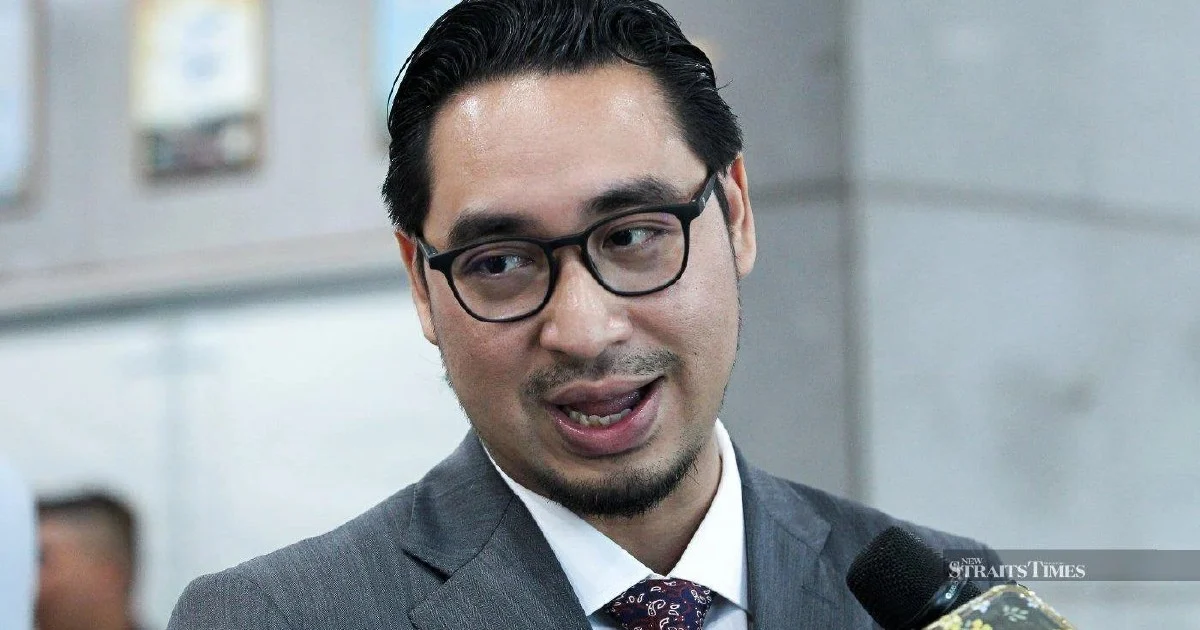
Bersatu is teetering on the edge of institutional breakdown, according to Machang MP Wan Ahmad Fayhsal Wan Ahmad Kamal, who has levelled serious accusations against party leadership regarding mismanagement of internal disputes. The stark assessment from a sitting member of parliament within Perikatan Nasional's largest coalition partner underscores mounting tensions that threaten the stability of the opposition alliance as it seeks to strengthen its position ahead of the next general election.
Wan Ahmad Fayhsal's intervention into public discourse about his party's direction signals a willingness among mid-ranking Bersatu figures to challenge the status quo rather than maintain party discipline behind closed doors. Such public criticism from within the parliamentary group carries particular weight, as MPs typically guard party matters carefully to avoid undermining collective messaging. The Machang representative's decision to speak openly suggests frustration has reached a threshold where silence feels untenable to some party members.
The MP has specifically identified Tan Sri Muhyiddin Yassin, the party president since its founding in 2016, as the focal point of the crisis. According to Wan Ahmad Fayhsal's assessment, Muhyiddin has struggled to address factional disputes through reasoned dialogue and institutional mechanisms. Instead, the leadership's handling of conflicts has apparently created further divisions rather than bridging them, compounding the party's difficulties. This critique strikes at the heart of party governance, questioning whether the foundational structures and decision-making processes are adequate for managing the diverse interests within Bersatu's membership.
Bersatu has experienced several episodes of internal turbulence since its 2016 establishment, initially formed as a breakaway from the United Malays National Organization. The party played a significant role in the 2018 political realignment, contributing to the downfall of Barisan Nasional's three-decade dominance, though it subsequently rejoined the Muhyiddin-led Perikatan Nasional coalition after the 2020 general election. Throughout these transitions, managing competing ambitions and factional interests has proven chronically difficult for party management.
The structural challenges facing Bersatu reflect broader difficulties within Malaysian political organisations, particularly those built around prominent individual leaders rather than robust institutional frameworks. When a single figure becomes the nexus of authority and decision-making, the capacity to absorb disagreements diminishes significantly. Subordinates may view challenges to their positions as personal affronts rather than legitimate political discourse, making rational dispute resolution increasingly unlikely. This dynamic appears to characterise Muhyiddin's tenure, based on Wan Ahmad Fayhsal's public comments.
For Perikatan Nasional as an electoral coalition, instability within Bersatu carries downstream consequences that extend beyond the party's internal health. As the largest component within PN, the party's decline would weaken the coalition's overall parliamentary representation and organisational capacity. Opposition figures from Pakatan Harapan will certainly view such internal turmoil as an opening to exploit, particularly in constituencies where Bersatu holds marginal parliamentary majorities. The timing of Wan Ahmad Fayhsal's remarks therefore carries strategic implications for the wider opposition landscape.
The specific nature of the internal conflicts that Wan Ahmad Fayhsal references remains partially opaque from his public statement, though Bersatu observers have pointed to disputes over candidate selection, resource allocation, and positioning within PN's leadership structure. These fault lines typically emerge when party leadership appears unable or unwilling to establish transparent criteria for advancement, leading ambitious members to perceive decisions as arbitrary or favouritist. Without clear institutional pathways for airing grievances and resolving disputes, frustration compounds.
Muhyiddin's position as party president has faced mounting questions beyond this latest intervention. His leadership style, variously described as autocratic or hands-on depending on observer perspective, has generated resentment among party cadres seeking greater agency in decision-making. The concentration of power within the president's office, without corresponding accountability mechanisms, has created conditions where dissenters view public criticism as their only effective recourse when internal channels prove unresponsive.
The trajectory of Bersatu over coming months will likely determine whether Wan Ahmad Fayhsal's warning represents an early intervention that sparks institutional reform, or whether it marks the beginning of a slow decline through defections and fragmenting coalitions. Malaysian political history offers examples of ruling and opposition parties that faced similar moments of institutional crisis, some emerging with renewed purpose and others gradually dissolving as factions gravitated toward more cohesive alternatives. The stakes for PN's broader coalition effectiveness remain substantial, particularly given the absence of clear momentum toward the next general election timeline.
For Malaysian observers tracking opposition development, the Bersatu situation demonstrates how personality-driven political structures, despite their initial advantages in generating loyalty and charismatic appeal, create long-term vulnerabilities when foundational institutional development lags. The challenge before Muhyiddin and Bersatu's leadership involves demonstrating capacity for rational governance and transparent institutional processes. Without such demonstration, the warnings from figures like Wan Ahmad Fayhsal will likely proliferate, accelerating the party's institutional decline regardless of its baseline electoral support.

%22%2F%3E%3C%2Fpattern%3E%3C%2Fdefs%3E%3Crect%20width%3D%22100%25%22%20height%3D%22100%25%22%20fill%3D%22url(%23ph2hy9vg)%22%2F%3E%3Crect%20width%3D%22100%25%22%20height%3D%22100%25%22%20fill%3D%22url(%23ph2hy9vp)%22%2F%3E%3Ctext%20x%3D%2250%25%22%20y%3D%2250%25%22%20text-anchor%3D%22middle%22%20dominant-baseline%3D%22central%22%20fill%3D%22rgba(255%2C255%2C255%2C0.95)%22%20font-family%3D%22Georgia%2C%20'Times%20New%20Roman'%2C%20serif%22%20font-weight%3D%22700%22%20font-size%3D%22272%22%20letter-spacing%3D%22-0.02em%22%3EAnwar%3C%2Ftext%3E%3C%2Fsvg%3E)