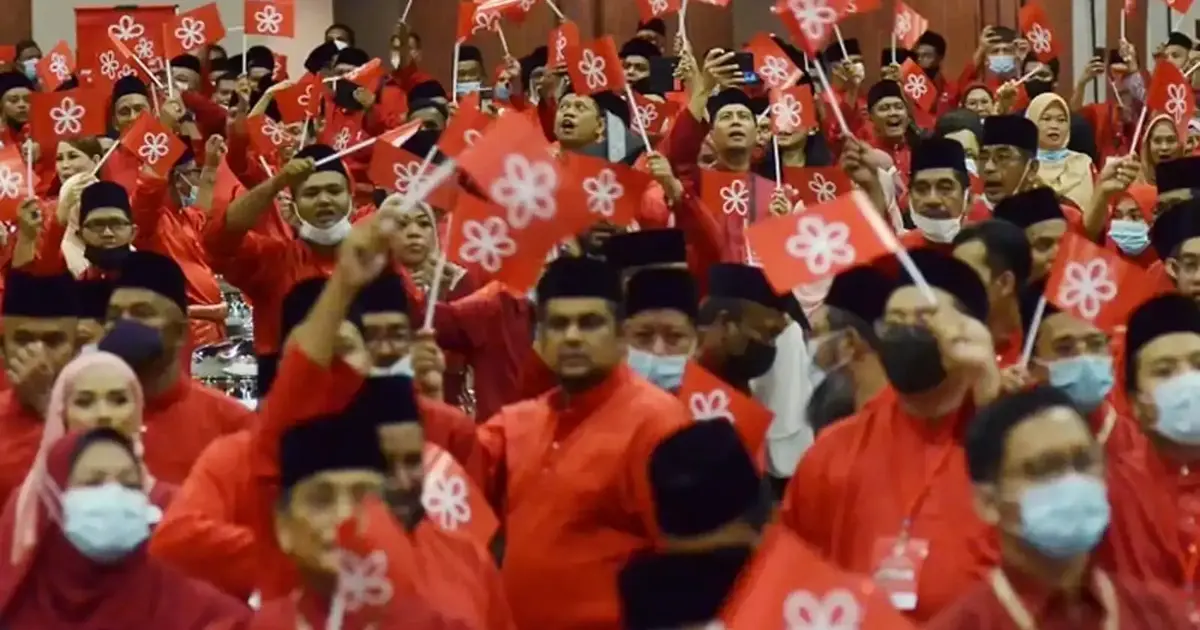
The stability of Malaysia's Perikatan Nasional coalition faced fresh scrutiny on Thursday when PAS treasurer Iskandar Abdul Samad publicly questioned whether Bersatu could realistically maintain its standing within the political alliance. His remarks signal growing tensions within the three-year-old coalition, which has served as the backbone of the current federal government since the 2022 general election.
Iskandar's intervention represents a notable shift in the usually coordinated messaging between PN's principal components. PAS, as the largest party in the coalition by parliamentary representation, has historically managed internal frictions with measured public statements. The fact that a senior party official felt compelled to address Bersatu's position directly suggests the underlying disagreements may have reached a critical juncture that party leadership can no longer contain entirely through private discussions.
Bersatu, founded by Muhyiddin Yassin in 2016, has occupied a peculiar position within Malaysian politics. Despite its relatively modest parliamentary strength compared to PAS or UMNO, the party punches above its weight through its control of the Prime Minister's office. This structural imbalance has created inevitable friction, particularly as other coalition members navigate the delicate politics of maintaining their electoral bases while deferring to Bersatu's leadership on key decisions.
The political landscape Iskandar referenced reflects several destabilising factors. Recent opinion polling indicates declining support for the PN-led federal government across multiple demographics. State-level elections have produced mixed results, with some PN-aligned governments facing serious challenges to their majorities. Within the coalition itself, PAS and UMNO have occasionally pursued divergent strategies on issues ranging from Syiah concerns to state governance, creating space for alternative narratives about unity.
Bersatu's organisational challenges compound the coalition's structural problems. The party has struggled to expand its membership base meaningfully since its formation, remaining largely dependent on elected representatives rather than cultivating deep grassroots support. This dependency means that should defections occur—a recurring feature of Malaysian politics—the party's parliamentary representation could erode rapidly without the buffer of party activism to sustain organisational cohesion.
The timing of Iskandar's comments carries political significance. They arrive amid ongoing discussions about federal-state coordination within PN, with particular attention to how the coalition can better compete against the Opposition in marginal constituencies. PAS, which controls several state governments and counts among Malaysia's most operationally efficient political machines, may be signalling that Bersatu's continued leadership requires demonstrable electoral benefits that justify the arrangement.
For Malaysian observers, this development underscores a deeper reality about coalition politics in the country's Westminster-influenced system. Coalitions form around immediate political exigencies rather than ideological coherence, and they survive only insofar as all partners perceive tangible advantages. When the cost-benefit calculation shifts—whether through electoral performance, policy disagreements, or organisational capacity—partners inevitably signal discontent through public statements that serve as both warnings and negotiating positions.
Bersatu's response to these comments will prove revealing. The party could defend its position by emphasising institutional achievements, rebuilding confidence in its leadership capacity, or negotiating a clearer division of roles within the coalition. Alternatively, continued pressure from within PN could force a recalibration of responsibilities, potentially diminishing Bersatu's policy influence even if it retains titular coalition membership.
The broader implications for Malaysia's political system merit consideration. If PN destabilises or fractures, the resulting parliamentary arithmetic could create opportunities for the Opposition to advance alternative government configurations. This uncertainty typically suppresses investor confidence and complicates policy implementation, as governments facing internal challenges tend toward caution on contentious issues.
For Southeast Asian analysts, Malaysia's coalition dynamics illustrate broader patterns affecting democracies across the region. Multi-party systems requiring coalition government often struggle with durability precisely because they aggregate diverse interests whose continued alignment depends on satisfactory distribution of power and resources. When that distribution becomes perceived as inequitable—as PAS appears to be suggesting about Bersatu's position—the fundamental stability of governance comes into question.
Iskandar's comments should not be dismissed as mere rhetorical positioning. They represent a substantive challenge from a significant coalition partner questioning whether existing arrangements remain politically defensible to their own membership and supporters. How PN manages this tension over coming months will substantially influence both the coalition's longevity and Malaysia's political trajectory leading into the next federal election cycle.


%22%2F%3E%3C%2Fpattern%3E%3C%2Fdefs%3E%3Crect%20width%3D%22100%25%22%20height%3D%22100%25%22%20fill%3D%22url(%23ph2hy9vg)%22%2F%3E%3Crect%20width%3D%22100%25%22%20height%3D%22100%25%22%20fill%3D%22url(%23ph2hy9vp)%22%2F%3E%3Ctext%20x%3D%2250%25%22%20y%3D%2250%25%22%20text-anchor%3D%22middle%22%20dominant-baseline%3D%22central%22%20fill%3D%22rgba(255%2C255%2C255%2C0.95)%22%20font-family%3D%22Georgia%2C%20'Times%20New%20Roman'%2C%20serif%22%20font-weight%3D%22700%22%20font-size%3D%22272%22%20letter-spacing%3D%22-0.02em%22%3EAnwar%3C%2Ftext%3E%3C%2Fsvg%3E)