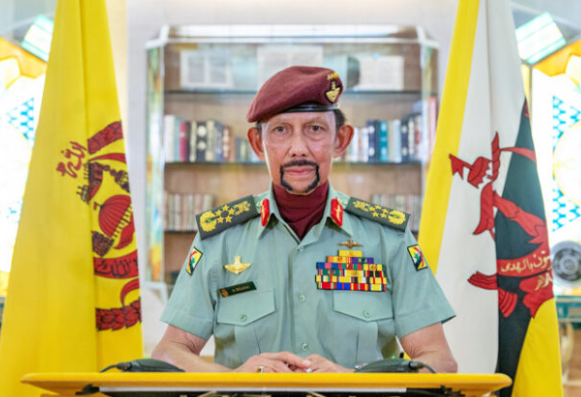
As the Islamic calendar turned to 1448 Hijrah, Brunei's Sultan Hassanal Bolkiah delivered a measured address to the nation emphasising that the arrival of a new year represents not a moment to initiate action, but rather an opportunity for renewed dedication to established pursuits. The monarch framed the occasion as a juncture for recommitting to the dual imperatives of material advancement and spiritual enrichment, two domains requiring sustained dedication and authentic intention directed solely towards Allah the Almighty.
The Sultan's articulation of progress encompassed a broad definition of national development. Material advancement, he explained, encompasses both economic growth and the physical infrastructure that supports daily life, while spiritual progress extends across the interconnected pillars of knowledge acquisition, educational advancement, and dakwah—the Islamic obligation to convey the faith's message to others. This framing reflects Brunei's consistent attempt to balance modernisation with religious commitment, a tension that many Southeast Asian Muslim-majority nations navigate carefully.
Central to the Sultan's message was gratitude for Brunei's relative stability amid a destabilised global landscape. The monarch acknowledged that the contemporary world remains wrought with conflict and warfare, environments where human suffering multiplies and no population escapes unscathed. By contrast, he noted that Brunei Darussalam has remained insulated from both warfare and the devastating natural disasters that periodically disrupt neighbouring countries in the region. This preservation of peace and stability, the Sultan attributed to the nation being sustained through Islamic practices—collective prayer, spiritual remembrance, and Quranic recitation.
Yet beneath this expression of gratitude lay an implicit warning. The Sultan's invocation of Brunei's blessings segued into acknowledgment of a persistent domestic challenge: criminal activity that threatens to undermine the nation's hard-won stability and international reputation. He specifically identified drug-related offences, theft, and other criminal acts as particularly corrosive, not merely because they violate secular law but because Islamic teaching explicitly condemns such transgressions. This framing transforms crime from a mere public order issue into a spiritual and moral failing, positioning law enforcement alongside religious authority as essential to national preservation.
The Sultan's address reflected a strategic shift in emphasis toward security agencies and religious institutions as dual custodians of national welfare. He demanded swift and effective action from organisations responsible for security and religious affairs, signalling that conventional law enforcement responses alone would prove insufficient. Instead, he elevated the role of religious education and intensified dakwah efforts as frontline defences against criminal activity, particularly drug abuse. This approach suggests recognition that material prosperity and Western-style security measures have not fully neutralised criminal impulses, requiring reinforcement through spiritual conviction and Islamic moral grounding.
The monarch's language around prayer and divine protection carried particular resonance given Brunei's recent struggles with narcotics trafficking and drug-related crime. Rather than positioning prayer as mere metaphorical comfort, he framed collective supplication as an active mechanism through which the nation could secure divine intervention and preservation. This invocation of spiritual protection operates simultaneously as a call to spiritual vigilance—a directive that citizens must remain alert, engaged, and resistant to complacency, even amid relative prosperity and stability.
What emerges from the Sultan's remarks is a vision of national resilience built upon shared responsibility that transcends institutional boundaries. He positioned the protection of both the broader Muslim community (the ummah) and the Bruneian nation-state as a collective obligation requiring unanimous commitment and unwavering divine favour. This framing moves beyond top-down governance, instead emphasising that security and progress derive from sustained grassroots participation in both religious practice and civic vigilance. Citizens are positioned not as passive beneficiaries of state protection but as active participants in maintaining the nation's spiritual and material wellbeing.
For Southeast Asian observers, particularly those in Malaysia, Singapore, and Indonesia where drug trafficking networks operate across porous borders and religious identity remains politically salient, the Sultan's address articulates a challenge facing many states in the region. How can governments simultaneously pursue economic modernisation and compete globally while preserving traditional Islamic values and community cohesion? Brunei's answer—strengthening religious education and institutional coordination between security and religious authorities—represents one model, though its effectiveness remains contested.
The Sultan's emphasis on renewed commitment rather than new initiatives also carries implicit fiscal and administrative implications. In an era of economic uncertainty driven by declining oil revenues, Brunei's government may face constraints on launching expansive new programmes. Instead, the address suggests that maximising efficiency of existing institutions—schools, mosques, security agencies—through enhanced coordination and religious emphasis may represent the preferred policy approach. This pragmatism, wrapped in spiritual language, reflects the careful balance required of monarchical leadership in a small nation dependent on both religious legitimacy and effective governance.
The address concluded with formal New Year greetings extended by the Sultan and royal family to all citizens and residents, a gesture that, while ceremonial, reasserts the monarchy's role as custodian of national unity and Islamic values. As Brunei moves through 1448 Hijrah, the implicit challenge to citizens involves translating the Sultan's call for vigilance and renewed commitment into concrete behavioural change—reduced drug use, diminished criminal activity, and strengthened community engagement with both religious institutions and state security apparatus. Whether this combination of spiritual exhortation, institutional coordination, and shared responsibility can effectively address Brunei's emerging security challenges remains an open question with implications extending throughout Southeast Asia's interconnected security landscape.

%22%2F%3E%3C%2Fpattern%3E%3C%2Fdefs%3E%3Crect%20width%3D%22100%25%22%20height%3D%22100%25%22%20fill%3D%22url(%23ph2hy9vg)%22%2F%3E%3Crect%20width%3D%22100%25%22%20height%3D%22100%25%22%20fill%3D%22url(%23ph2hy9vp)%22%2F%3E%3Ctext%20x%3D%2250%25%22%20y%3D%2250%25%22%20text-anchor%3D%22middle%22%20dominant-baseline%3D%22central%22%20fill%3D%22rgba(255%2C255%2C255%2C0.95)%22%20font-family%3D%22Georgia%2C%20'Times%20New%20Roman'%2C%20serif%22%20font-weight%3D%22700%22%20font-size%3D%22272%22%20letter-spacing%3D%22-0.02em%22%3EAnwar%3C%2Ftext%3E%3C%2Fsvg%3E)