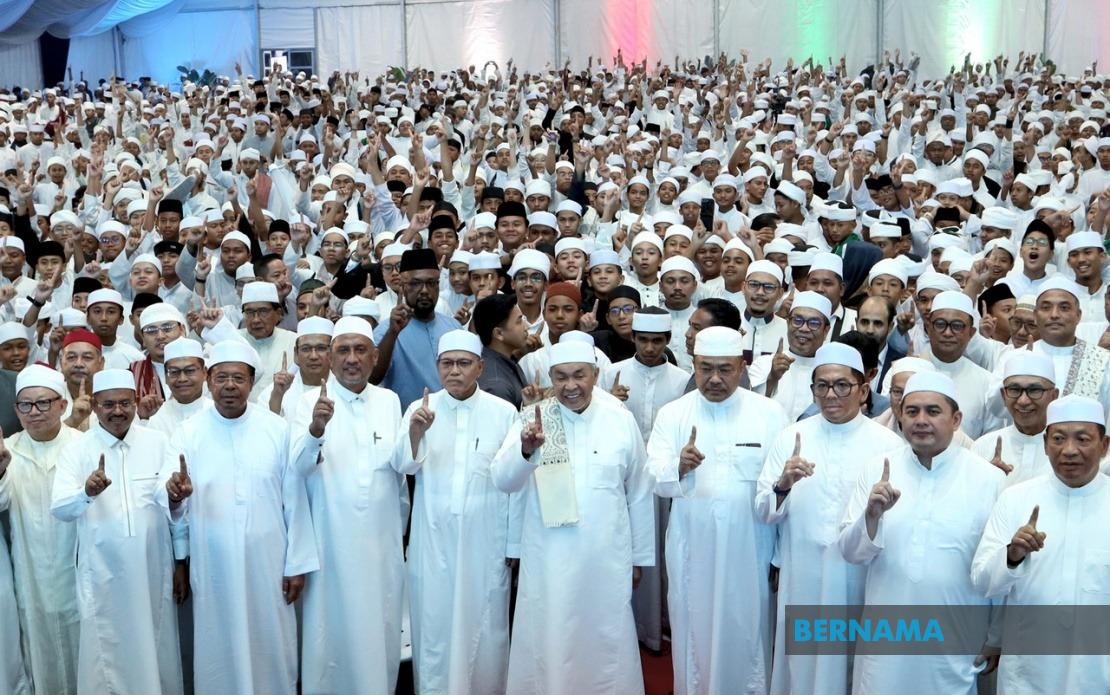
Malaysia's federal government has given formal approval to establish the National Tahfiz Council, a pivotal institutional framework designed to unify and professionalise Quranic memorisation education across the country. Deputy Prime Minister Datuk Seri Dr Ahmad Zahid Hamidi announced the Cabinet's decision at the Pahang State Huffaz Gathering 2026 held in Kuantan on June 18, revealing that Prime Minister Datuk Seri Anwar Ibrahim has appointed him as chairman of the new council. The initiative represents a comprehensive overhaul of how tahfiz education—the Islamic practice of memorising the Quran—is recognised, structured, and integrated into Malaysia's broader education ecosystem.
At its core, the National Tahfiz Council addresses a longstanding gap in Malaysia's educational landscape. While tahfiz institutions have operated for decades, they have historically existed somewhat outside the formal education system, creating ambiguity around qualification recognition, progression routes, and professional opportunities for graduates. The new council will establish standardised direction, create unified education models, define consistent recognition standards, and chart clear academic pathways for tahfiz students from primary through tertiary education. This institutional clarity is particularly significant for families and students considering tahfiz education as a long-term commitment, as it removes uncertainty about what comes after completing memorisation studies.
Ahmad Zahid's vision extends beyond mere standardisation to fundamentally repositioning tahfiz education within Malaysian society. He articulated an ambitious framework wherein tahfiz students can transition seamlessly from madrasah to university, develop both memorisation skills and contemporary competencies, and enter the professional workforce with recognised qualifications and expanded career prospects. This dual-track approach acknowledges that modern tahfiz graduates require more than religious knowledge to thrive economically and socially. By creating bridges between traditional Islamic education and secular professional pathways, the council addresses a critical challenge that has historically limited tahfiz graduates' employment options outside religious sectors.
Pahang State has emerged as a model for this integrated approach. Ahmad Zahid highlighted how the state has developed a comprehensive tahfiz education continuum beginning in early childhood through Tadika Tahfiz Negeri Pahang, an initiative inspired by Sultan Al-Sultan Abdullah Ri'ayatuddin Al-Mustafa Billah Shah. From these foundational programmes, Pahang has constructed increasingly sophisticated educational structures that progress through schooling and extend to international engagement. This layered development demonstrates that tahfiz education need not exist in isolation but can be embedded within a broader knowledge framework that meaningfully shapes students' futures. The state's success provides a tested blueprint that the National Tahfiz Council can scale nationally.
The government is simultaneously implementing the enhanced National Tahfiz Policy 2.0, which introduces several structural innovations designed to professionalise the sector. Technical and Vocational Education and Training in tahfiz, known as TVET Tahfiz, enables memorisation students to simultaneously acquire skilled trade qualifications, addressing employability concerns directly. The Malaysian Tahfiz Certificate 2.0 provides standardised, nationally recognised credentials for graduates, eliminating the qualification recognition fragmentation that previously plagued the sector. The Graded Hafazan Certification creates transparent benchmarks for memorisation proficiency, while the Huffaz Financing Scheme removes financial barriers that have traditionally prevented talented students from pursuing this educational path.
These policy instruments reflect sophisticated understanding of tahfiz education's systemic challenges. The Malaysian Tahfiz Recognition Standard ensures that qualifications earned through different institutions carry equivalent weight in the job market and higher education admissions. Strategic collaborations with higher learning institutions and skills institutes create direct pipeline pathways, enabling tahfiz graduates to transition into university degree programmes or vocational certification courses without friction. Such institutional integration represents a departure from historical practice where tahfiz education and mainstream education operated in separate spheres with limited recognition of each other's credentials.
The Pahang State Huffaz Gathering 2026, which drew over 5,000 huffaz participants from across the state, provided the launching platform for these initiatives. This turnout underscores substantial grassroots demand for tahfiz education within Malaysia. The large assembly of memorisation students and educators demonstrates that tahfiz represents not a marginal educational interest but a significant constituency deserving institutional attention and policy investment. The scale of participation also validates the government's investment in creating formal structures to support this community.
During the event, Ahmad Zahid witnessed the signing of a memorandum of understanding involving Yayasan Pahang, the Community Development Department (KEMAS), and Majlis Amanah Rakyat (MARA). This tripartite collaboration institutionalises tahfiz education development and expands skills training opportunities for huffaz graduates. MARA's involvement is particularly significant given its traditional focus on supporting Bumiputera entrepreneurship and professional development; its engagement with tahfiz education signals that this sector is now prioritised within Malaysia's broader economic development strategy.
For Southeast Asia more broadly, Malaysia's formalisation of tahfiz education carries regional implications. As the region's largest Muslim-majority nation outside Indonesia and the only ASEAN member with Islam as the constitutionally established religion, Malaysia's approach to integrating religious education with secular professional pathways may influence policy discussions across the region. Thailand, Brunei, and Indonesia each manage their own tahfiz sectors; Malaysia's innovation in creating formal recognition standards and professional progression routes could inspire comparable institutional reforms elsewhere.
The establishment of the National Tahfiz Council also addresses concerns about educational quality and consistency. By implementing standardised curricula, recognition criteria, and institutional partnerships, the council enables accountability and oversight mechanisms that strengthen the sector overall. Students and parents gain confidence that tahfiz education meets defined standards, while institutions benefit from clearer benchmarks for excellence. This quality assurance dimension is particularly important given tahfiz education's significant role in Islamic knowledge transmission across Malaysia's Muslim population.
Economically, formalising tahfiz education expands the skilled workforce by retaining talented individuals within the system rather than forcing difficult choices between religious memorisation and professional viability. Huffaz who complete secondary tahfiz studies while acquiring TVET credentials become marketable to employers in sectors ranging from Islamic finance to heritage tourism to religious education administration. This multiplier effect on human capital productivity benefits the entire economy while fulfilling the government's commitment to inclusive education policies.
Looking forward, the National Tahfiz Council's success will depend on sustained institutional commitment and adequate resourcing. Implementation of Policy 2.0's multiple initiatives requires coordination across education, finance, and workforce development ministries. Universities and vocational institutes must genuinely value tahfiz qualifications as legitimate entry credentials rather than treating them as exotic credentials requiring separate consideration. Employers must recognise that huffaz graduates bring disciplined learning capabilities and religious grounding alongside their technical skills. These shifts in institutional culture and perception will ultimately determine whether the National Tahfiz Council transforms tahfiz education from a parallel pathway into a fully integrated educational choice.

%22%2F%3E%3C%2Fpattern%3E%3C%2Fdefs%3E%3Crect%20width%3D%22100%25%22%20height%3D%22100%25%22%20fill%3D%22url(%23ph2hy9vg)%22%2F%3E%3Crect%20width%3D%22100%25%22%20height%3D%22100%25%22%20fill%3D%22url(%23ph2hy9vp)%22%2F%3E%3Ctext%20x%3D%2250%25%22%20y%3D%2250%25%22%20text-anchor%3D%22middle%22%20dominant-baseline%3D%22central%22%20fill%3D%22rgba(255%2C255%2C255%2C0.95)%22%20font-family%3D%22Georgia%2C%20'Times%20New%20Roman'%2C%20serif%22%20font-weight%3D%22700%22%20font-size%3D%22272%22%20letter-spacing%3D%22-0.02em%22%3EAnwar%3C%2Ftext%3E%3C%2Fsvg%3E)