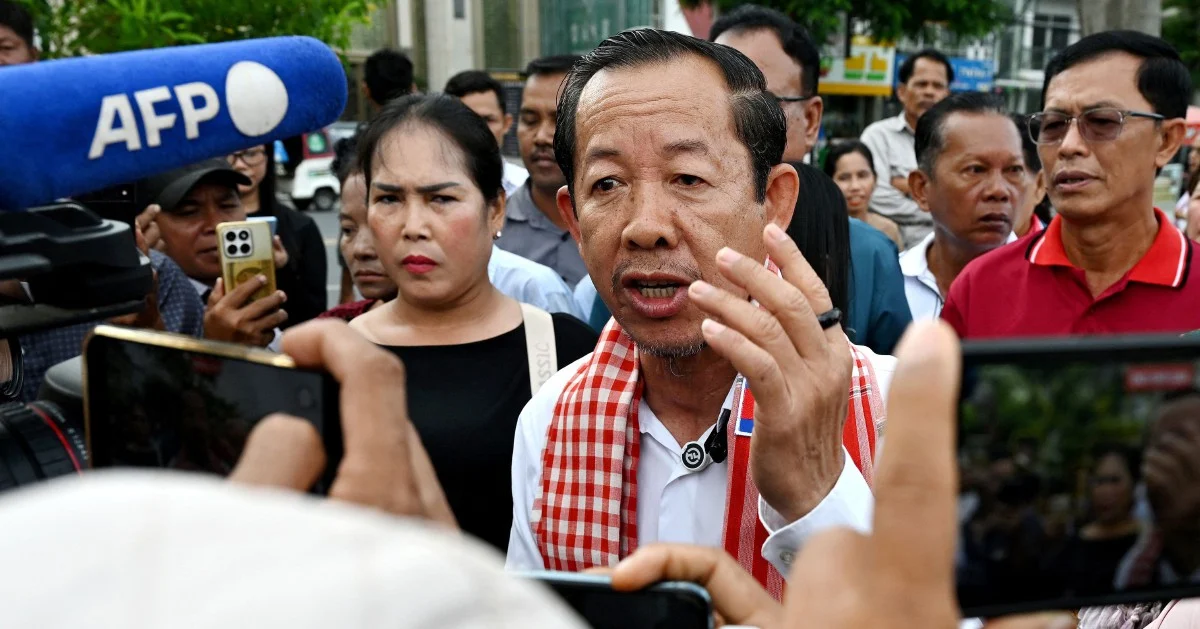
Cambodia's highest court has delivered a mixed ruling on opposition politician Rong Chhun, suspending an imposed prison sentence while maintaining a complete ban on his participation in future elections. The decision, announced on Friday in Phnom Penh through his legal representatives, illustrates the ongoing tensions between the government and opposition figures in the Southeast Asian nation, where electoral competition remains deeply contested and restrictions on political participation have become increasingly common.
The Supreme Court's move to suspend Rong Chhun's custodial sentence suggests some judicial flexibility in his case, yet the confirmation of his election ban demonstrates the authorities' determination to exclude him from the political arena. This contradictory outcome—leniency on imprisonment coupled with firmness on electoral eligibility—underscores the complexity of Cambodia's legal and political landscape, where courts navigate pressures from multiple directions while attempting to maintain institutional credibility.
Rong Chhun's legal predicament must be understood within the context of Cambodia's political evolution since the ruling Cambodian People's Party consolidated power over rival factions. The country has experienced significant restrictions on opposition movements, with various political figures facing charges and barriers to participation. These developments have drawn international scrutiny regarding democratic standards and judicial independence, concerns that extend across Southeast Asia where similar patterns of restricted political space have emerged in several nations.
The election ban carries particular significance for Cambodia's democratic trajectory. Preventing opposition figures from running in national or local elections effectively removes alternative voices from formal competition, narrowing the range of choices available to voters. This mechanism differs from outright prohibitions on political parties but achieves similar outcomes by targeting individual candidates deemed problematic by authorities. For Malaysian observers and Southeast Asian democracy watchers, such restrictions warrant attention as they reflect broader regional trends in constraining political opposition.
Rong Chhun's situation also reflects how contemporary authoritarian practices often employ legal instruments to achieve political objectives. Rather than crude suppression, authorities use courts to impose technically lawful restrictions that accomplish political aims while maintaining veneer of judicial process. The suspension of his prison sentence may be calculated to reduce international pressure while the election ban addresses the core political concern—preventing his return to electoral competition. This selective application of leniency and firmness illustrates sophisticated political management through legal channels.
For Cambodia's opposition movements and civil society organizations, the ruling presents a cautionary scenario. Leaders can face multiple punishments operating simultaneously across different legal domains, with selective enforcement leaving uncertainty about future treatment. This environment of unpredictability discourages political organizing and makes it difficult for opposition figures to plan long-term strategies. Similar dynamics affect neighbouring countries where opposition leaders navigate comparable legal hazards, creating a chilling effect on democratic participation across the region.
The broader implications extend to Cambodia's development trajectory and international relations. Western nations, including the United States and European Union countries, monitor such cases as indicators of democratic health and judicial independence. Restrictions on opposition figures affect how international partners view Cambodia's governance and can influence diplomatic relations, investment decisions, and development assistance. For regional bodies like ASEAN, such developments raise questions about democratic standards and human rights that members nominally endorse despite varying commitment levels.
Cambodia's Supreme Court decision also reflects the institutional architecture of the country's governance system. The judiciary's role in sustaining political outcomes favourable to the ruling party suggests limited separation of powers and judicial autonomy from executive influence. Courts that primarily validate government positions rather than independently adjudicating disputes undermine faith in legal institutions across society. This pattern, visible across several Southeast Asian nations, weakens rule of law foundations essential for sustained development and stability.
The timing and nature of the ruling may carry strategic implications for Cambodia's upcoming electoral cycles. By upholding the election ban while suspending imprisonment, authorities demonstrate they can manage opposition through legal restrictions while projecting moderation through sentence suspension. This approach allows governments to appear reasonable internationally while maintaining political control domestically. For Malaysia and other regional democracies, understanding these tactics provides insight into how authoritarian practices evolve and adapt to international pressure.
Rong Chhun's case ultimately exemplifies tensions inherent in Cambodia's political system between formal legal procedures and substantive democratic practice. The court may technically have acted within its constitutional authority, yet the practical effect—permanently barring a political opponent from electoral participation—achieves exclusionary outcomes that undermine competitive democracy. These dynamics warrant continued monitoring by international observers, regional human rights organizations, and ASEAN member states concerned with maintaining minimum democratic standards.
Looking forward, the Supreme Court's decision establishes a precedent for managing opposition through selective legal application. If sustained, this approach suggests Cambodia's political competition will increasingly operate within constrained parameters, with barriers to participation replacing direct suppression. For the broader Southeast Asian region, such developments demonstrate how democratic institutions can be hollowed from within through seemingly neutral legal processes, a pattern with significant implications for democratic resilience and accountability across member nations.

%22%2F%3E%3C%2Fpattern%3E%3C%2Fdefs%3E%3Crect%20width%3D%22100%25%22%20height%3D%22100%25%22%20fill%3D%22url(%23ph2hy9vg)%22%2F%3E%3Crect%20width%3D%22100%25%22%20height%3D%22100%25%22%20fill%3D%22url(%23ph2hy9vp)%22%2F%3E%3Ctext%20x%3D%2250%25%22%20y%3D%2250%25%22%20text-anchor%3D%22middle%22%20dominant-baseline%3D%22central%22%20fill%3D%22rgba(255%2C255%2C255%2C0.95)%22%20font-family%3D%22Georgia%2C%20'Times%20New%20Roman'%2C%20serif%22%20font-weight%3D%22700%22%20font-size%3D%22272%22%20letter-spacing%3D%22-0.02em%22%3EAnwar%3C%2Ftext%3E%3C%2Fsvg%3E)