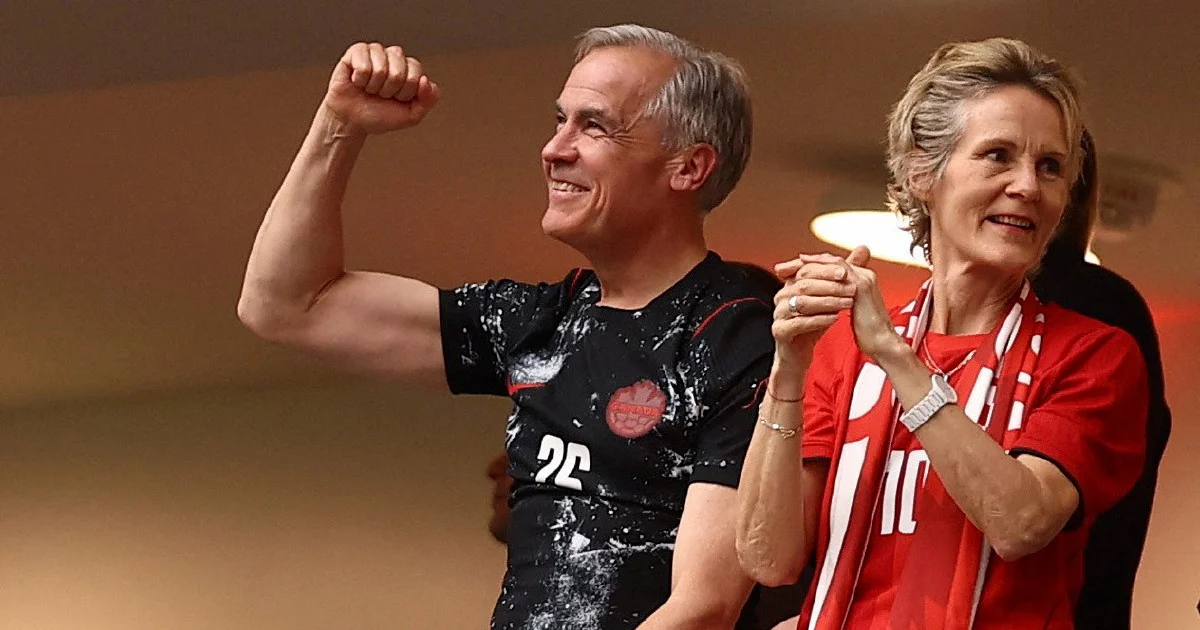
Canadian Prime Minister Mark Carney made an unexpected appearance in the team's dressing room following the nation's breakthrough World Cup finals victory, using the moment to acknowledge the players' exceptional character and mental fortitude in the face of adversity. The visit underscored the significance of the achievement—a landmark moment for Canadian football that has long struggled to establish itself as a competitive force on the international stage. Carney's direct engagement with the squad reflected the cultural importance of the result across the country, where football has increasingly captured public imagination despite the nation's traditional sporting priorities centring on ice hockey and other winter sports.
The timing of the Prime Minister's appearance carried symbolic weight, arriving moments after the team secured their first-ever win in a World Cup finals tournament. This milestone represents the culmination of years of investment, infrastructure development, and strategic focus by Canada's football governing bodies. The victory breaks a drought that had defined Canadian football's World Cup history—previous tournament appearances had yielded only disappointment and early eliminations. With this win, Canada has begun to reshape perceptions of its footballing capabilities and demonstrated that patience and systematic development can yield results even in highly competitive international environments.
Among the various challenges the team faced during the match, one of the most testing moments came when a player suffered a serious leg fracture, a significant setback that would have destabilized many squads mentally. Such injuries represent far more than physical damage; they disrupt team chemistry, require tactical adjustments, and can psychologically affect remaining players who witness the incident. The fact that Canada maintained its composure and ultimately secured victory despite this trauma speaks volumes about the depth of preparation and mental conditioning that coaching staff have instilled throughout the tournament campaign.
Carney's decision to visit the locker room and publicly commend the players' character reflects a broader recognition in Canadian society that sporting achievement extends beyond mere technical proficiency or tactical execution. The players demonstrated resilience—the ability to adapt to unexpected adversity and maintain focus on objectives despite genuine hardship. This quality resonates deeply in Canadian cultural values and helps explain why the Prime Minister felt compelled to acknowledge it personally rather than issue a standard statement through official channels.
For Malaysian and Southeast Asian football observers, Canada's breakthrough carries instructive lessons. The region's football nations understand the importance of sustained investment and systematic player development in competing against established powerhouses. Canada's journey, while finally yielding a World Cup finals victory, required consistent commitment through multiple tournament cycles and near-misses. Several Southeast Asian nations have similarly pursued aggressive football modernisation programmes, recognising that competitive success at the highest levels demands patience, financial commitment, and institutional stability.
The injury to the Canadian player also highlights a dimension of elite football that crosses all borders and cultures. Tournament football places extraordinary physical and mental demands on participants, and equipment-related misfortune can strike any side regardless of preparation or resources. How teams respond to such setbacks often determines their ultimate trajectory in competitions. Canada's response—continuing to execute their game plan effectively despite the emotional and tactical disruption—demonstrates the kind of mental resilience that distinguishes successful tournament teams from those that falter under pressure.
Carney's visit also reflects the elevated status that football has achieved within Canadian national discourse. Traditionally overshadowed by hockey as Canada's sporting obsession, football has grown significantly in participation, media coverage, and public investment over the past decade. A World Cup finals victory, even a single match win, represents validation of these efforts and provides momentum for continued expansion of the sport's infrastructure and support systems. This trajectory mirrors developments across much of the world, where football's commercial and cultural dominance continues to expand at the expense of other sports.
The broader significance of Canada's achievement extends to competitive dynamics within the North American football ecosystem. As the region prepares for future World Cup tournaments and as football's global architecture continues to evolve, nations are competing intensely for competitive positioning. Canada's breakthrough result establishes them as a credible participant rather than a perpetual outsider, potentially attracting enhanced investment, sponsorship, and player development resources that compound competitive advantages over time.
Looking forward, the question becomes whether this isolated victory represents the beginning of sustained competitiveness or a singular bright moment within a broader pattern of struggle. Carney's presence and public acknowledgment suggest the Canadian football establishment views this win as foundational rather than anomalous. The character and resilience the Prime Minister commended will be tested repeatedly as the programme attempts to build on this foundation and establish Canada as a regular World Cup finals participant capable of competing across multiple tournaments.

%22%2F%3E%3C%2Fpattern%3E%3C%2Fdefs%3E%3Crect%20width%3D%22100%25%22%20height%3D%22100%25%22%20fill%3D%22url(%23ph2hy9vg)%22%2F%3E%3Crect%20width%3D%22100%25%22%20height%3D%22100%25%22%20fill%3D%22url(%23ph2hy9vp)%22%2F%3E%3Ctext%20x%3D%2250%25%22%20y%3D%2250%25%22%20text-anchor%3D%22middle%22%20dominant-baseline%3D%22central%22%20fill%3D%22rgba(255%2C255%2C255%2C0.95)%22%20font-family%3D%22Georgia%2C%20'Times%20New%20Roman'%2C%20serif%22%20font-weight%3D%22700%22%20font-size%3D%22272%22%20letter-spacing%3D%22-0.02em%22%3EAnwar%3C%2Ftext%3E%3C%2Fsvg%3E)