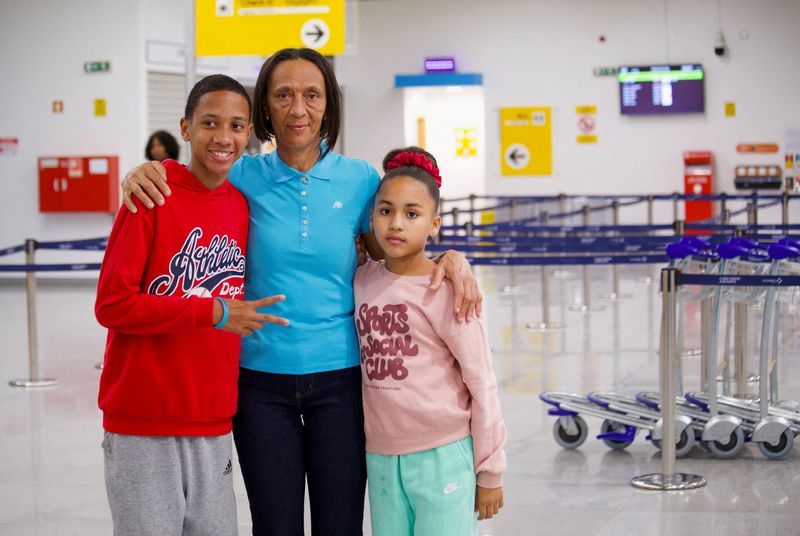
Cape Verde's goalkeeper Vozinha will finally see his mother in the stands when the African nation takes on Uruguay in Miami on Sunday, after the United States granted Ana Candida Evora a visa to travel to the tournament. The approval came swiftly following the 40-year-old keeper's tearful public revelation that his mother had been unable to attend his team's opening group match in Atlanta, where he delivered a career-defining performance that captured global attention and sympathy.
Vozinha's heroics in that encounter with European champions Spain demonstrated his exceptional shot-stopping ability and positioning. Producing seven crucial saves throughout the match, he orchestrated a defensive masterclass that yielded Cape Verde's most impressive result at a World Cup tournament—a goalless draw that shocked many observers who had expected the Spaniards to dominate possession and create numerous scoring opportunities. Named player of the match for his commanding display, Vozinha's contribution proved instrumental in establishing Cape Verde as a competitive force in their group stage campaign.
Yet the goalkeeper's triumph was shadowed by personal disappointment. The absence of his mother from the Atlanta stadium weighed heavily on him emotionally, as family support often provides athletes with crucial psychological reinforcement during major competitions. Vozinha's candid acknowledgement of her missing his standout moment resonated powerfully with audiences worldwide, transforming a bureaucratic immigration issue into a human interest story that transcended sports commentary.
The United States State Department responded promptly to the situation, recognising both the diplomatic implications and the public relations dimension of the matter. Officials confirmed that their visa processing team stationed in Praia, the capital of Cape Verde, had established direct communication with Evora and expedited her application through the necessary channels. A department representative publicly declared that the approval aligned fully with established procedures and standards, emphasising the commitment to facilitating her journey to witness her son's subsequent matches.
The broader context surrounding Evora's initial visa difficulties reflects the stringent immigration policies that the Trump administration implemented across multiple entry categories. The United States had imposed a requirement for citizens of numerous nations—including Cape Verde—to post bonds ranging up to $15,000 as a precondition for entry, as part of a comprehensive crackdown on immigration flows into American territory. These financial barriers created substantial obstacles for ordinary families seeking to travel internationally, effectively pricing out many individuals who lacked significant disposable income.
For Evora specifically, the financial burden of posting such a bond made the prospect of travelling to Atlanta to support her son financially prohibitive. Even before the initial match against Spain, she had reluctantly concluded that the cumulative costs—combining the bond deposit, air tickets, accommodation, and other expenses—exceeded her capacity to pay. The decision to remain in Cape Verde rather than attempt the journey represented a difficult personal sacrifice, one that only became public after Vozinha's emotional disclosure during post-match interviews.
The trajectory of events illuminates how international sporting spectacles can inadvertently expose and amplify the human consequences of immigration policy. Vozinha's case attracted sufficient media attention that it prompted official intervention and reconsideration of individual circumstances. However, the broader pattern suggests that many other World Cup-connected travellers likely faced similar obstacles without receiving comparable diplomatic attention or public support.
For Malaysian and Southeast Asian readers, the situation demonstrates the practical realities that athletes and their families from developing nations navigate when competing on the world's largest sporting stage. Visa requirements, bond deposits, and processing delays frequently complicate international travel plans, particularly for individuals from smaller Caribbean and African nations whose diplomatic representation in major capitals may be limited. The experience underscores persistent inequalities in how different passport holders access international mobility.
Evora's approval to travel arrives at a strategically important moment in Cape Verde's tournament campaign. The Uruguay fixture represents a critical match with significant group stage implications, where securing a positive result could substantially enhance the team's qualification prospects. Having his mother present in the Miami stadium may provide Vozinha with enhanced confidence and emotional support during what remains his greatest professional challenge, potentially influencing his concentration and performance under pressure.
The resolution of Evora's visa status also reflects the prominence that individual stories within sporting narratives now command in the digital age. Vozinha's emotional account circulated rapidly across social media platforms and international news outlets, creating sufficient public consciousness about the situation that official agencies felt compelled to respond. This dynamic illustrates how contemporary athletes can leverage media platforms to draw attention to personal and systemic challenges that might otherwise remain obscure.
Looking forward, Cape Verde's World Cup campaign will carry added resonance for viewers following Vozinha's journey. The goalkeeper's mother will now be able to observe not merely another professional match, but rather the culmination of her own sacrifice and the vindication of her son's determination to achieve excellence at sport's highest level. Their reunion in Miami represents both a personal triumph and a reminder of the emotional dimensions underlying international competition.

%22%2F%3E%3C%2Fpattern%3E%3C%2Fdefs%3E%3Crect%20width%3D%22100%25%22%20height%3D%22100%25%22%20fill%3D%22url(%23ph2hy9vg)%22%2F%3E%3Crect%20width%3D%22100%25%22%20height%3D%22100%25%22%20fill%3D%22url(%23ph2hy9vp)%22%2F%3E%3Ctext%20x%3D%2250%25%22%20y%3D%2250%25%22%20text-anchor%3D%22middle%22%20dominant-baseline%3D%22central%22%20fill%3D%22rgba(255%2C255%2C255%2C0.95)%22%20font-family%3D%22Georgia%2C%20'Times%20New%20Roman'%2C%20serif%22%20font-weight%3D%22700%22%20font-size%3D%22272%22%20letter-spacing%3D%22-0.02em%22%3EAnwar%3C%2Ftext%3E%3C%2Fsvg%3E)