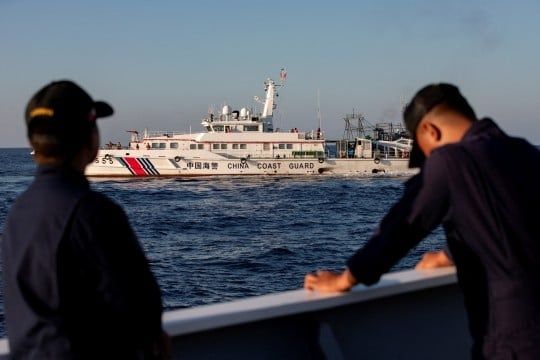
China has publicly acknowledged Malaysia's instrumental contribution to ongoing efforts to establish a legally binding Code of Conduct governing behaviour in the contested South China Sea, underscoring the significance of regional diplomacy as negotiations reach their most consequential phase. China's Ambassador to Malaysia Ouyang Yujing delivered the commendation during a media engagement in Kuala Lumpur on Tuesday, positioning Malaysia as a key player in what Beijing views as essential institutional architecture for managing one of the world's most strategically sensitive maritime zones.
The ambassador's remarks came in response to Prime Minister Datuk Seri Anwar Ibrahim's recent statements reaffirming Malaysia's commitment to expediting the COC discussions. Ouyang emphasised that the bilateral partnership between Beijing and Kuala Lumpur has proven essential in facilitating these multilateral negotiations, with the two countries maintaining sustained dialogue channels specifically dedicated to maritime cooperation and conflict prevention in South China Sea waters claimed or contested by multiple nations.
For Malaysian observers, the timing of this Chinese endorsement reflects the delicate balancing act Kuala Lumpur must perform. As the current co-chair of the ASEAN mechanism overseeing implementation of the earlier Declaration on the Conduct of Parties in the South China Sea, Malaysia occupies a pivotal intermediary position between major powers and competing claimants. The country has consistently advocated for peaceful, rules-based solutions while maintaining pragmatic relationships with all stakeholders, a stance that distinguishes it diplomatically within the region's complex strategic landscape.
Ouyang characterised the ongoing negotiations as having reached a critical juncture, with all participating parties expressing determination to meet their target timeline for completion. The ambassador's declaration of confidence reflected Beijing's assessment that substantial progress has been achieved despite the inherent complexity of reconciling competing maritime claims and national interests across multiple nations. This optimism, however, must be understood against the backdrop of previous setbacks and the persistent disagreements that have slowed negotiations over the past years.
The significance of a finalised COC extends beyond diplomatic formality. Such an instrument would theoretically establish binding rules governing military activities, environmental protection, resource management, and dispute resolution mechanisms in these waters, affecting billions of dollars in annual maritime trade and impacting the livelihoods of fishing communities across Southeast Asia. For Malaysia, particularly given its substantial maritime interests and vulnerable position as both a claimant state and ASEAN member, successfully shepherding this agreement through completion would represent a significant foreign policy achievement.
Ouyang's comments underscored that China views the COC framework as providing what Beijing describes as an institutional guarantee for sustained peace and stability in the region. This framing suggests Chinese leadership sees the agreement as preferable to alternative dispute-resolution mechanisms or external interventions, positioning multilateral ASEAN-China cooperation as the appropriate forum for addressing maritime challenges. The emphasis on institutional guarantees reflects Beijing's broader strategic interest in cementing its influence over regional governance structures.
The ambassador noted that enhanced bilateral engagement between Chinese and Malaysian leadership has accelerated progress on maritime cooperation initiatives. He specifically highlighted that Premier Li Qiang had visited Malaysia twice during the preceding year, while Prime Minister Anwar Ibrahim had made four separate trips to China since assuming office. These frequent high-level exchanges signal the priority both governments place on their relationship and their mutual interest in advancing regional stability arrangements.
Ouyang attributed the strengthened ties partly to President Xi Jinping's state visit to Malaysia the previous year, describing this as a watershed moment that elevated bilateral relations to their highest plane. The ambassador noted that these improved political relationships have translated into expanded cooperation across diverse sectors including trade, investment, cultural affairs, and scientific collaboration. This multidimensional engagement creates broader constituency support for continued cooperation on contentious issues like maritime governance.
Within the broader ASEAN context, Malaysia's role carries implications extending beyond bilateral China-Malaysia relations. Various Southeast Asian leaders have publicly expressed hope that finalising the COC this year represents an achievable objective. However, the success of such endeavours depends substantially on consensus-building within ASEAN itself, where member states hold divergent perspectives on maritime claims and negotiating positions. Malaysia's ability to navigate these internal differences whilst maintaining productive engagement with China will significantly influence the pace and ultimate character of any concluded agreement.
The ambassador's emphasis on eliminating interference and seeking common ground whilst managing differences appeared to reference concerns regarding external powers' involvement in South China Sea issues. This rhetorical positioning underscores Beijing's preference for addressing the matter through ASEAN-China mechanisms rather than through involvement from distant powers. For Malaysia, this stance aligns with its own sovereignty concerns and preference for regional actors determining regional outcomes.
The COC negotiations remain one of the most significant outstanding maritime issues in Asia-Pacific affairs. The disputed waters traverse major shipping lanes carrying enormous volumes of international commerce, contain potential hydrocarbon resources, and possess strategic military significance. Any framework successfully establishing predictable behavioural norms among competing claimants would substantially reduce risks of accidental escalation or miscalculation.
Moving forward, Malaysia's continued diplomatic leadership in this domain will require careful calibration of competing interests. The country must simultaneously satisfy ASEAN colleagues, manage China's expectations, protect its own maritime interests, and maintain openness to international maritime law principles. Ouyang's public commendation provides Malaysia with valuable diplomatic recognition, though ultimate success depends on whether all parties can translate current goodwill into concrete, mutually acceptable legal provisions governing one of Asia's most contested waters.


%22%2F%3E%3C%2Fpattern%3E%3C%2Fdefs%3E%3Crect%20width%3D%22100%25%22%20height%3D%22100%25%22%20fill%3D%22url(%23ph2hy9vg)%22%2F%3E%3Crect%20width%3D%22100%25%22%20height%3D%22100%25%22%20fill%3D%22url(%23ph2hy9vp)%22%2F%3E%3Ctext%20x%3D%2250%25%22%20y%3D%2250%25%22%20text-anchor%3D%22middle%22%20dominant-baseline%3D%22central%22%20fill%3D%22rgba(255%2C255%2C255%2C0.95)%22%20font-family%3D%22Georgia%2C%20'Times%20New%20Roman'%2C%20serif%22%20font-weight%3D%22700%22%20font-size%3D%22272%22%20letter-spacing%3D%22-0.02em%22%3EAnwar%3C%2Ftext%3E%3C%2Fsvg%3E)