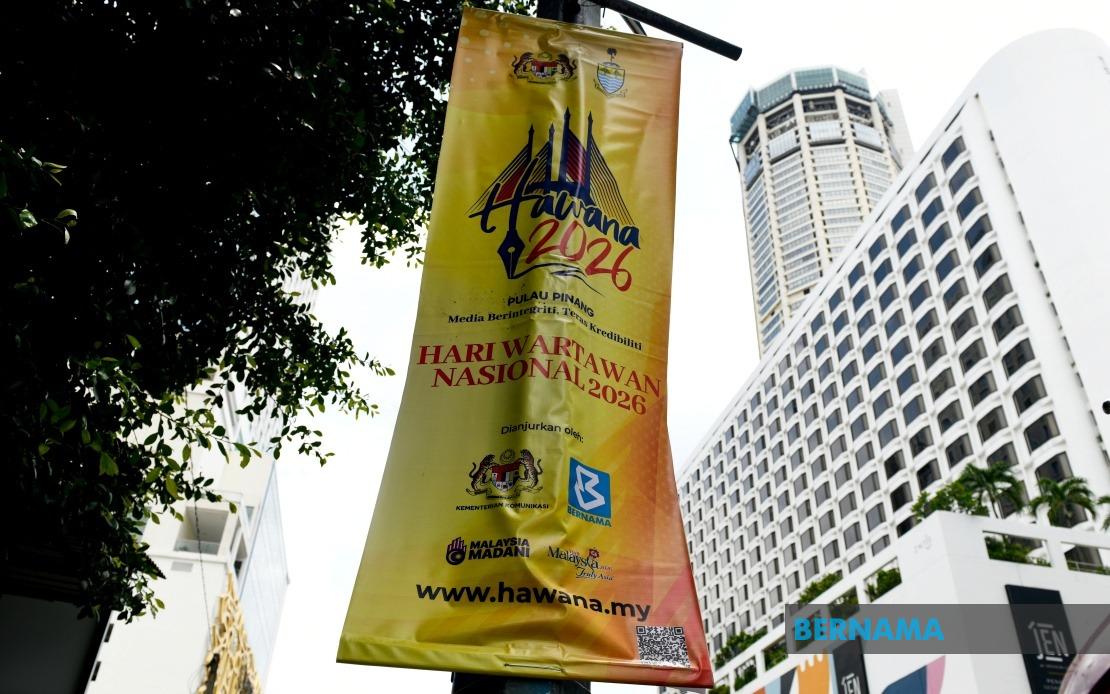
Communications Minister Datuk Fahmi Fadzil will spend two days in Penang from today immersed in a comprehensive schedule of events anchored around the HAWANA 2026 grand finale, the year's marquee celebration of National Journalists' Day. The minister's visit represents a significant political commitment to acknowledging the media sector's instrumental role in Malaysia's development trajectory, underscoring the government's recognition that journalism and credible information dissemination remain cornerstones of national progress.
Fahmi's first engagement will be the Malaysia Media Retreat Programme 2.0 in Seberang Jaya this afternoon, setting the tone for an intensive dialogue with news industry leaders. This programme serves as a bridge-building exercise between government officials and the media establishment, creating informal spaces where journalists, editors-in-chief, and executives from both domestic and international news organisations can exchange perspectives on industry challenges and opportunities. The retreat format allows for candid conversations often impossible within formal press conferences, potentially yielding deeper insights into media concerns around editorial independence, resource constraints, and the digital transformation reshaping newsrooms across Malaysia.
This evening, Fahmi will join Penang Yang Dipertua Negeri Tun Ramli Ngah Talib for a state government dinner that further cements the occasion's significance. The dinner signals Penang's proactive participation in national media celebrations, demonstrating that recognition of journalism's contributions transcends federal-state political boundaries. For a state that has historically positioned itself as progressive and forward-thinking, the governor's personal attendance underscores media's standing in Penang's governance narrative.
The RIUH Pi HAWANA Carnival at PICCA Convention Centre @ Butterworth Arena represents the event's cultural dimension, blending creative industries with journalistic celebration. This three-day carnival, which commenced today, extends the traditional journalism-focused commemoration into broader creative and community spaces, reflecting how information dissemination and artistic expression increasingly intersect in contemporary society. With over 24 local creative brands, 20 food and beverage vendors, and 16 stage performances featuring artists including Sakura Band, Kaka Azraff, Budak Nakal Hujung Simpang, and Chelsea Ng, the carnival transforms HAWANA from an institutional event into a public celebration. Free admission ensures accessibility, democratising what might otherwise remain an industry affair.
Workshops in cyanotype printmaking, albumen printing, and stone-carving underscore an innovative curatorial approach that acknowledges print media's historical significance while introducing diverse creative methodologies. These hands-on activities engage the public in understanding traditional and contemporary image-making techniques, subtly reinforcing media literacy and visual communication's role in information sharing.
Tomorrow's schedule intensifies the engagement with Jiwa@Sembang Santai, a casual dialogue programme at Seberang Jaya Public Market Food Court. By situating this discussion in a neighborhood food court rather than a formal auditorium, organisers deliberately demystify minister-public interaction, creating an approachable setting where ordinary citizens can encounter their Communications Minister in a community space. This grassroots approach aligns with contemporary democratic values emphasizing accessibility and transparency in government engagement.
The Media Dialogue with Fahmi in Butterworth at 9.30 am provides platform for sector-specific discussions, allowing journalists to articulate concerns directly to the minister responsible for communications policy. These dialogues often generate commitments toward regulatory adjustments, funding initiatives, or support mechanisms for the media industry, making them substantively important beyond their ceremonial aspects.
The HAWANA 2026 Grand Finale at 3 pm represents the crescendo of these two days, with Prime Minister Datuk Seri Anwar Ibrahim officiating the event under the thematic focus "Media Integrity Strengthens Credibility". The theme selection is particularly significant given contemporary global concerns about misinformation, disinformation, and the erosion of public trust in traditional news institutions. By positioning media integrity as foundational to credibility, the government articulates a sophisticated understanding that in an information-saturated age, journalism's survival depends upon uncompromising commitment to accuracy, fairness, and accountability.
An anticipated attendance of approximately 1,000 media practitioners from within Malaysia and internationally transforms this into a substantial gathering capable of setting industry discourse directions. International participation particularly enriches proceedings, enabling Malaysian journalists to benchmark their professional standards against international peers and understand evolving global journalism best practices. For Southeast Asian editors and reporters, such convenings often become opportunities for cross-border collaboration on regional stories transcending single-nation boundaries.
The event's organisation under the Ministry of Communications, with Bernama as implementing agency, reflects institutional architecture designed to ensure the media commemoration maintains governmental legitimacy while preserving editorial independence. Bernama's role as implementing rather than governing entity creates appropriate distance, allowing the celebration to foreground journalist voices rather than government messaging.
For Malaysian journalism, HAWANA 2026 occurs amid broader regional and global transformations challenging traditional business models, editorial autonomy, and public confidence. By assembling 1,000 practitioners to discuss contemporary journalism's direction, the government implicitly acknowledges that the profession requires collective reflection, institutional renewal, and renewed social investment. Fahmi's two-day commitment demonstrates political seriousness about these challenges, though real progress will ultimately depend upon whether government commitments translate into sustained policy support, equitable press freedom protections, and regulatory environments enabling quality journalism to flourish economically.
The ministerial visit also carries implications for Southeast Asian media discussions more broadly. As Malaysia hosts this regional showcase, neighbouring journalists observe how the government balances celebrating journalism's democratic role while navigating tensions between official narratives and editorial independence. The HAWANA 2026 outcome may influence how other Southeast Asian nations approach their own media sector engagement, potentially establishing templates for constructive government-media relationships respecting both institutional roles.

%22%2F%3E%3C%2Fpattern%3E%3C%2Fdefs%3E%3Crect%20width%3D%22100%25%22%20height%3D%22100%25%22%20fill%3D%22url(%23ph2hy9vg)%22%2F%3E%3Crect%20width%3D%22100%25%22%20height%3D%22100%25%22%20fill%3D%22url(%23ph2hy9vp)%22%2F%3E%3Ctext%20x%3D%2250%25%22%20y%3D%2250%25%22%20text-anchor%3D%22middle%22%20dominant-baseline%3D%22central%22%20fill%3D%22rgba(255%2C255%2C255%2C0.95)%22%20font-family%3D%22Georgia%2C%20'Times%20New%20Roman'%2C%20serif%22%20font-weight%3D%22700%22%20font-size%3D%22272%22%20letter-spacing%3D%22-0.02em%22%3EAnwar%3C%2Ftext%3E%3C%2Fsvg%3E)