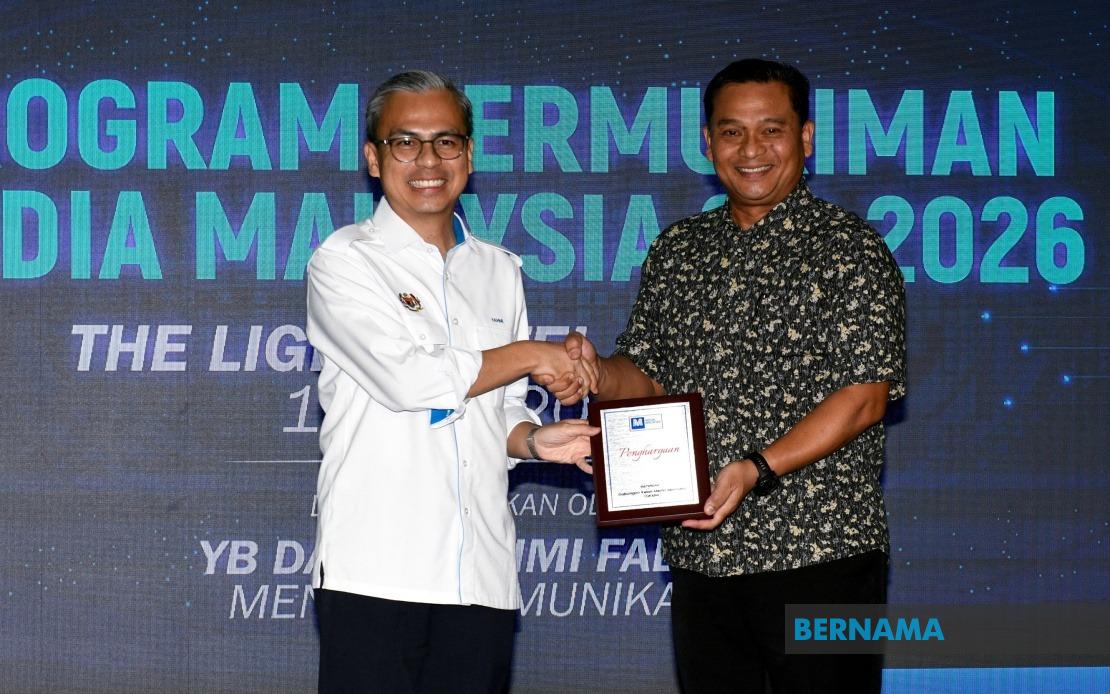
Communications Minister Datuk Fahmi Fadzil has unveiled a new funding initiative designed to strengthen the media industry and support journalist welfare across Malaysia. Speaking at the Malaysia Media Retreat Programme 2.0 in Butterworth on June 19, Fahmi announced that the Communications Ministry would distribute RM10,000 to each state media club affiliated with the Malaysian Media Clubs Association (GKMM), whilst channelling an additional RM30,000 directly to the umbrella organisation. The allocation represents the government's commitment to addressing the material concerns of news professionals and sustaining industry infrastructure during a period of significant technological and economic change.
Fahmi's announcement carries particular significance given ongoing conversations about the future of journalism in Southeast Asia. The minister explicitly framed the contribution as an investment in human capital, emphasising that trained journalists cannot be substituted by artificial intelligence systems despite rapid advances in automated news generation. This positioning reflects growing concern among policymakers about the erosion of professional journalism and the rise of unverified information in digital ecosystems. By directing resources toward established media institutions and professional associations, the government is attempting to buttress traditional journalistic practices even as digital disruption threatens conventional newsroom economics across the region.
The funding mechanism itself deserves attention for its structural approach. Rather than allocating resources directly to individual news organisations—which might create contentious questions about editorial independence—the ministry has chosen to channel support through professional welfare associations. This preserves a degree of institutional separation whilst still enabling government resources to reach practitioners. The GKMM, whilst not functioning as a formal trade union, has emerged as a significant voice in articulating industry grievances and advocating for improved working conditions among reporters, editors, and support staff across Malaysia's disparate media landscape.
Fahmi's remarks about journalist protection underscore broader anxieties about media sustainability. Newsroom employment in Malaysia, like elsewhere in Asia, has contracted significantly over the past decade as advertising revenue migrated online and audience attention fragmented. Many smaller publications have ceased operations entirely, whilst survivors have implemented rounds of redundancies and restructuring. By publicly affirming that "journalists' jobs can be preserved," Fahmi is signalling that job protection remains a policy priority for his ministry, even if concrete measures remain limited. The financial allocation, whilst welcome, represents modest support compared to the scale of employment challenges facing the industry.
The government's stated intention to consult media practitioners during policymaking also surfaces in Fahmi's comments. He referenced the drafting of the Malaysian Media Council Act, which he characterised as substantially shaped by input from industry stakeholders. This consultative approach, if genuinely implemented, could foster greater alignment between regulatory frameworks and practical realities faced by newsrooms. However, the historical relationship between Malaysian governments and the media has been complicated by periods of tension and control, so journalists may approach such collaboration with cautious optimism whilst remaining alert to potential constraints on editorial freedom.
Context matters for understanding this announcement's implications. Malaysia's media environment includes a mix of state-owned outlets, commercially-operated publications, and digital-native platforms. Competition for advertising revenue has intensified as digital platforms capture marketing budgets historically allocated to traditional media. Meanwhile, government licensing requirements and regulatory frameworks create dependencies between news organisations and state institutions. Financial support from the Communications Ministry, therefore, must be understood within this ecosystem of institutional relationships and power dynamics.
The allocation to GKMM specifically acknowledges the association's expanding role as a professional organisation representing collective interests. GKMM membership includes journalists from government agencies, commercial outlets, and independent publications, making it a broadly representative body despite lacking formal bargaining power. The RM30,000 grant provides resources for the association to conduct activities and programmes addressing welfare concerns—potentially including professional development workshops, mental health support, insurance schemes, or advocacy campaigns around working conditions.
State-level media clubs, which will each receive RM10,000, vary significantly in size, resources, and influence. Larger clubs in Kuala Lumpur, Selangor, and Penang typically command greater visibility and capacity than their counterparts in smaller states. The flat-rate funding model may inadvertently advantage wealthier clubs whilst placing additional pressure on resource-constrained organisations. Some state clubs may struggle to utilise their allocations meaningfully, whilst others might leverage the funds strategically for infrastructure improvements or membership programmes.
Fahmi's emphasis on journalism's irreplaceability carries rhetorical weight in conversations about artificial intelligence and news production. Whilst automated systems excel at generating straightforward factual summaries—sports scores, financial results, earnings reports—investigative journalism, contextual analysis, and human-centred storytelling remain distinctly professional functions. The minister's framing reinforces this distinction and implicitly rejects arguments that news production could be substantially automated. This positioning has particular relevance for Southeast Asia, where several governments have experimented with AI-driven content moderation and information systems that might eventually constrain professional journalism's scope.
The broader policy context includes Malaysia's commitment to media development within ASEAN frameworks and its engagement with international journalism organisations. The government has periodically signalled openness to strengthening media institutions, yet actual investment in journalist welfare, newsroom infrastructure, and professional standards remains relatively limited compared to developed democracies. Fahmi's announcement represents incremental progress, though sceptics might note that RM10,000 per state club annually—totalling roughly RM160,000 across Malaysia's fourteen states and three federal territories—constitutes modest expenditure relative to overall ministry budgets.
For Malaysian journalists themselves, the announcement offers tangible if limited benefit. State media clubs may channel funds toward professional development seminars, emergency assistance schemes for members facing hardship, or improved facilities for journalism meetings and training activities. Individual journalists, however, will not directly receive personal payments, meaning the impact on individual economic security or career prospects remains indirect. The funds' effectiveness ultimately depends on how GKMM and state clubs prioritise allocation and implementation.
This initiative also reflects evolving government attitudes toward media institution-building in the post-pandemic era. The COVID-19 pandemic highlighted both journalism's essential role in disseminating public health information and the precariousness of newsroom economics when advertising revenue collapsed. Recovery has been uneven, with digital outlets recovering faster than print-dependent publications. Government support for media infrastructure, even in limited forms, acknowledges journalism's continuing public value and the need for deliberate policy measures to sustain professional news production.
Looking forward, the success of this funding initiative will depend on transparent implementation, sensible deployment by recipient organisations, and whether it catalyses broader government commitments to media sustainability. Journalists across Malaysia will likely scrutinise how funds are utilised and whether tangible improvements to working conditions, professional development opportunities, or member support services materialise. The announcement positions journalism as worthy of public investment whilst leaving fundamental questions about long-term sustainability and editorial independence substantially unanswered.


%22%2F%3E%3C%2Fpattern%3E%3C%2Fdefs%3E%3Crect%20width%3D%22100%25%22%20height%3D%22100%25%22%20fill%3D%22url(%23ph2hy9vg)%22%2F%3E%3Crect%20width%3D%22100%25%22%20height%3D%22100%25%22%20fill%3D%22url(%23ph2hy9vp)%22%2F%3E%3Ctext%20x%3D%2250%25%22%20y%3D%2250%25%22%20text-anchor%3D%22middle%22%20dominant-baseline%3D%22central%22%20fill%3D%22rgba(255%2C255%2C255%2C0.95)%22%20font-family%3D%22Georgia%2C%20'Times%20New%20Roman'%2C%20serif%22%20font-weight%3D%22700%22%20font-size%3D%22272%22%20letter-spacing%3D%22-0.02em%22%3EAnwar%3C%2Ftext%3E%3C%2Fsvg%3E)