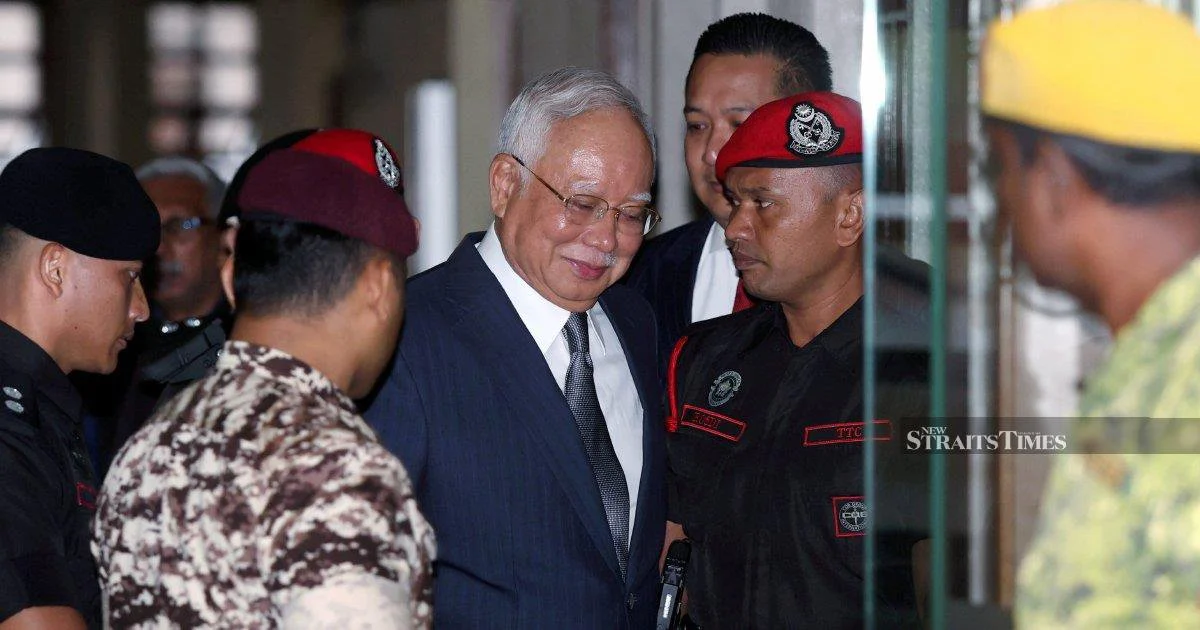
A Malaysian court has established a direct collaborative relationship between former Prime Minister Datuk Seri Najib Razak and fugitive businessman Low Taek Jho in systematically channelling massive sums from 1Malaysia Development Bhd (1MDB), a conclusion that reinforces the interconnected nature of what has become Southeast Asia's largest financial scandal.
The judicial determination that the two operated on a coordinated basis to misappropriate state development funds represents a milestone in Malaysia's long legal reckoning with the 1MDB affair. The finding goes beyond establishing individual culpability to demonstrating deliberate partnership in executing a complex scheme that ultimately cost the nation tens of billions of ringgit. For Malaysian observers, the ruling underscores how governance failures at the highest institutional levels enabled one of the region's most consequential corruption cases.
The 1MDB saga has fundamentally reshaped Malaysian political discourse since the fund's establishment in 2009. Originally conceived as an instrument for national economic diversification, the sovereign wealth vehicle instead became a vehicle for what investigators and prosecutors across multiple jurisdictions have characterised as systematic embezzlement. The scale of the alleged misappropriation—touching billions rather than millions—distinguishes this case from typical corruption inquiries and explains the sustained international attention it has commanded.
Jho Low's fugitive status adds another dimension to the judgment. Despite remaining outside Malaysian jurisdiction, the court's ability to establish his role alongside Najib creates a legal record that complicates his international mobility and reinforces the breadth of the criminal enterprise. Various countries have pursued investigations into transactions linked to 1MDB, with financial institutions across multiple continents tracing suspicious fund flows that originated from or transited through Malaysian channels.
For Malaysia's judicial system and prosecutorial authorities, securing convictions and establishing collaborative guilt requires navigating complex evidentiary challenges. Financial crimes on this scale invariably involve sophisticated layering across multiple entities, jurisdictions, and intermediaries. The court's ability to reconstruct the operational relationship between Najib and Jho Low demonstrates that Malaysian investigators and prosecutors have successfully unravelled enough of this complexity to build persuasive legal narratives.
The judgment carries implications for broader governance reform in Malaysia. The 1MDB debacle exposed vulnerabilities in institutional oversight, board-level accountability, and parliamentary scrutiny that have prompted discussions about strengthening checks on executive power and sovereign wealth fund management. Subsequent Malaysian governments have implemented enhanced transparency mechanisms and governance protocols designed to prevent similar accumulation of unchecked discretionary authority over state assets.
International dimensions of the 1MDB investigation remain active across multiple jurisdictions. Financial regulators and enforcement agencies in the United States, Singapore, Switzerland, and the United Arab Emirates have pursued parallel investigations into how alleged 1MDB proceeds were laundered through global financial systems and converted into real estate, art, and other assets. These investigations have generated their own criminal proceedings and regulatory actions against financial institutions that failed to conduct adequate due diligence.
The ruling also reflects Malaysia's participation in strengthened international cooperation frameworks addressing transnational financial crime. The country's commitment to combating large-scale corruption has been tested through the 1MDB prosecutions, with Malaysian courts demonstrating capacity to engage sophisticated forensic financial analysis and international evidence-sharing protocols. This judicial engagement has enhanced Malaysia's credibility within global networks focused on financial transparency and corruption prevention.
For Malaysian political culture, the judgment continues a reckoning with how the 1MDB crisis shattered public confidence in institutional integrity. The scandal contributed directly to electoral outcomes, including the 2018 general election result that saw Najib's coalition defeated after more than six decades of continuous governance. Subsequent years have witnessed political realignment and competing narratives about accountability, with the ongoing judicial processes serving as a backdrop to these broader political conversations.
The court's determination that Najib and Jho Low operated in coordinated fashion establishes criminal responsibility extending beyond individual actors to encompass deliberate partnership. This finding may influence how investigators and prosecutors approach other cases involving multiple putative wrongdoers, providing precedent for establishing conspiracy or joint enterprise liability in complex financial crime contexts. The judgment demonstrates that Malaysian courts can construct coherent narratives of coordinated misconduct even when evidence necessarily relies on financial records, communications, and circumstantial linkages rather than direct confession.
Moving forward, the 1MDB prosecutions continue as Malaysian authorities pursue remaining legal proceedings against other individuals implicated in the scheme. The case remains emblematic of broader governance challenges facing developing economies seeking to protect sovereign wealth assets while balancing political pressures and institutional capacity constraints. Malaysia's sustained engagement with 1MDB accountability represents both a commitment to rule of law and an acknowledgment that rebuilding public trust requires prolonged judicial engagement with the mechanisms that enabled the fund's capture and systematic misappropriation.


%22%2F%3E%3C%2Fpattern%3E%3C%2Fdefs%3E%3Crect%20width%3D%22100%25%22%20height%3D%22100%25%22%20fill%3D%22url(%23ph2hy9vg)%22%2F%3E%3Crect%20width%3D%22100%25%22%20height%3D%22100%25%22%20fill%3D%22url(%23ph2hy9vp)%22%2F%3E%3Ctext%20x%3D%2250%25%22%20y%3D%2250%25%22%20text-anchor%3D%22middle%22%20dominant-baseline%3D%22central%22%20fill%3D%22rgba(255%2C255%2C255%2C0.95)%22%20font-family%3D%22Georgia%2C%20'Times%20New%20Roman'%2C%20serif%22%20font-weight%3D%22700%22%20font-size%3D%22272%22%20letter-spacing%3D%22-0.02em%22%3EAnwar%3C%2Ftext%3E%3C%2Fsvg%3E)