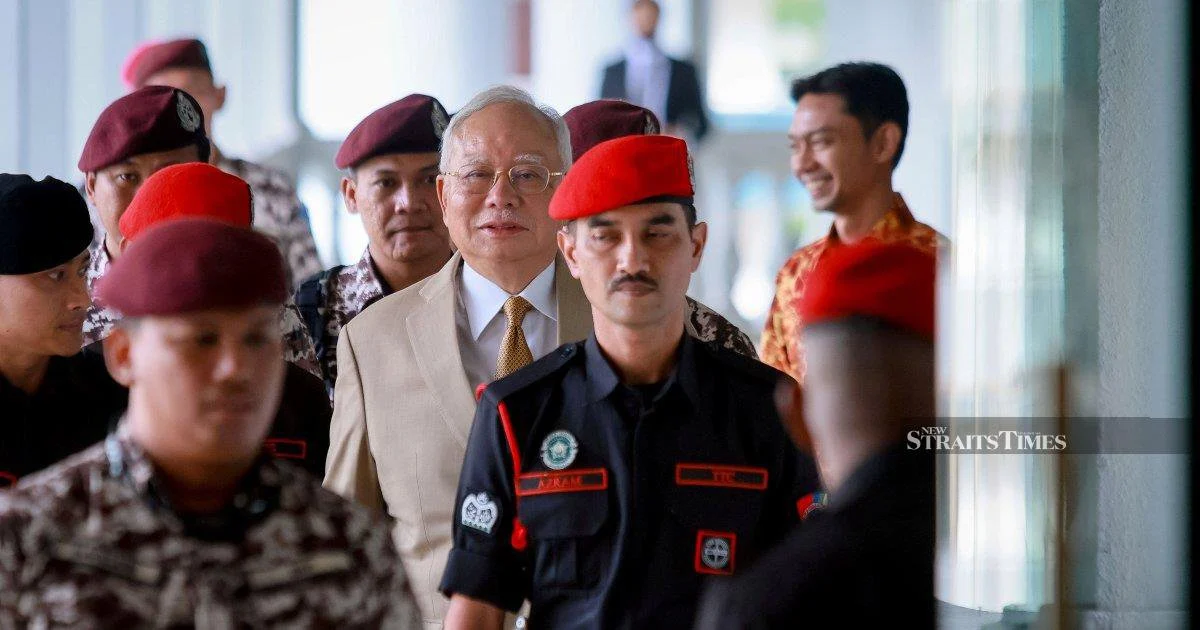
A judge has ruled that Datuk Seri Najib Razak's failure to take appropriate action regarding the transfer of billions of ringgit connected to 1Malaysia Development Bhd into his personal bank accounts fell well short of what a reasonable person would do in similar circumstances. The court's assessment highlights a critical juncture in the ongoing legal proceedings related to one of the largest financial scandals in Malaysia's modern history, with the judiciary taking a clear stance on the former Prime Minister's conduct during the period when substantial sums flowed through his private accounts.
The judge's characterization of the funds as something far more significant than trivial reflects the magnitude of the sums at issue. The phrasing employed in court—deliberately avoiding minimization of the transfer amounts—underscores that the financial flows involved were substantial enough to demand immediate and careful attention from any prudent account holder. This distinction matters legally and morally, as it establishes that Najib could not plausibly claim ignorance or suggest that the scale of money involved was beneath his notice or unworthy of investigation.
The 1MDB scandal remains central to Malaysian political discourse and has had lasting ramifications for national governance and international reputation. The development fund, established in 2009 during Najib's tenure as Prime Minister, eventually became the vehicle through which investigators allege billions were misappropriated. The discovery that substantial amounts subsequently appeared in the accounts of the sitting Prime Minister raised extraordinary questions about oversight, accountability, and the mechanisms through which public funds were managed during that administration.
Najib's legal defence has navigated between various positions regarding his knowledge and authority over these transactions. The court's finding that his inaction was unreasonable suggests that regardless of whether he initiated the transfers personally, maintaining silence and taking no steps to clarify or reverse them once deposited represented a failure of basic prudence. The judgement implies that any reasonable person receiving such substantial unexpected sums—particularly from a government-linked entity—would logically seek explanation, verification, or remedial action.
The implications of this ruling extend beyond the immediate case against Najib. It establishes a judicial standard for how political figures should conduct themselves when faced with suspicious financial activity involving their accounts. In the Southeast Asian context, where questions about financial transparency and leadership accountability remain pressing, Malaysia's courts are signalling that high office does not shield individuals from ordinary expectations of responsible conduct. This sends a message both domestically and regionally about the judiciary's commitment to the rule of law.
For Malaysian readers and observers across Southeast Asia, the ruling provides concrete evidence of the legal system's capacity to scrutinize former leaders, even those who once wielded significant power. The case demonstrates that temporal distance from office and political status do not immunize individuals from judicial examination of their financial conduct. This principle strengthens public confidence in institutional checks on executive power, a concern throughout the region where democratic accountability mechanisms vary considerably.
The unreasonableness finding also carries implications for how Malaysian courts might assess similar cases involving public officials and unexplained wealth. By establishing that passivity in the face of suspicious financial flows represents a failure of reasonable conduct, the judiciary creates a framework that could apply more broadly to other investigations involving possible misuse of public funds or inexplicable private enrichment by state officials.
The 1MDB situation itself involved complex international dimensions, with investigators tracing flows through multiple jurisdictions and financial institutions. Najib's personal accounts became repositories for amounts that raised immediate suspicions among financial professionals and authorities. The fact that these transactions occurred at the highest level of government—affecting the Prime Minister's own accounts—made their questionable nature all the more significant for national institutions and public trust in governance.
The judge's emphasis on the non-trivial nature of the funds suggests the court rejected any suggestion that the amounts involved were minor or easily overlooked. This rhetorical choice reinforces the seriousness with which the judiciary views the financial flows and Najib's response to them. The substantial scale demands serious explanation and action, the court's language indicates, and failure to provide either compounds the original problem.
Moving forward, this ruling may influence how subsequent proceedings develop and what additional charges or findings emerge from the broader 1MDB investigation. Other officials and individuals implicated in the scandal will note how Malaysian courts assess responsibility when confronted with unexplained wealth and questionable transactions. The precedent suggests that courts will not accept passivity as a reasonable response to such circumstances.
The case remains significant for Malaysia's journey toward stronger governance standards and for regional observers monitoring how nations address high-level financial impropriety. The ruling demonstrates that despite political complexities and sensitivities surrounding former leaders, judicial mechanisms can function to hold powerful individuals accountable. For Southeast Asia broadly, the Malaysian experience offers lessons about the importance of institutional independence and the courts' role in constraining potential abuse of state resources.


%22%2F%3E%3C%2Fpattern%3E%3C%2Fdefs%3E%3Crect%20width%3D%22100%25%22%20height%3D%22100%25%22%20fill%3D%22url(%23ph2hy9vg)%22%2F%3E%3Crect%20width%3D%22100%25%22%20height%3D%22100%25%22%20fill%3D%22url(%23ph2hy9vp)%22%2F%3E%3Ctext%20x%3D%2250%25%22%20y%3D%2250%25%22%20text-anchor%3D%22middle%22%20dominant-baseline%3D%22central%22%20fill%3D%22rgba(255%2C255%2C255%2C0.95)%22%20font-family%3D%22Georgia%2C%20'Times%20New%20Roman'%2C%20serif%22%20font-weight%3D%22700%22%20font-size%3D%22272%22%20letter-spacing%3D%22-0.02em%22%3EAnwar%3C%2Ftext%3E%3C%2Fsvg%3E)