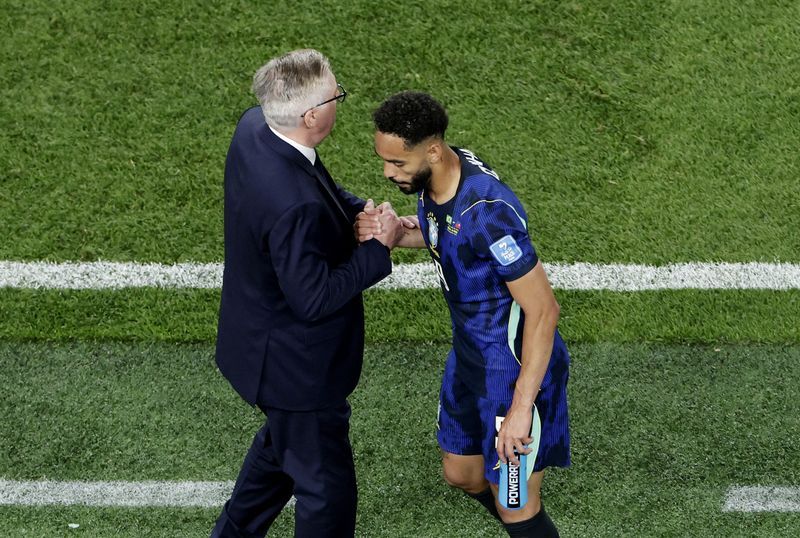
Carlo Ancelotti's Brazil may not have dismantled every structural weakness during their romp over Haiti in Philadelphia on June 19, but the Italian tactician at least provided supporters with a tangible sense of where the five-time world champions might travel next. The 3-0 scoreline itself was somewhat hollow, delivered against opponents with limited technical resources and a concerning tendency to abandon defensive shape in pursuit of attacking opportunities. Yet beneath the surface, there emerged genuine architectural clarity that had been conspicuously absent when Brazil laboured through their opening Group C fixture against Morocco.
The catalyst for this measured improvement lay in Ancelotti's substitution of Igor Thiago with Matheus Cunha in the forward line. This was not merely a cosmetic alteration to Brazil's attacking personnel. Rather, it represented a fundamental reimagining of how the midfield might service the front line and, conversely, how the forwards could drop deeper to create space and passing angles for their deeper colleagues. The movement and positional intelligence that Cunha brought to the party injected a fluidity that had been missing from Brazil's approach play. Where Igor Thiago had seemed disconnected from the midfield's rhythm, Cunha drifted naturally across the park, creating the bridge that any attacking unit requires.
What emerged during Brazil's second-half dominance was the first genuine operational glimpse of Ancelotti's favoured diamond midfield configuration. The system, theoretically elegant on the training ground, requires a specific type of player in each position—intelligent movers, technically assured passers, and individuals capable of reading space before it fully materialises. Lucas Paquetá, whose first-half performance against Morocco had drawn considerable criticism, appeared considerably more comfortable operating as the left-sided midfielder. Rather than appearing isolated or reactive, he engaged systematically with both Vinicius Jr and Cunha, constructing short passing sequences that culminated in Brazil's goal-scoring opportunities. The left side of Brazil's attack, in particular, demonstrated a cohesion that has been largely absent since Neymar's serious injury removed a player whose creative electricity had long compensated for structural deficiencies elsewhere.
Cunha's tireless movement proved crucial to this equilibrium. Operating with the kind of restless intelligence that modern attacking football demands, he continually positioned himself as an outlet for possession, a link between phases of play, and a threat to Haiti's defensive structure. His chemistry with both Paquetá and Vinicius felt organic rather than forced, suggesting that Ancelotti may have identified a genuinely complementary pairing. The goals themselves predictably emerged from this rejuvenated flank, a clear indication that when Brazil's left side functions with purpose and connectivity, the team's overall attacking efficiency improves substantially.
However, this optimistic assessment must be tempered by significant concerns emerging on Brazil's right flank. Raphinha, operating for the second consecutive match, failed to impose himself on proceedings and was eventually withdrawn owing to physical discomfort. Earlier in the week, blisters on his feet had forced him to miss training, and his lack of sharpness from the opening moments suggested his preparation had been compromised. More troubling than injury concerns, however, is Raphinha's apparent discomfort with the wide positioning assigned to him. In his club football, the Barcelona winger operates in a more fluid, interior role—much closer to the function Cunha successfully executed against Haiti. Pinned to the touchline, Raphinha appeared uncomfortable, his passing timing questionable and his ball control uncharacteristically sloppy.
This positional mismatch raises strategic questions about Brazil's right-side construction under Ancelotti's system. The diamond formation demands specific contributions from its wide players, yet Raphinha's natural instincts pull him infield. When he was withdrawn, his replacement, Rayan, similarly failed to settle into the rhythm of the match, leaving Ancelotti with a conundrum heading into future fixtures. Should Raphinha miss the Scotland encounter, Luiz Henrique emerges as the more probable deputy, offering different attributes and positioning flexibility that could potentially resolve this ongoing issue.
Defensive solidity presents another area warranting careful observation. Casemiro's presence at the base of midfield offers experience and a certain rough-hewn reliability, yet serious questions persist about whether the 34-year-old can maintain his typically commanding standards against opponents far more technically proficient and physically intense than Haiti. Bruno Guimarães, who operated fluidly as right midfielder against Haiti, possesses the requisite defensive nous and passing range to drop deeper into a more protective midfield role if Ancelotti deems such an adjustment necessary. Such a repositioning would sacrifice some attacking fluidity on the right flank but could provide the defensive foundation essential for progression through the tournament's latter stages.
Brazil's performance, while demonstrating undeniable progress, hardly announced itself as a statement of intent. Haiti's fundamental limitations as a footballing entity meant that any reasonably organised Brazilian team would have dominated proceedings. Yet within the tactical framework Ancelotti deployed and the individual performances that emerged, there existed encouraging threads worth following. The diamond formation, when executing with purpose, offered a structural foundation more coherent than anything observed during the Morocco draw. Cunha's impact suggested that Ancelotti has identified a player type and a tactical role that could unlock Brazil's attacking potential during the remainder of their campaign.
The challenge now facing Ancelotti involves consolidating these positive developments while addressing the vulnerabilities exposed over Haiti's hapless 90 minutes. The left side requires careful management to prevent complacency, while the right flank demands urgent tactical recalibration to prevent it becoming an avenue through which more formidable opponents might exploit Brazil's structural weaknesses. Whether Ancelotti possesses both the flexibility and the personnel options to refine his approach will largely determine whether this measured progress represents the genesis of a genuine tournament revival or merely a false dawn kindled by a thoroughly inadequate opponent.
%22%2F%3E%3C%2Fpattern%3E%3C%2Fdefs%3E%3Crect%20width%3D%22100%25%22%20height%3D%22100%25%22%20fill%3D%22url(%23ph2hy9vg)%22%2F%3E%3Crect%20width%3D%22100%25%22%20height%3D%22100%25%22%20fill%3D%22url(%23ph2hy9vp)%22%2F%3E%3Ctext%20x%3D%2250%25%22%20y%3D%2250%25%22%20text-anchor%3D%22middle%22%20dominant-baseline%3D%22central%22%20fill%3D%22rgba(255%2C255%2C255%2C0.95)%22%20font-family%3D%22Georgia%2C%20'Times%20New%20Roman'%2C%20serif%22%20font-weight%3D%22700%22%20font-size%3D%22272%22%20letter-spacing%3D%22-0.02em%22%3EAnwar%3C%2Ftext%3E%3C%2Fsvg%3E)