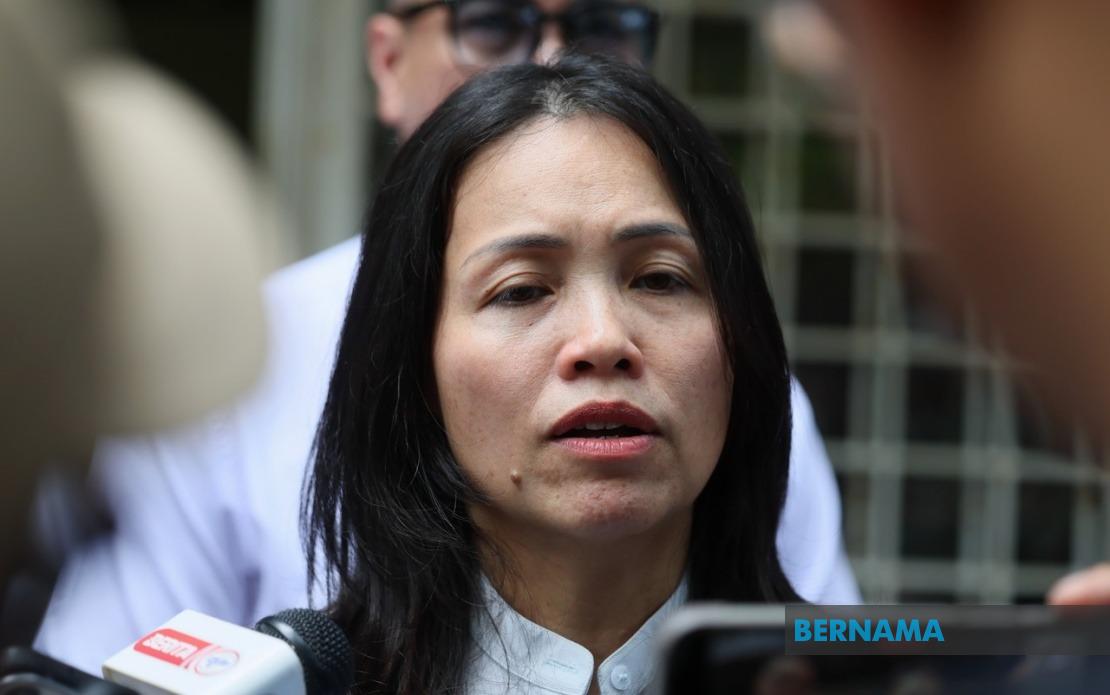
Johor's Democratic Action Party leadership has sounded the alarm over what it characterises as a coordinated effort to undermine the coalition through deceptive campaign materials, urging the electorate to remain vigilant against misinformation during the upcoming state election. The allegation centres on the doctoring of promotional posters depicting potential DAP candidates, with alterations designed to portray them wearing headscarves in ways the party argues misrepresent both the individuals and Islamic traditions.
According to Johor DAP chairman Teo Nie Ching, the manipulation serves a calculated purpose: to sow discord within the non-Malay voter base and discourage support for Pakatan Harapan ahead of the July 11 polling day. By falsely presenting DAP candidates as Muslim women—a significant demographic shift from the party's actual composition in many constituencies—the altered materials appear intended to trigger anxieties among the Chinese community and other non-Malay voters regarding representation and cultural identity. This tactic exploits deep-seated sensitivities around religious and communal boundaries in Malaysian politics, weaponising visual imagery to reshape voter perceptions without relying on substantive policy debate.
Teo, who also serves as Wanita DAP chief and Deputy Communications Minister, emphasised that such conduct breaches fundamental principles of electoral integrity and mutual respect. Her statement underscores a critical tension: while DAP champions pluralism and the rights of all communities regardless of faith, the party simultaneously recognises the sacred place of Islamic practices within Malaysian society. The party's response frames the poster manipulation not merely as a political attack but as a disrespectful act toward the women supposedly depicted and toward Islamic traditions themselves—suggesting that the perpetrators, in pursuing narrow electoral advantage, have compromised both decency and religious propriety.
The timing of these allegations arrives amid intensifying competition within Malaysia's fractured political landscape. Johor, once a BN stronghold, has become a critical battleground where the coalition faces unprecedented pressure from multiple opposition forces. The 56-seat state legislature currently comprises Barisan Nasional with 40 seats, Pakatan Harapan with 12, Perikatan Nasional with three, and MUDA with one. The dissolution of the assembly on June 1 triggered the electoral process, with nomination day set for June 27 and voting scheduled for July 11. This fragmented seat distribution reflects broader instability in Malaysian politics, where no single force commands comfortable dominance and coalition arithmetic becomes determinative.
The allegation of poster manipulation reveals how campaigns increasingly rely on visual signalling and identity politics rather than programmatic differentiation. By altering photographic representations of candidates, the unnamed parties engaging in this practice sidestep direct policy criticism and instead appeal to voter anxieties about community change and representation. For DAP, historically vulnerable to accusations of inadequate concern for Malay-Muslim interests despite its multiracial rhetoric, such distortions hit particularly vulnerably. The party must perpetually navigate the paradox of contesting in a system where communal identity remains politically dominant while maintaining its commitment to transcommunal principles.
Teo's invocation of religious respect—acknowledging that the headscarf holds profound significance for Muslim women and should never be trivialised—represents a deliberate rhetorical strategy. By defending Islamic practice while condemning the posters' manipulation, DAP attempts to reclaim moral high ground and demonstrate that opposition to smear tactics does not reflect hostility toward Islam or Muslim communities. This positioning becomes essential for a party often suspected by Malay-Muslim voters of harbouring secular or anti-religious agendas, regardless of empirical reality. The party's emphasis on defending women and religious dignity aims to transform the narrative from one of electoral combat into one of shared values and mutual protection.
The broader implications for Malaysian electoral discourse warrant attention. Election campaigns increasingly feature allegations of deception, manipulation, and bad-faith conduct, yet accountability mechanisms remain weak. The Election Commission, while responsible for regulating campaign conduct, historically exercises limited enforcement authority over material published by unnamed actors or circulated through informal channels. Social media amplification has compounded this challenge, enabling rapid dissemination of altered content beyond easy verification or correction. Voters, confronted with contradictory claims and visual evidence that may be genuine or doctored, face mounting difficulty in distinguishing reliable information from propaganda.
For Southeast Asian observers, the Johor election illustrates patterns evident across the region: the persistence of identity-based politics, vulnerability to visual manipulation in campaigns, and the erosion of shared epistemological ground upon which democratic deliberation depends. Malaysia's multiracial composition, while a potential source of democratic strength through coalition-building across communities, simultaneously creates openings for divisive campaigning that exploits communal anxieties. The alleged poster alterations exemplify how campaigns can weaponise identity itself, distorting representation and stoking fear without engaging substantive policy differences.
Teo's call for voters to reject such tactics and embrace harmony, unity, and peace reflects aspirational rhetoric common in Malaysian politics yet difficult to operationalise given structural incentives toward communal mobilisation. Her dual appeal—to both defend DAP's reputation and uphold Islamic propriety—demonstrates the complex navigation required of multiracial parties in systems where ethnic and religious identity remain politically determinant. Whether the electorate will heed warnings against manipulation or whether such campaigns will prove electorally effective remains uncertain, but the episode underscores the vulnerability of Malaysian democracy to coordinated deception campaigns and the need for strengthened mechanisms to ensure campaign integrity.

%22%2F%3E%3C%2Fpattern%3E%3C%2Fdefs%3E%3Crect%20width%3D%22100%25%22%20height%3D%22100%25%22%20fill%3D%22url(%23ph2hy9vg)%22%2F%3E%3Crect%20width%3D%22100%25%22%20height%3D%22100%25%22%20fill%3D%22url(%23ph2hy9vp)%22%2F%3E%3Ctext%20x%3D%2250%25%22%20y%3D%2250%25%22%20text-anchor%3D%22middle%22%20dominant-baseline%3D%22central%22%20fill%3D%22rgba(255%2C255%2C255%2C0.95)%22%20font-family%3D%22Georgia%2C%20'Times%20New%20Roman'%2C%20serif%22%20font-weight%3D%22700%22%20font-size%3D%22272%22%20letter-spacing%3D%22-0.02em%22%3EAnwar%3C%2Ftext%3E%3C%2Fsvg%3E)