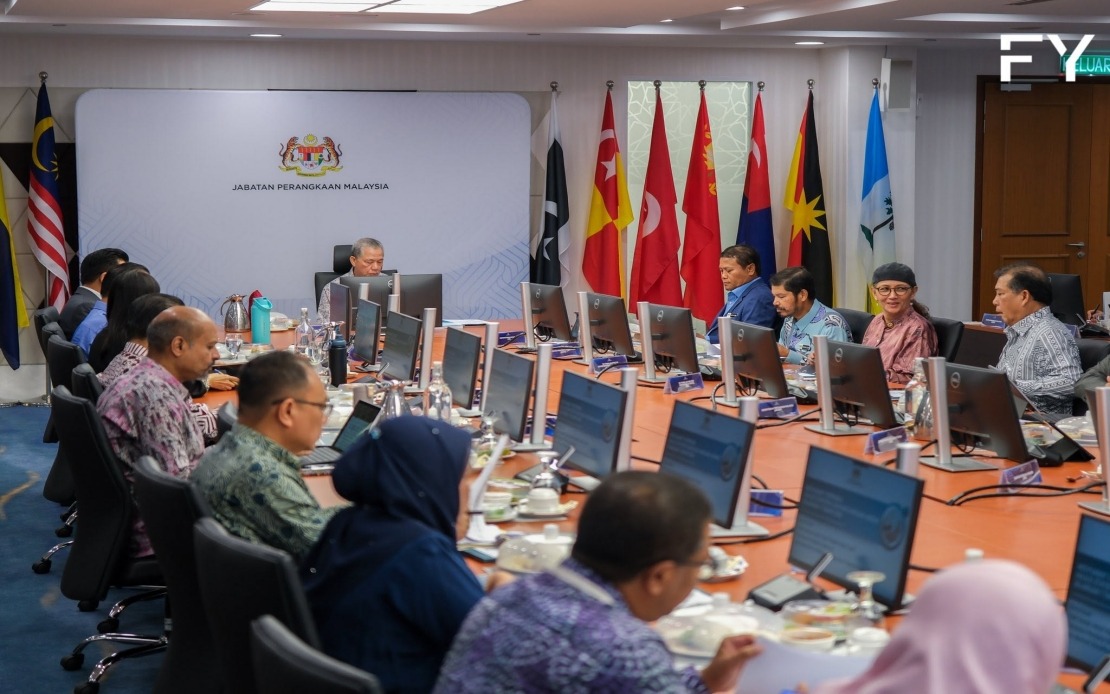
Deputy Prime Minister Datuk Seri Fadillah Yusof has signalled that the government intends to position data analytics and artificial intelligence as cornerstones of strategic governance, with both tools essential to realizing the ambitions of the 13th Malaysia Plan spanning 2026-2030. Speaking after chairing a high-level meeting of the National Statistics and Data Council (MSDN), Fadillah articulated a vision in which Malaysia's statistical infrastructure becomes not simply a repository of information but a dynamic engine powering ministerial decisions across all sectors.
The Deputy Prime Minister's emphasis reflects a broader international trend wherein governments rely increasingly on quantitative evidence to navigate an extraordinarily complex operating environment. Fadillah specifically identified economic volatility, geopolitical instability, accelerating digital disruption, environmental pressures and the transformative potential of artificial intelligence as factors that necessitate robust data governance. In Malaysia's context, where policymakers must balance competing developmental objectives across a multi-ethnic, regionally diverse nation, the capacity to disaggregate and analyse data with precision becomes strategically valuable.
Central to Fadillah's remarks was the assertion that the 13th Malaysia Plan cannot succeed without substantial improvements in the quality, timeliness and integrity of official statistics. This framing inverts conventional assumptions about planning, suggesting that no strategy, however intellectually sound, can be executed effectively without reliable measurement systems. The implication is that Malaysia's statistical agencies, particularly the Department of Statistics, require enhanced resources and institutional autonomy to fulfil this expanded mandate.
The meeting convened representatives from multiple government portfolios, reflecting the cross-cutting nature of data governance. Attendees included Works Minister Datuk Seri Alexander Nanta Linggi, Deputy Health Minister Datuk Hanifah Hajar Taib, Deputy Communications Minister Teo Nie Ching, Deputy Digital Minister Datuk Wilson Ugak Kumbong, Deputy Economy Minister Datuk Mohd Shahar Abdullah and chief statistician Datuk Seri Dr Mohd Uzir Mahidin. This composition underscores recognition that effective data ecosystems cannot be siloed within single agencies but must span health, infrastructure, communications, digital services and economic portfolios.
Fadillah pointed to Malaysia's first-quarter 2026 gross domestic product expansion of 5.4 per cent as evidence that data-informed policymaking produces tangible economic benefits. This assertion carries particular weight in Malaysia's context, where previous development plans have sometimes encountered implementation shortcomings. By linking statistical rigour to measurable macroeconomic performance, the Deputy Prime Minister constructs a compelling narrative for enhanced investment in data infrastructure.
The strategy outlined involves deepening collaboration across government tiers, from federal ministries through state administrations, while simultaneously engaging the private sector and academic institutions. This pluralistic approach acknowledges that comprehensive datasets increasingly reside outside government agencies entirely. Financial institutions hold credit data, telecommunications companies maintain usage patterns, and universities conduct specialized research. A modern statistical system must therefore establish governance frameworks enabling secure, ethical data sharing across institutional boundaries without compromising privacy or security.
Fadillah, who additionally holds the Energy Transition and Water Transformation portfolio, highlighted how strategic sectors confronting transformation pressures require granular data support. Energy transition initiatives, climate change adaptation, water sector modernization and sustainable development all demand precision targeting of investments and interventions. Without comprehensive baseline data and sophisticated analytics capabilities, ministries risk deploying resources inefficiently or pursuing policies misaligned with actual ground conditions.
The council reviewed several foundational initiatives, including standardization of official statistical methodology, governance frameworks governing data access and security, integration of administrative records from multiple agencies, development of talent databases across science and technology sectors, targeted analysis supporting youth development initiatives, and systematic cataloguing of national road assets. Each initiative represents a building block toward what Fadillah termed a more integrated, high-integrity national data ecosystem.
Artificial intelligence's role in this architecture extends beyond simple automation. Machine learning algorithms can identify patterns within massive datasets that human analysts might overlook, enabling early detection of emerging challenges. However, integrating AI into government decision-making introduces governance complexities, particularly regarding algorithmic transparency, bias mitigation and accountability. Malaysian policymakers must therefore establish robust frameworks ensuring that AI deployment enhances rather than undermines democratic governance and equity principles.
For Malaysia's broader regional position, developing sophisticated data and AI capabilities carries strategic implications. Nations competing for foreign investment, attracting technology talent, and positioning themselves as digital economy leaders increasingly emphasize their analytical infrastructure. By foregrounding data governance, Malaysia signals commitment to professional, evidence-based administration—qualities valued by multinational corporations and international partners evaluating investment destinations.
The success of this data-centric approach ultimately depends on sustained institutional commitment extending beyond current political cycles. Statistical agencies require stable funding, professional insulation from short-term political pressures, and mechanisms enabling continuous skill development as technology evolves. The 13th Malaysia Plan represents an opportunity to embed these capabilities deeply within Malaysian governance structures, but only if successive administrations maintain investment and prioritization.
Looking forward, the challenge for Malaysian policymakers involves translating these strategic principles into operational reality. Establishing data governance frameworks, building technical talent pipelines, negotiating data-sharing agreements across institutions, and implementing AI systems responsibly demands sustained effort and significant resource allocation. Yet as Fadillah's remarks suggest, such investments are increasingly non-negotiable for governments aiming to deliver responsive, efficient public services in an era defined by rapid technological change and complex, interconnected challenges.
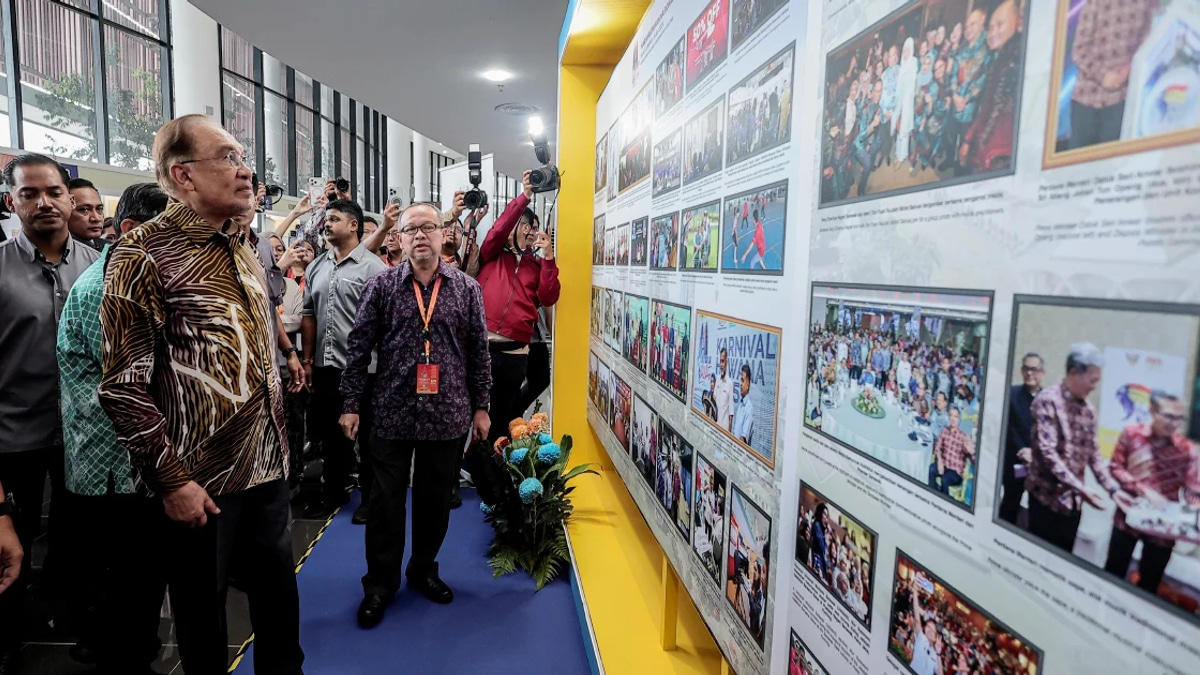

%22%2F%3E%3C%2Fpattern%3E%3C%2Fdefs%3E%3Crect%20width%3D%22100%25%22%20height%3D%22100%25%22%20fill%3D%22url(%23ph2hy9vg)%22%2F%3E%3Crect%20width%3D%22100%25%22%20height%3D%22100%25%22%20fill%3D%22url(%23ph2hy9vp)%22%2F%3E%3Ctext%20x%3D%2250%25%22%20y%3D%2250%25%22%20text-anchor%3D%22middle%22%20dominant-baseline%3D%22central%22%20fill%3D%22rgba(255%2C255%2C255%2C0.95)%22%20font-family%3D%22Georgia%2C%20'Times%20New%20Roman'%2C%20serif%22%20font-weight%3D%22700%22%20font-size%3D%22272%22%20letter-spacing%3D%22-0.02em%22%3EAnwar%3C%2Ftext%3E%3C%2Fsvg%3E)