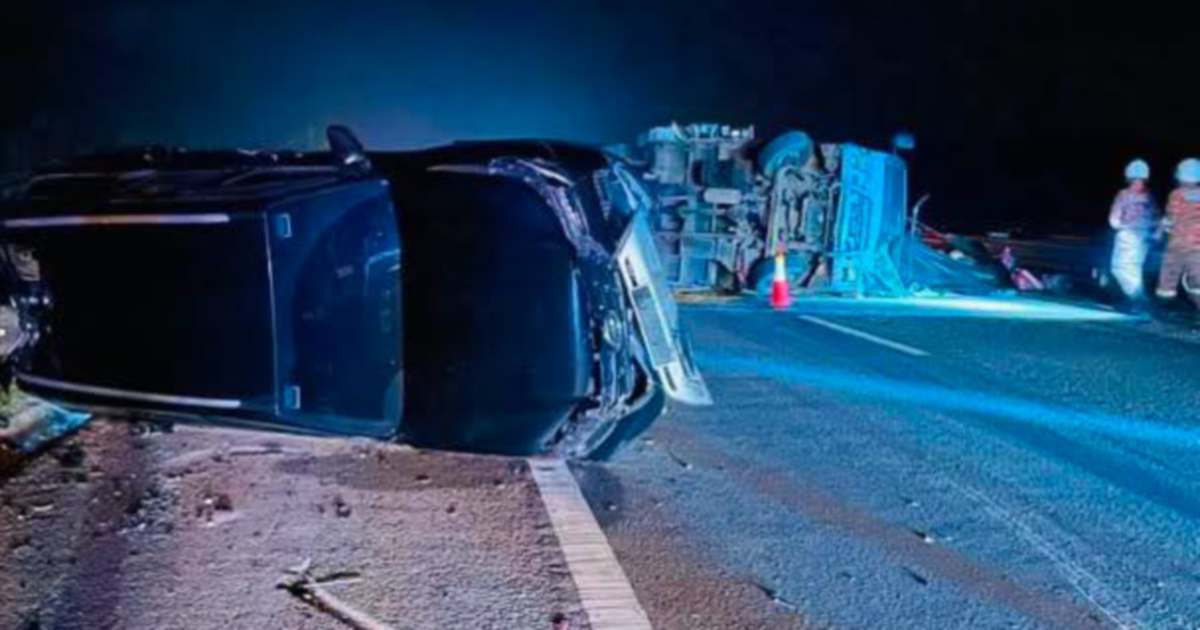
A three-vehicle collision on the East Coast Expressway near Maran has left seven people injured, including three media personnel attached to the office of Deputy Prime Minister Datuk Seri Dr Ahmad Zahid Hamidi. The incident occurred in the early hours of the day at Kilometre 144 of the expressway, a major transportation corridor that links Kuala Lumpur to the east coast states of Peninsular Malaysia.
The presence of media officers from the Deputy Prime Minister's office among the casualties underscores the hazards faced by those who travel frequently along Malaysia's highway network. Journalists and communications staff assigned to senior government officials often spend considerable time on the road attending events, managing media coverage, and coordinating with news outlets across multiple locations. The East Coast Expressway, while a critical infrastructure project that has significantly reduced travel times to eastern Malaysia, has also witnessed a number of serious traffic incidents over the years.
Accidents involving high-ranking officials or their support staff tend to draw heightened public attention, particularly when they occur on major thoroughfares that handle significant traffic volumes. The expressway serves as a vital economic artery, connecting industrial zones, manufacturing hubs, and residential areas. Early morning hours often see elevated traffic volumes as commuters and commercial vehicles move goods and personnel across the peninsula.
The three media officers, while among the injured, were reported to have escaped serious injury, suggesting that safety measures or the circumstances of the collision prevented more catastrophic outcomes. This distinction is important for understanding accident dynamics on expressways, where high speeds and the mass of vehicles involved can amplify the severity of collisions. Medical responders and highway authorities would have assessed all seven injured persons at the scene.
The multi-vehicle nature of the accident—involving three separate vehicles—indicates a chain-reaction scenario that is not uncommon on expressways during periods of congestion or reduced visibility. Such collisions often stem from inadequate following distances, sudden lane changes, or unexpected obstacles on the roadway. The involvement of media personnel means this particular incident may receive broader coverage through news channels and social media platforms, potentially serving as a cautionary reminder to Malaysian drivers about expressway safety practices.
Deputy Prime Minister Ahmad Zahid's media contingent represents one of several communication teams deployed by senior government figures to manage public relations and media engagement. The regular movement of these teams across Malaysia's highways reflects the demands of high-level government operations and the need to maintain constant media presence and public messaging. Incidents affecting such personnel inevitably raise questions about travel safety protocols and vehicle maintenance standards within official establishments.
The East Coast Expressway remains a critical piece of Malaysia's transportation infrastructure despite the safety concerns associated with any major highway. The expressway has enabled faster, more efficient movement of people and goods compared to the previous network of secondary roads. However, with increased traffic volumes comes a corresponding need for enhanced safety awareness, better road design in accident-prone areas, and improved emergency response systems.
Authorities managing the expressway typically investigate such incidents to determine contributing factors and implement preventive measures where necessary. Road safety investigations on major highways often examine vehicle conditions, driver behaviour, weather conditions, road markings, and visibility factors. Data from such investigations contributes to broader understanding of collision patterns and informs policy decisions regarding speed limits, lane design, and safety features.
For Malaysian readers who regularly use the expressway, incidents involving multiple vehicles serve as stark reminders of the importance of defensive driving practices, maintaining appropriate speeds, and ensuring vehicles are properly maintained. The fact that media officers attached to the Deputy Prime Minister's office experienced this collision demonstrates that accidents do not discriminate based on professional status or the importance of one's role in government. Safety on Malaysian highways remains a shared responsibility involving drivers, vehicle owners, road authorities, and emergency response personnel working in concert to reduce accident frequency and severity.

%22%2F%3E%3C%2Fpattern%3E%3C%2Fdefs%3E%3Crect%20width%3D%22100%25%22%20height%3D%22100%25%22%20fill%3D%22url(%23ph2hy9vg)%22%2F%3E%3Crect%20width%3D%22100%25%22%20height%3D%22100%25%22%20fill%3D%22url(%23ph2hy9vp)%22%2F%3E%3Ctext%20x%3D%2250%25%22%20y%3D%2250%25%22%20text-anchor%3D%22middle%22%20dominant-baseline%3D%22central%22%20fill%3D%22rgba(255%2C255%2C255%2C0.95)%22%20font-family%3D%22Georgia%2C%20'Times%20New%20Roman'%2C%20serif%22%20font-weight%3D%22700%22%20font-size%3D%22272%22%20letter-spacing%3D%22-0.02em%22%3EAnwar%3C%2Ftext%3E%3C%2Fsvg%3E)