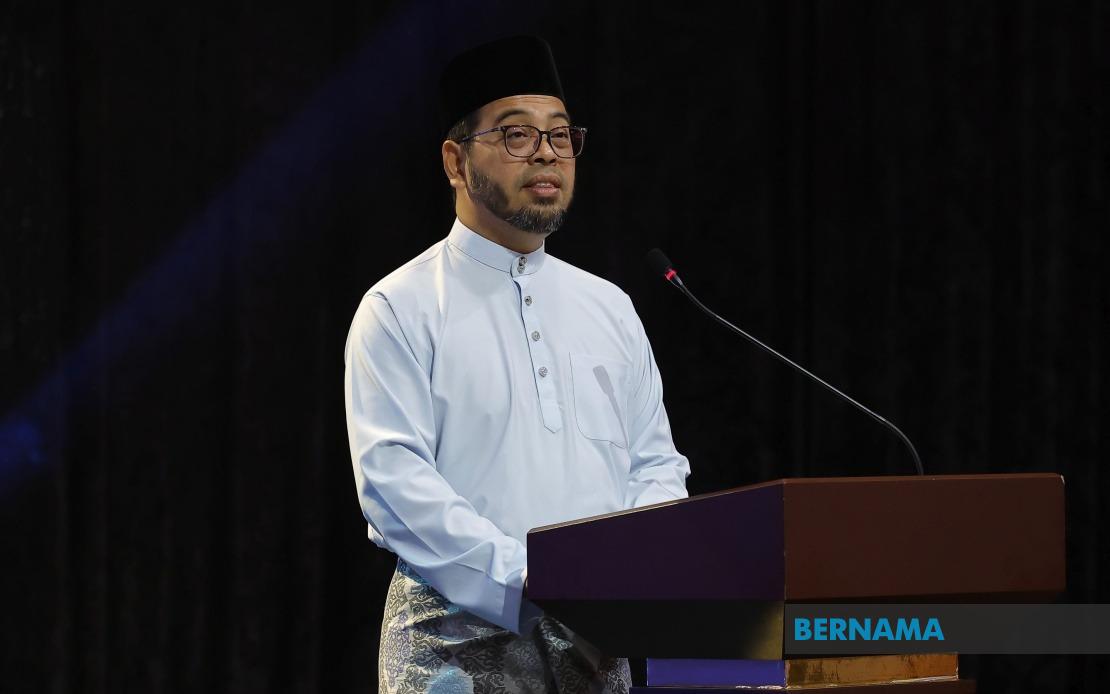
Malaysia's Muslim community must move past internal disputes and old grievances to forge a more unified ummah capable of confronting the complexities of an interconnected world, Religious Affairs Minister Dr Zulkifli Hasan urged during the national-level Maal Hijrah 1448H/2026M celebration at Putra Mosque in Putrajaya on June 17. The religious leader stressed that meaningful progress requires individuals to undergo deep personal transformation rooted in intellectual growth, spiritual maturity, and moral character development, principles he articulated before a gathering that included Sultan of Perak Sultan Nazrin Shah and Deputy Prime Minister Datuk Seri Fadillah Yusof.
Dr Zulkifli's message centred on a fundamental truth: that fractured communities invite suffering while unified ones generate prosperity for all members. The minister underscored how division weakens national resilience, a particularly pertinent observation given Malaysia's exposure to global economic turbulence. His remarks at the ceremony, organised under the theme "MADANI Dihayati, Ummah Diberkati", highlighted the mounting relevance of social cohesion as countries worldwide grapple with supply chain disruptions, inflationary pressures, and broader economic uncertainty.
The context for this appeal becomes clearer when examining Malaysia's unique position as a Muslim-majority nation navigating diverse religious interpretations and competing interests within its Islamic community. Unlike homogeneous societies, Malaysia must balance multiple strands of Islamic thought while maintaining space for other faiths under its constitutional framework. This complexity underscores why the Religious Affairs Minister's emphasis on unity assumes particular weight—internal discord could undermine the very foundations of interfaith harmony and national stability that have characterised Malaysian society.
Dr Zulkifli reframed the classical Islamic concept of hijrah—traditionally understood as physical migration—as a perpetual spiritual and intellectual journey. Rather than a singular historical event, he presented hijrah as an ongoing process of abandoning destructive behaviours and embracing values that cement social bonds among Muslims. This contemporary interpretation carries significant implications for how the religious establishment encourages community members to think about personal development and collective responsibility. By casting hijrah as internal transformation rather than external displacement, the minister advocated for a spirituality rooted in concrete social action.
The minister's call for continued support of government initiatives aimed at elevating Muslim dignity reflects broader tensions within Malaysia's religious landscape. Competing claims about what constitutes authentic Islamic practice, disagreements over Islamic law implementation, and debates about the proper relationship between religious and secular authority periodically surface in Malaysian public discourse. By appealing for unity, Dr Zulkifli implicitly acknowledged these fault lines while seeking to redirect communal energy toward shared objectives.
Central to his message was the recognition that Malaysia cannot insulate itself from global shocks and challenges. Whether economic disruptions, technological transformation, or geopolitical realignments, external pressures demand coordinated domestic response. A fractured Muslim community would struggle to present coherent positions on policy issues affecting Islamic institutions, halal commerce, Islamic finance, and religious education—sectors of considerable economic and social importance throughout Southeast Asia. Malaysia's experience as a regional leader in Islamic banking and finance exemplifies how unity can translate into competitive advantage.
Dr Zulkifli also stressed that despite religious and ideological differences, all Malaysian citizens bear collective responsibility for safeguarding peace, stability, and prosperity. This inclusive framing attempts to bridge potential gaps between those emphasising Islamic particularism and those advocating for secular nationalism. The minister's approach suggests that Muslim unity need not undermine broader national cohesion—indeed, a confident, internally harmonious Muslim community may strengthen overall social stability.
The ceremony's awards recognised significant contributions to Islamic thought and practice. International Islamic University Malaysia Rector Prof Emeritus Datuk Dr Osman Bakar received the National Tokoh Maal Hijrah award, honouring his decades of work integrating Islamic scholarship with scientific inquiry. Moroccan Islamic scholar Dr Ahmad Al-Raysuni received the International Tokoh Maal Hijrah award, reflecting Malaysia's engagement with global Islamic intellectual currents. These selections suggest that national and international recognition increasingly flows toward figures emphasising dialogue, integration, and constructive scholarship over polarising stances.
For Malaysian policymakers and religious leaders, Dr Zulkifli's address signals the government's intent to position religious affairs within a framework emphasising stability and practical application rather than doctrinal disputes. The emphasis on internal transformation aligns with Malaysia's MADANI framework, which seeks to balance material progress with spiritual development. Whether this appeal for unity can meaningfully shift entrenched positions on contentious religious issues remains an open question, but the rhetoric indicates official recognition that internal coherence within Malaysia's Muslim community serves national interests.
The timing of this message during Maal Hijrah celebrations carries symbolic weight, coinciding with the Islamic calendar's commemoration of the Prophet Muhammad's migration to Medina. Historically, this journey represented a community's commitment to shared values and collective survival. By invoking this symbolism while discussing contemporary economic challenges, Dr Zulkifli framed unity as both spiritually grounded and pragmatically necessary. This dual appeal attempts to motivate Muslims through both religious principle and material self-interest.
The presence of senior political figures at the ceremony underscores the government's prioritisation of religious messaging as central to national governance. In Malaysia's political economy, religious affairs transcend ceremonial significance; they touch constitutional arrangements, state-federal relationships, and electoral calculations. A minister's call for Muslim unity inevitably carries political dimensions, though Dr Zulkifli carefully emphasised that unity should strengthen rather than polarise the broader national project.
Moving forward, the challenge lies in translating rhetorical appeals into institutional arrangements that genuinely foster cooperation among Malaysia's diverse Islamic constituencies. Religious organisations, political parties, media outlets, and educational institutions would need to align incentives toward unity rather than perpetuating sectarian divisions. Whether the government possesses the tools and will to accomplish this transformation remains to be seen, but the explicit framing of unity as essential to national resilience suggests official recognition that fragmentation carries mounting costs.

%22%2F%3E%3C%2Fpattern%3E%3C%2Fdefs%3E%3Crect%20width%3D%22100%25%22%20height%3D%22100%25%22%20fill%3D%22url(%23ph2hy9vg)%22%2F%3E%3Crect%20width%3D%22100%25%22%20height%3D%22100%25%22%20fill%3D%22url(%23ph2hy9vp)%22%2F%3E%3Ctext%20x%3D%2250%25%22%20y%3D%2250%25%22%20text-anchor%3D%22middle%22%20dominant-baseline%3D%22central%22%20fill%3D%22rgba(255%2C255%2C255%2C0.95)%22%20font-family%3D%22Georgia%2C%20'Times%20New%20Roman'%2C%20serif%22%20font-weight%3D%22700%22%20font-size%3D%22272%22%20letter-spacing%3D%22-0.02em%22%3EAnwar%3C%2Ftext%3E%3C%2Fsvg%3E)