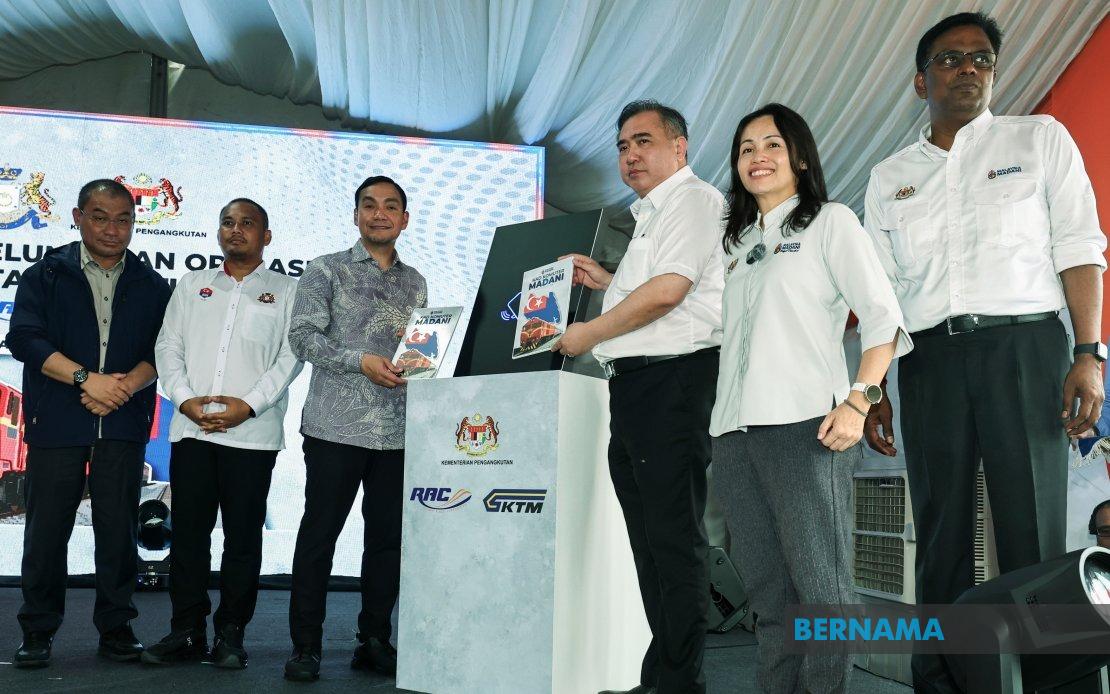
Johor Menteri Besar Datuk Seri Onn Hafiz Ghazi has identified the Elevated Autonomous Rapid Transit (E-ART) project as essential infrastructure to shield Johor Bahru from traffic gridlock when the Johor Bahru-Singapore Rapid Transit System (RTS) Link opens to the public in 2025. Making the remarks during the launch of the Southern Shuttle train service at KTM Kulai Station, Onn Hafiz framed the E-ART as a foundational piece of the state's long-term mobility architecture, one that will be indispensable as cross-border travel volumes climb significantly.
The menteri besar's emphasis on the E-ART reflects a broader acknowledgment among Johor's leadership that existing transportation infrastructure and near-term interventions alone will prove insufficient to absorb the passenger surge that the RTS Link will generate. While short-term and medium-term relief measures—including the expansion of Park & Ride facilities and deployment of intelligent traffic management systems at JB Sentral—offer temporary respite, these initiatives will merely postpone the onset of more serious bottlenecks rather than resolve them structurally. Onn Hafiz articulated this reality plainly, noting that authorities must continue implementing these stopgap measures while awaiting the completion of the flagship E-ART project, which represents the genuine solution to dispersing traffic loads across the city.
The demographic and economic context underlining this infrastructure challenge is substantial. Johor Bahru's population of approximately 1.8 million residents approaches that of Penang, positioning it as one of Malaysia's most densely populated urban centres. This concentration alone strains the existing road network during peak hours, and the forthcoming RTS Link promises to intensify that pressure substantially. The rapid transit connection will not merely serve local commuters; it will fundamentally reshape cross-border mobility patterns, potentially drawing hundreds of thousands of daily travellers from Singapore and encouraging reciprocal movement from Johor Bahru into the island state.
Onn Hafiz also highlighted Johor Bahru's strategic role as the nation's principal international gateway. This designation carries profound implications for transportation planning. The city functions as the primary terrestrial linkage between Malaysia and Singapore, handling not only daily commuters but also freight traffic, business travellers, and leisure visitors. The infrastructure supporting this movement must therefore operate with precision and capacity to maintain economic competitiveness and facilitate the seamless flow of both people and goods. Without adequate capacity, bottlenecks at border crossings and within the city could undermine the economic advantages that the RTS Link is intended to unlock.
The E-ART project itself represents a technological and operational shift in urban transit design. As an elevated autonomous system, it promises to decouple mobility from existing street-level infrastructure, allowing transit vehicles to operate independently of congested road networks. This architectural approach offers several advantages: it maximizes land use efficiency by operating above existing urban fabric, reduces conflict with other transport modes, and potentially enables higher operational speeds and frequencies than conventional surface transit. For a city of Johor Bahru's scale and with its cross-border importance, such innovations are not merely amenities but competitive necessities.
The timeline for the RTS Link's operations creates an additional layer of urgency. With the transit connection slated to begin next year, the window for completing or advancing the E-ART project has effectively narrowed. Transport planners across the region are watching closely, as the experience in Johor Bahru will likely inform similar infrastructure decisions in other Southeast Asian urban centres facing comparable challenges. Bangkok, Ho Chi Minh City, and other major regional hubs are grappling with similar congestion pressures, making Johor Bahru's approach a potential model—or cautionary tale—depending on execution.
Onn Hafiz's framing of the E-ART as a form of meaningful federal intervention carries political significance as well. By emphasizing that the project represents tangible government commitment felt by residents through improved mobility and reduced commute times, the menteri besar is positioning infrastructure investment as a visible achievement with direct personal benefit. This rhetorical positioning matters, particularly in Johor, where public sentiment regarding government effectiveness and resource allocation influences electoral outcomes and policy support.
The presence of Transport Minister Anthony Loke and Deputy Communications Minister Teo Nie Ching at the Southern Shuttle launch signals federal-level alignment on these mobility priorities. Such ministerial participation reinforces the seriousness with which the federal government views the E-ART implementation and suggests that coordinating mechanisms between federal and state authorities are functioning. This coordination will be crucial, as the project's success depends on aligned funding priorities, regulatory clarity, and expedited approval processes.
For Malaysian commuters and businesses depending on efficient Johor Bahru connectivity, the E-ART project represents more than incremental improvement—it embodies a commitment to sustainable, high-capacity urban mobility. The alternative scenario, where the RTS Link's opening is accompanied by severe congestion due to inadequate feeder or internal city transit capacity, would diminish the economic and social returns on that major cross-border investment. Johor Bahru's leaders are therefore justified in treating E-ART not as an optional enhancement but as foundational infrastructure integral to the RTS Link's success and the city's long-term competitiveness in the region.

%22%2F%3E%3C%2Fpattern%3E%3C%2Fdefs%3E%3Crect%20width%3D%22100%25%22%20height%3D%22100%25%22%20fill%3D%22url(%23ph2hy9vg)%22%2F%3E%3Crect%20width%3D%22100%25%22%20height%3D%22100%25%22%20fill%3D%22url(%23ph2hy9vp)%22%2F%3E%3Ctext%20x%3D%2250%25%22%20y%3D%2250%25%22%20text-anchor%3D%22middle%22%20dominant-baseline%3D%22central%22%20fill%3D%22rgba(255%2C255%2C255%2C0.95)%22%20font-family%3D%22Georgia%2C%20'Times%20New%20Roman'%2C%20serif%22%20font-weight%3D%22700%22%20font-size%3D%22272%22%20letter-spacing%3D%22-0.02em%22%3EAnwar%3C%2Ftext%3E%3C%2Fsvg%3E)