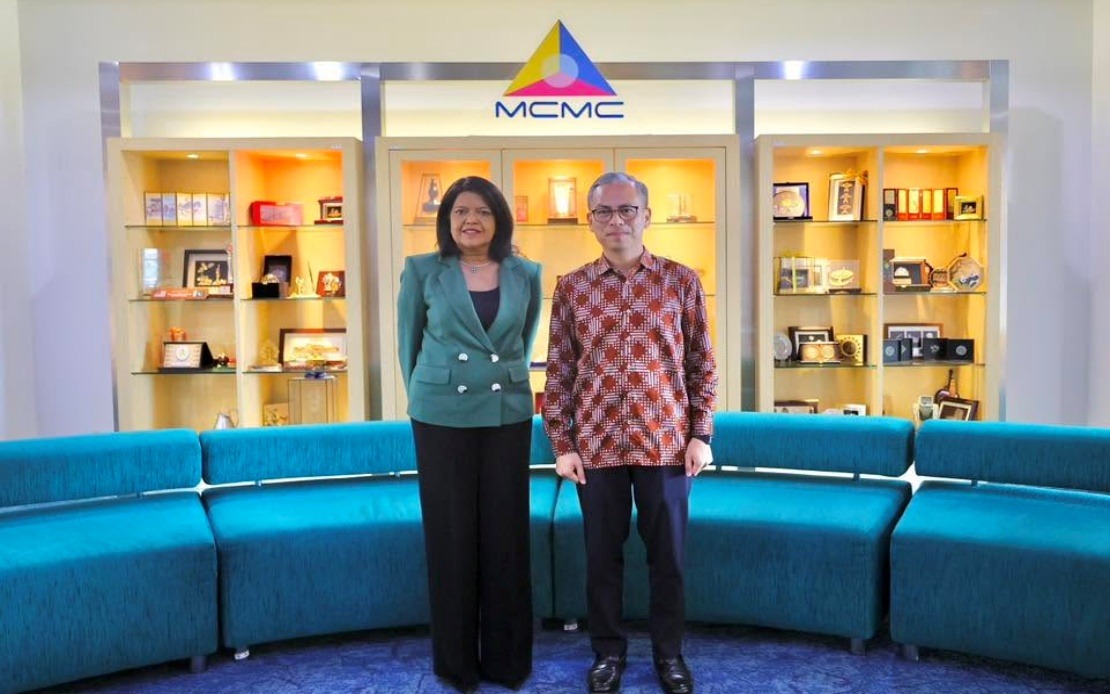
Communications Minister Datuk Fahmi Fadzil has publicly welcomed the appointment of Tan Sri Nallini Pathmanathan as the new chairman of the Malaysian Media Council, signalling government endorsement of the self-regulatory body's leadership transition. The minister's congratulatory message, shared via Facebook on June 15, reflects the significance the government places on the council's governance structure at a time when media accountability and press freedom remain central policy concerns across Southeast Asia.
Nallini's elevation to the helm of the MMC represents a pivotal moment for Malaysia's media industry self-regulation framework. As a former Federal Court judge, she brings substantial judicial credibility and institutional experience to a role that demands both independence and public trust. The appointment was formally endorsed unanimously by the council's board members during a meeting held on May 26, underscoring broad consensus among media industry stakeholders regarding her suitability for the position.
The Malaysian Media Council itself operates as the industry's principal self-regulatory mechanism, established under the recently enacted Malaysian Media Council Act 2025. This legislative foundation provides the council with formal authority to oversee standards compliance, investigate complaints, and enforce ethical guidelines across the media sector. For Malaysian readers and media professionals, understanding the MMC's role is crucial because it sits at the intersection of press freedom and public accountability, without direct government control yet operating within a legal framework that government has established.
In his statement, Fahmi articulated specific expectations for Nallini's tenure, emphasising the need to champion "responsible media freedom" while simultaneously strengthening journalistic ethics. This formulation reflects a careful balance that Malaysian policymakers must maintain: protecting editorial independence and press freedom on one hand, whilst ensuring media outlets adhere to professional standards and accuracy on the other. The language used suggests government confidence that the council can pursue both objectives without contradiction.
The emphasis on "responsible" media freedom carries particular weight in the Malaysian context. The country has experienced ongoing tensions between media outlets, political actors, and regulatory authorities over the boundaries of acceptable reporting. By positioning Nallini's leadership as custodian of this equilibrium, Fahmi appears to be signalling that the government views the MMC as a viable alternative to direct regulatory intervention for managing media conduct issues.
Nallini's background as a senior judge also matters substantially for Southeast Asian media governance dynamics. Judicial experience provides familiarity with evidentiary standards, procedural fairness, and the reasoning required to make defensible rulings in contested cases. For media organisations facing potential complaints or ethical investigations, a chair with this background may offer greater assurance that adjudication will follow transparent, legally sound processes rather than political whim.
The MMC's establishment under a new dedicated act in 2025 marks a formal modernisation of Malaysia's media self-regulation architecture. Previously, media ethics and standards were addressed through various fragmented mechanisms. The dedicated legislation and creation of a unified council represent an attempt to create a more coherent, industry-owned oversight system. However, the effectiveness of such bodies ultimately depends on their perceived independence, the quality of their decision-making, and whether both media outlets and the public view their rulings as legitimate.
For Malaysian media practitioners and organisations, Nallini's appointment carries practical implications. The council under her leadership will likely be called upon to address recurring disputes over news accuracy, bias, privacy violations, and the boundaries between legitimate investigative journalism and defamatory reporting. Her judicial temperament and experience navigating complex legal arguments may lead to more carefully reasoned council determinations, though this could also mean slower resolution of complaints compared to less formal processes.
Regionally, Malaysia's efforts to establish effective media self-regulation remain instructive. Across Southeast Asia, countries grapple with similar challenges: how to protect press freedom whilst maintaining professional standards, and how to create accountability mechanisms that are neither instruments of state censorship nor entirely toothless. The MMC model, with an independent chair of judicial standing, represents one approach that other regional governments may observe with interest.
The broader context includes growing concerns about misinformation, the role of digital platforms in news distribution, and the financial sustainability of traditional media outlets. An effective MMC under Nallini's leadership could potentially address not only traditional ethical lapses but also emerging challenges around digital verification, fact-checking standards, and the media industry's adaptation to technological change. How the council positions itself on these emerging issues will significantly shape its relevance and influence.
Fahmi's explicit wish that the council help ensure the media industry "remains sustainable and trusted" also hints at recognition that Malaysian media faces existential challenges beyond regulatory compliance. Economic pressures, audience fragmentation, and competition from social media platforms have weakened many traditional outlets. The council's role may increasingly involve not just policing misconduct but supporting industry-wide efforts to rebuild public confidence and business viability.
Looking forward, Nallini's success will be measured by whether the MMC can establish itself as a genuinely respected arbiter that media organisations voluntarily cooperate with, that the public perceives as fair and transparent, and that serves as a constructive alternative to adversarial legal action or government intervention. Her judicial background provides one foundation for this legitimacy, but sustained performance, clear communication of decisions, and responsiveness to legitimate industry concerns will ultimately determine whether the MMC fulfils its potential under her leadership.

%22%2F%3E%3C%2Fpattern%3E%3C%2Fdefs%3E%3Crect%20width%3D%22100%25%22%20height%3D%22100%25%22%20fill%3D%22url(%23ph2hy9vg)%22%2F%3E%3Crect%20width%3D%22100%25%22%20height%3D%22100%25%22%20fill%3D%22url(%23ph2hy9vp)%22%2F%3E%3Ctext%20x%3D%2250%25%22%20y%3D%2250%25%22%20text-anchor%3D%22middle%22%20dominant-baseline%3D%22central%22%20fill%3D%22rgba(255%2C255%2C255%2C0.95)%22%20font-family%3D%22Georgia%2C%20'Times%20New%20Roman'%2C%20serif%22%20font-weight%3D%22700%22%20font-size%3D%22272%22%20letter-spacing%3D%22-0.02em%22%3EAnwar%3C%2Ftext%3E%3C%2Fsvg%3E)