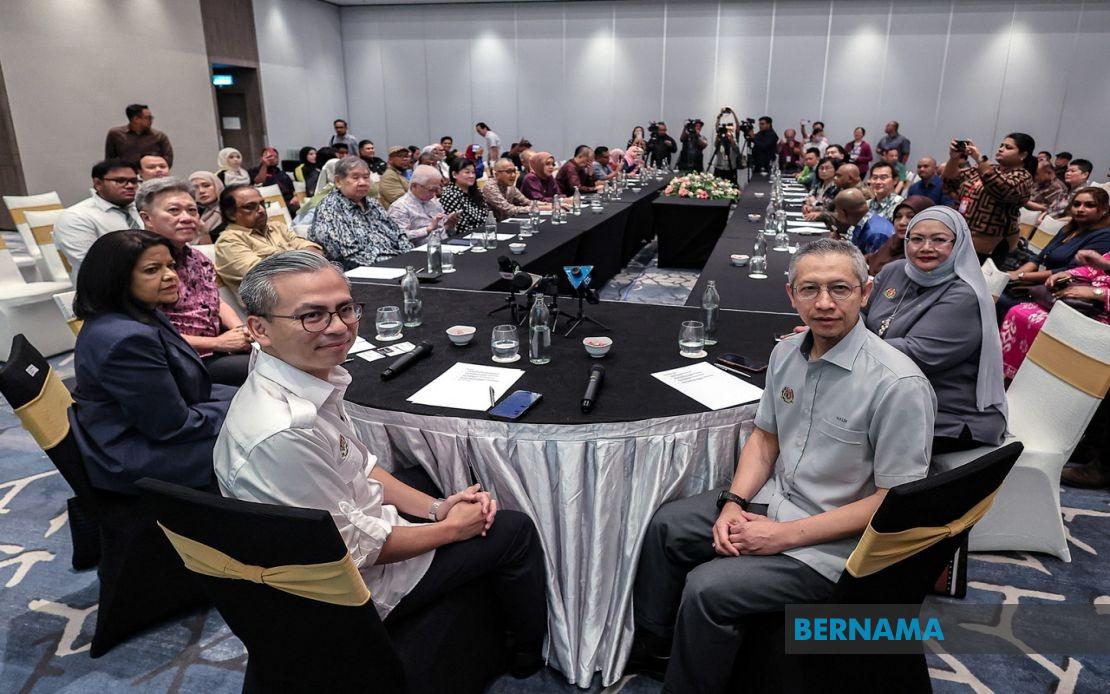
Communications Minister Datuk Fahmi Fadzil has unveiled plans to embed annual retreat sessions into Malaysia's National Journalists' Day (HAWANA) celebrations, signalling a commitment to formalizing dialogue between the government and the country's media sector. Speaking during the HAWANA 2026 event in Butterworth on June 20, Fahmi outlined a framework where the Malaysian Media Council (MMC) would take a coordinating role, transforming what has previously been ad-hoc engagement into a structured institutional practice.
The initiative reflects an acknowledgment within the Communications Ministry that meaningful policy development requires sustained conversation with practitioners. Rather than treating industry concerns as periodic grievances, the retreat format would institutionalize feedback loops, allowing journalists, editors, and media organization leaders to raise issues directly with government representatives in a dedicated setting. This structural change matters because it signals a shift from reactive policymaking to a more consultative approach, potentially reducing the friction that has historically characterized Malaysia's government-media relations.
Fahmi framed the retreats as vehicles for collecting insights on multiple fronts. Beyond general feedback, the sessions would specifically invite proposals on legislative and regulatory reform, including amendments to existing media-related acts and laws. This is significant for the Malaysian media landscape, where the regulatory framework has long been a point of contention between practitioners and authorities. By explicitly opening space for industry input on legal matters, the government appears to acknowledge that sustainable media policy requires technical expertise and practical knowledge from those operating within the system.
The second major focus identified by Fahmi centers on the economic viability of Malaysia's media industry—an increasingly urgent concern as digital transformation reshapes revenue models. Fahmi articulated a specific challenge that many editors and publishers across the region face: mainstream media organizations produce content that circulates on social media platforms but generates no direct financial benefit. This structural problem threatens the sustainability of quality journalism, as advertising revenue fractures across multiple platforms while original content producers receive nothing.
In addressing this economic dimension, Fahmi signaled government willingness to engage with social media companies on behalf of the industry. This represents a potentially significant intervention point. The suggestion that the government might facilitate negotiations between Malaysian media organizations and global platforms like Meta, Google, and TikTok touches on issues already being debated in other democracies. Countries including Australia, Canada, and the European Union have explored mechanisms to ensure platforms either compensate news publishers or provide more favorable algorithmic treatment to professional journalism.
For Malaysian readers and media professionals, this proposal carries several implications. First, it suggests the government recognizes that media sustainability is a governance issue, not merely a market problem. Second, it acknowledges that unregulated digital platforms pose challenges to the local media ecosystem that individual organizations cannot address alone. Third, it hints at potential future policy interventions in how Malaysian social media companies operate, though the specifics remain undeveloped.
The scale of the challenge cannot be understated. Malaysia's mainstream media organizations—from Bernama to private publishers—have weathered decades of technological disruption. Yet the shift from print to digital, combined with the explosion of social platforms, has created a scenario where quality journalism exists in fierce competition with entertainment, misinformation, and user-generated content, all without traditional revenue protections. Journalists in Malaysia, like their counterparts across Southeast Asia, increasingly find themselves doing more work for less sustainable income.
The retreat proposal also reflects broader conversations happening globally about the relationship between government and a healthy media ecosystem. Democracies depend on functioning press institutions that can investigate, analyze, and hold power accountable. When those institutions face existential economic pressure, governments must decide whether to stand aside or intervene. Malaysia's approach, through facilitation rather than direct subsidy, attempts to navigate this tension without appearing to co-opt media institutions.
The attendance at the initial dialogue session underscores the seriousness of the undertaking. Alongside Fahmi, the Communications Ministry's most senior officials participated, including secretary-general Datuk Abdul Halim Hamzah and deputy secretary-general Datuk Bahria Mohd Tamil. From the media side, Bernama's leadership attended alongside the MMC's chairman, demonstrating that major institutional players recognize the initiative's potential significance. This level of engagement suggests the government intends these retreats to become substantive forums, not ceremonial occasions.
For the Malaysian Media Council, the coordinating role represents both opportunity and responsibility. As the industry's self-regulatory body, the MMC holds theoretical legitimacy in speaking for media practitioners. However, its effectiveness has long been questioned, and tasking it with organizing government-industry dialogue could either enhance its standing or expose its limitations if the process proves ineffectual. The council's success in managing these retreats will partly determine whether the initiative becomes a genuine mechanism for change or simply another government consultation exercise that produces limited tangible results.
The timing matters as well. HAWANA 2026 occurs in a moment when Malaysian media faces multiple pressures: economic uncertainty, competition from digital natives, regulatory scrutiny, and audience fragmentation. By proposing to institutionalize feedback mechanisms now, rather than waiting for crisis, the government and industry may be signalling a desire to cooperate on medium-term sustainability rather than merely react to short-term disruptions.
Looking forward, the effectiveness of this proposal will depend on follow-through. Announcements of dialogue platforms are common; actual implementation that leads to policy change is rarer. For Malaysian journalists and media organizations, the critical questions are whether the retreat sessions will translate into concrete government action on social media negotiations, whether legislative proposals emerging from the retreats will be seriously considered, and whether the process will remain transparent enough that participants can demonstrate value to their organizations and colleagues. If executed well, the HAWANA retreat initiative could become a model for how government and media sector navigate their often-complicated relationship.

%22%2F%3E%3C%2Fpattern%3E%3C%2Fdefs%3E%3Crect%20width%3D%22100%25%22%20height%3D%22100%25%22%20fill%3D%22url(%23ph2hy9vg)%22%2F%3E%3Crect%20width%3D%22100%25%22%20height%3D%22100%25%22%20fill%3D%22url(%23ph2hy9vp)%22%2F%3E%3Ctext%20x%3D%2250%25%22%20y%3D%2250%25%22%20text-anchor%3D%22middle%22%20dominant-baseline%3D%22central%22%20fill%3D%22rgba(255%2C255%2C255%2C0.95)%22%20font-family%3D%22Georgia%2C%20'Times%20New%20Roman'%2C%20serif%22%20font-weight%3D%22700%22%20font-size%3D%22272%22%20letter-spacing%3D%22-0.02em%22%3EAnwar%3C%2Ftext%3E%3C%2Fsvg%3E)