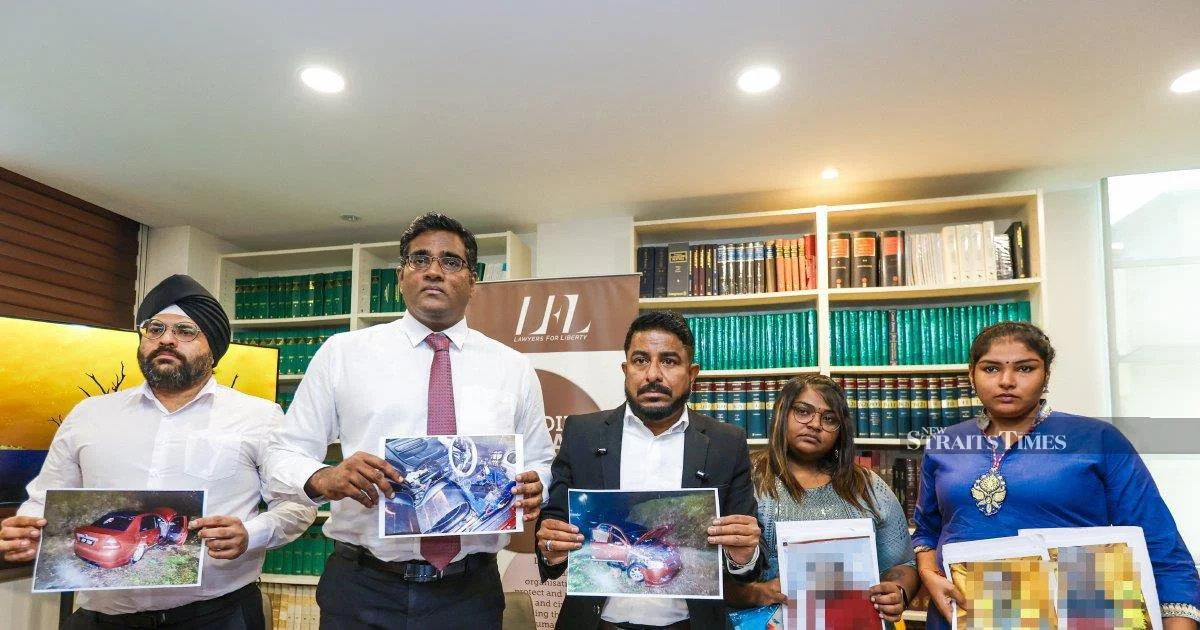
The relatives of three men killed in a police shooting in Durian Tunggal, Melaka on November 24 have called for the Malaysian Anti-Corruption Commission to launch a formal investigation into the law enforcement officers involved in the incident. The families' push for MACC involvement signals growing concerns about the circumstances surrounding the deaths and suggests they view the matter as requiring scrutiny beyond standard police accountability mechanisms.
The decision to seek corruption investigators represents a significant escalation in the families' pursuit of answers. Rather than rely solely on internal police inquiries or standard criminal investigations, the relatives appear to be suggesting that irregularities or misconduct may have characterised the operation. This approach reflects a pattern seen in other controversial police incidents where families have sought alternative investigative bodies to ensure impartial examination of police conduct.
The November 24 shooting in the Durian Tunggal area of Melaka resulted in three deaths, making it a significant incident within Malaysia's law enforcement landscape. The exact circumstances that led police to use lethal force remain a point of contention, with families presumably questioning whether the response was proportionate and necessary. Such incidents often raise broader questions about police training, rules of engagement, and the decision-making processes employed by officers in high-pressure situations.
Involving the MACC in investigations of this nature could examine whether financial misconduct, bribery, or abuse of power played any role in the incident or its handling. The anti-corruption body has previously investigated cases involving allegations of misconduct by public officials, including law enforcement personnel. However, the involvement of MACC typically focuses on corruption-related aspects rather than the justification for the use of force itself, which falls under police and criminal procedures.
The families' move reflects the complicated dynamics surrounding police accountability in Malaysia. While police internal affairs divisions and the police force itself conduct investigations into shooting incidents, public confidence in these processes can be limited. External oversight, whether through the courts, civil society monitoring, or other government bodies, has become increasingly important to communities affected by controversial police actions. The families' insistence on MACC involvement suggests they view standard mechanisms as insufficient for addressing their concerns.
Such incidents carry significant implications for police-community relations, particularly in areas where public trust in law enforcement may already be fragile. The Melaka shooting and the subsequent calls for investigation have likely generated considerable discussion within local communities about police conduct and the circumstances under which officers employ deadly force. These conversations can influence public perception of police legitimacy and willingness of communities to cooperate with law enforcement.
The Malaysian context for such incidents is important to understand. Police shootings and deaths in custody have occasionally generated public controversy and demands for greater accountability. Civil society organisations and legal experts have periodically called for stronger independent oversight mechanisms for police conduct, particularly in cases involving lethal force. The families' approach aligns with these broader calls for more robust accountability structures.
The specifics of what occurred in Durian Tunggal on November 24 would typically be examined through several channels: police internal investigations, criminal procedures if applicable, and potentially civil litigation by the families. Adding MACC involvement broadens the investigative scope, though it also raises questions about jurisdictional overlap and what specific corruption allegations the families believe warrant anti-corruption body attention.
From a regional perspective, Malaysia's approach to police accountability continues to evolve. Southeast Asian nations grapple with balancing police operational independence and discretion with meaningful oversight and accountability. The incident in Melaka and the families' response contribute to ongoing conversations about these tensions and the most effective mechanisms for ensuring that police power is exercised appropriately and in accordance with law.
The families' determination to pursue multiple investigative avenues demonstrates their commitment to understanding what led to the deaths of their relatives. Whether the MACC will accept the investigation request and what such an investigation might reveal remain open questions. The case underscores the need for transparent, credible processes that can satisfy both operational police requirements and public demands for accountability in sensitive incidents.


%22%2F%3E%3C%2Fpattern%3E%3C%2Fdefs%3E%3Crect%20width%3D%22100%25%22%20height%3D%22100%25%22%20fill%3D%22url(%23ph2hy9vg)%22%2F%3E%3Crect%20width%3D%22100%25%22%20height%3D%22100%25%22%20fill%3D%22url(%23ph2hy9vp)%22%2F%3E%3Ctext%20x%3D%2250%25%22%20y%3D%2250%25%22%20text-anchor%3D%22middle%22%20dominant-baseline%3D%22central%22%20fill%3D%22rgba(255%2C255%2C255%2C0.95)%22%20font-family%3D%22Georgia%2C%20'Times%20New%20Roman'%2C%20serif%22%20font-weight%3D%22700%22%20font-size%3D%22272%22%20letter-spacing%3D%22-0.02em%22%3EAnwar%3C%2Ftext%3E%3C%2Fsvg%3E)