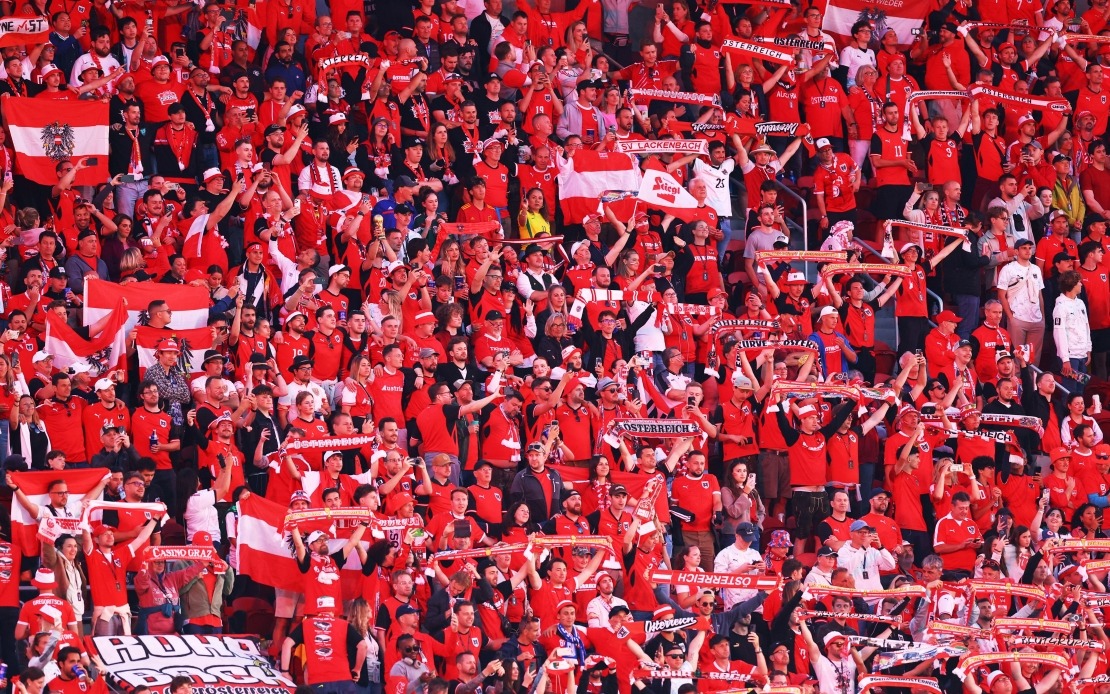
The FIFA World Cup in North America has achieved a significant attendance milestone, with more than one million fans filling stadiums during the opening 16 matches of the tournament. According to FIFA's official figures released on Monday, the total attendance reached 1,028,429 spectators, translating to a 99.34 per cent stadium capacity across all venues. This strong turnout represents a major success for the tournament organisers, particularly given that previous months had seen considerable scepticism about whether fans would embrace the event at the proposed ticket price points.
The attendance figures underscore the broad appeal of international football in the North American market, where the World Cup represents a relatively infrequent occurrence. Each match staged during the initial phase of the tournament drew substantial crowds, with spectators travelling across multiple jurisdictions to witness their national teams compete. The widespread participation suggests that despite economic headwinds affecting discretionary spending across many households, the cultural magnetism of the World Cup proved sufficiently compelling to drive attendance figures well above the thresholds that many analysts had predicted.
Earlier apprehensions about ticket pricing appeared justified when empty seats became visible during matches such as South Korea versus the Czech Republic, played in Guadalajara on Thursday, and Qatar against Switzerland, contested in the San Francisco Bay Area on Saturday. These televised images of partially vacant sections raised questions about whether the tournament's commercial pricing strategy would ultimately prove counterproductive. However, the final attendance statistics suggest that such isolated instances did not reflect broader participation patterns, and that overall spectator engagement remained remarkably robust throughout the opening phase.
FIFA president Gianni Infantino celebrated the attendance achievement by commemorating the one millionth fan to enter the tournament venues. Infantino, who shared the moment with Aaron Bren on his Instagram account, expressed gratitude to supporters for bringing what he characterised as the most inclusive FIFA World Cup to fruition. His framing of the tournament as uniquely inclusive reflects FIFA's positioning of the North American World Cup as distinctly different from previous iterations, emphasising accessibility and broad participation across demographic and geographical lines.
Beyond raw attendance numbers, the milestone carries symbolic significance for FIFA's commercial and strategic objectives. The organisation has invested heavily in expanding the World Cup format to 48 teams, increasing the number of matches and theoretically expanding market opportunities. The strong opening attendance validates this expansion strategy and suggests that FIFA's financial projections, which depend on sustained spectator revenue across ticket sales, concessions, and associated hospitality packages, remain on trajectory.
However, the celebratory tone surrounding attendance figures masks emerging concerns about spectator safety and crowd management practices at the tournament. Football Supporters Europe, a pan-European advocacy organisation representing fan interests, has raised alarm about inadequate segregation between opposing supporters at matches. According to Ronan Evain, the executive director of Football Supporters Europe, the absence of formal segregation protocols represents a departure from established best practices at major international tournaments and creates genuine safety risks.
Evain articulated a specific vulnerability: the secondary ticket market, which FIFA actively encouraged through its resale mechanisms, has created conditions where supporters from competing nations may find themselves intermingled throughout stadium sections. This circumstance creates the potential for confrontational encounters between opposing fans, who might otherwise be physically separated by designated seating protocols. The executive director emphasised that FIFA's limited visibility into ticket distribution chains—a consequence of deliberately promoting resales—means the organisation cannot effectively manage or predict crowd compositions at individual matches.
Traditionally, international football tournaments employ rigorous segregation protocols, with dedicated seating blocks assigned to each nation's supporters. This approach, while sometimes reducing the festive atmosphere that comes from integrated crowds, substantially diminishes the probability of violent confrontations or disorder. The North American World Cup's more relaxed approach reflects broader American cultural preferences for less regimented sporting environments and FIFA's desire to encourage the kind of cosmopolitan, mixed-nationality crowd experience that appeals to mainstream American sporting audiences.
FIFA has defended its crowd management approach by highlighting its allocation of tickets through official participant member association channels, arguing that each nation's most dedicated supporters receive guaranteed seating through these mechanisms. The organisation contends that this ringfenced allocation system ensures that core supporter groups maintain cohesion and dedicated spaces. However, critics argue that this arrangement addresses only a fraction of total attendance, leaving the majority of spectators—particularly casual or corporate buyers—distributed across sections without safeguards against demographic mixing.
For Malaysian football fans and those across Southeast Asia, the North American World Cup attendance trends carry implications for how future tournaments might be structured and marketed. Should the strong opening attendance be sustained throughout the competition, it would signal that expanded World Cup formats can successfully attract large audiences, potentially influencing FIFA's decisions about tournament design in forthcoming editions. Malaysia, which did not qualify for this World Cup, remains invested in how global tournament administration evolves, as these decisions shape the environment within which regional nations compete and participate.
The tension between achieving record attendance and maintaining spectator safety reflects broader challenges facing major sporting events in contemporary contexts. Tournament organisers must balance commercial imperatives favouring accessibility and attendance maximisation against security and management considerations that historically justified more restrictive protocols. The North American World Cup, by prioritising the former, has achieved enviable attendance statistics but has simultaneously created conditions that worry experienced observer communities focused on supporter welfare.
As the tournament progresses beyond its opening 16 matches, attention will likely intensify on whether the initial attendance momentum can be sustained across later stages, and whether the relaxed segregation approach produces any significant incidents that might vindicate the concerns raised by Football Supporters Europe. These intersecting narratives—one of commercial triumph and one of potential safety compromise—will ultimately define the North American World Cup's legacy within the broader evolution of international football administration.

%22%2F%3E%3C%2Fpattern%3E%3C%2Fdefs%3E%3Crect%20width%3D%22100%25%22%20height%3D%22100%25%22%20fill%3D%22url(%23ph2hy9vg)%22%2F%3E%3Crect%20width%3D%22100%25%22%20height%3D%22100%25%22%20fill%3D%22url(%23ph2hy9vp)%22%2F%3E%3Ctext%20x%3D%2250%25%22%20y%3D%2250%25%22%20text-anchor%3D%22middle%22%20dominant-baseline%3D%22central%22%20fill%3D%22rgba(255%2C255%2C255%2C0.95)%22%20font-family%3D%22Georgia%2C%20'Times%20New%20Roman'%2C%20serif%22%20font-weight%3D%22700%22%20font-size%3D%22272%22%20letter-spacing%3D%22-0.02em%22%3EAnwar%3C%2Ftext%3E%3C%2Fsvg%3E)