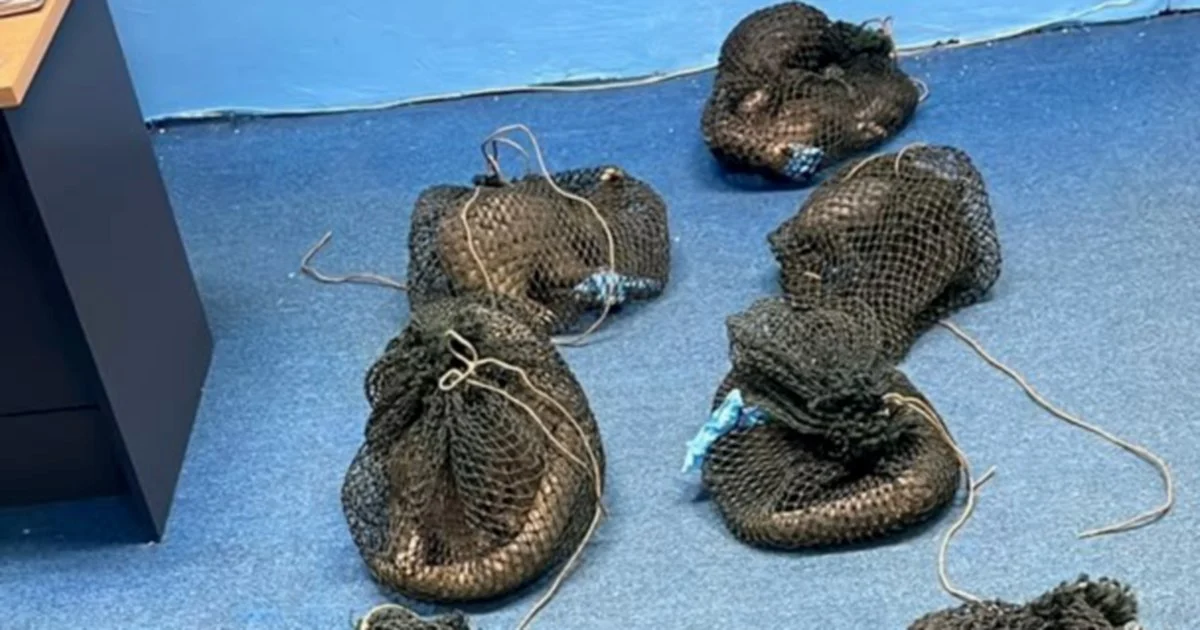
Wildlife enforcement agencies in Sabah made a significant catch in their ongoing battle against illegal animal trafficking, apprehending a 27-year-old Filipino national following a raid at a plantation property in Kampung Paris 3, Kinabatangan district. The operation resulted in the rescue of ten living pangolins that had been held in captivity, alongside the seizure of an elephant tusk, underscoring the persistent challenges facing conservation authorities across the Malaysian-Philippine border region.
Pangolins represent the world's most trafficked mammals, hunted intensively for their scales—used in traditional medicine despite being scientifically proven ineffective—and meat consumed in parts of Asia. The species is increasingly difficult to encounter in its natural state, with populations decimated by poaching networks that span multiple countries. The discovery of ten individuals at a single location suggests organised trafficking rather than opportunistic hunting, pointing to structured supply chains moving contraband through Borneo's porous borders.
The plantation setting chosen for holding these animals reflects a deliberate strategy employed by trafficking networks. Remote agricultural properties, often located on the periphery of monitored zones, provide sufficient isolation from routine patrols while maintaining accessibility for handlers and potential buyers. Such locations also offer cover—legitimate farming operations mask illegal holding areas, complicating detection efforts and allowing traffickers to maintain operational flexibility.
The presence of elephant ivory alongside pangolins indicates diversified trafficking operations rather than specialisation in a single commodity. This bundling of contraband is characteristic of regional smuggling syndicates that exploit cross-border demand from multiple markets simultaneously. Elephant tusks command premium prices in certain Asian markets, with value chains extending from source countries in Africa and Borneo through consolidation points in Southeast Asia toward final destinations in China and Vietnam.
Sabah's geography makes it particularly vulnerable to wildlife trafficking. The state shares a land border with Indonesia, a maritime boundary with the Philippines, and encompasses some of Malaysia's most biodiverse but least-monitored forest regions. Established smuggling routes navigate river systems and coastal areas where enforcement capacity remains limited relative to trafficking volume. The state also serves as a transit corridor for contraband originating from Indonesian protected areas, bound for offshore markets.
The arrest carries implications for ongoing cooperation between Malaysian and Philippine law enforcement agencies. Cross-border trafficking networks routinely exploit jurisdictional gaps, with handlers and logistics operatives distributed across multiple nations. The capture of a Philippine national may facilitate intelligence-sharing regarding network operations, supply sources, and destination markets. However, the individual's nationality—likely indicating he was a logistics operative rather than network leadership—suggests that dismantling such organisations requires sustained regional coordination beyond single-jurisdiction enforcement.
Conservation impact extends beyond the immediate seizure. The rescue of ten living pangolins represents a small victory against trafficking that eliminates hundreds of individuals monthly across Southeast Asia. However, the survival rate for animals held in captivity during trafficking varies significantly depending on duration and conditions. Pangolins are notoriously difficult to maintain in captive environments, facing stress-related illness and digestive complications when removed from natural foraging habitats, meaning not all rescued individuals necessarily survive rehabilitation.
The operation reflects investment by Sabah's wildlife enforcement agencies in intelligence-gathering and raid coordination. Detection of this plantation holding required either intelligence work, routine patrols, or informant information—each pathway suggesting different vulnerabilities in trafficking networks that enforcement can potentially exploit. Sustained pressure on known trafficking routes and holding sites can disrupt operational continuity, increasing operational costs for smuggling syndicates and potentially degrading network viability over time.
Larger structural challenges persist despite such seizures. Demand for traditional medicine products containing pangolin scales remains substantial across Asia, while poverty in source communities creates recruitment opportunities for trafficking networks seeking handlers and poachers. Without addressing these underlying economic incentives and cultural demand patterns, enforcement alone cannot substantially reduce trafficking pressure on remaining wild populations.
The case demonstrates how Malaysian law enforcement continues managing a trafficking problem that shows no signs of abating despite increased penalties and enforcement efforts. International pressure from the Convention on International Trade in Endangered Species framework has elevated pangolins' protection status, yet enforcement remains inconsistent across the region. Sabah's experience illustrates the resource-intensive nature of countering sophisticated, profitable criminal enterprises that exploit wildlife as a commodity.
Movement of such contraband through the state carries implications for Southeast Asia's broader wildlife security landscape. Sabah occupies a strategic position within trafficking networks connecting African ivory, Asian pangolins, and other endangered species toward consolidated distribution hubs. Effective enforcement here disrupts broader flows, though only temporarily until traffickers identify alternative routes. Building more robust monitoring systems—combining intelligence work, community engagement, and regional cooperation—remains essential for any meaningful progress against these networks.


%22%2F%3E%3C%2Fpattern%3E%3C%2Fdefs%3E%3Crect%20width%3D%22100%25%22%20height%3D%22100%25%22%20fill%3D%22url(%23ph2hy9vg)%22%2F%3E%3Crect%20width%3D%22100%25%22%20height%3D%22100%25%22%20fill%3D%22url(%23ph2hy9vp)%22%2F%3E%3Ctext%20x%3D%2250%25%22%20y%3D%2250%25%22%20text-anchor%3D%22middle%22%20dominant-baseline%3D%22central%22%20fill%3D%22rgba(255%2C255%2C255%2C0.95)%22%20font-family%3D%22Georgia%2C%20'Times%20New%20Roman'%2C%20serif%22%20font-weight%3D%22700%22%20font-size%3D%22272%22%20letter-spacing%3D%22-0.02em%22%3EAnwar%3C%2Ftext%3E%3C%2Fsvg%3E)