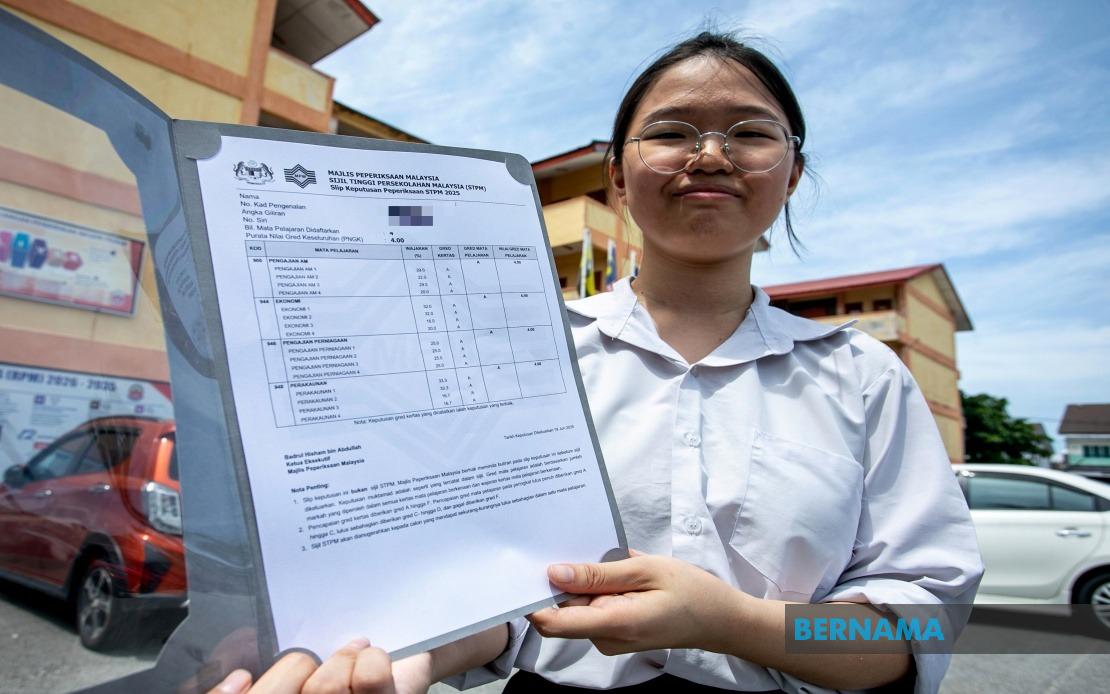
Yong Xin Yi, a 20-year-old student at Sekolah Menengah Kebangsaan Jalan Tasek in Ipoh, has demonstrated how structured discipline and consistent effort can translate into academic excellence. The only child in her family secured an outstanding result in the 2025 Sijil Tinggi Persekolahan Malaysia examination, earning straight A grades across all four subjects and achieving a perfect Cumulative Grade Point Average of 4.00. Her accomplishment places her among an elite group of five students from her school who managed the same feat this year, showcasing the competitive nature of Malaysia's pre-university qualifications.
The cornerstone of Xin Yi's achievement was her unwavering commitment to a structured daily revision schedule. Every evening after school concluded, she dedicated five hours—from 5:00 pm to 10:00 pm—to reviewing and consolidating what she had learned in class. This consistency transformed her study sessions from sporadic cramming into a predictable routine that allowed her mind to absorb material systematically. Rather than treating revision as a desperate last-minute measure before examinations, she embedded it into her daily rhythm, making learning accumulative rather than retroactive.
However, what distinguishes her approach from other high-performing students is her emphasis on the quality of classroom engagement. Xin Yi recognised that five hours of home revision, however disciplined, becomes significantly more efficient when classroom instruction is absorbed with full concentration. She prioritised understanding the teacher's explanations directly, recognising that clarity gained during lessons dramatically reduces confusion during subsequent revision sessions. This insight reveals a sophisticated understanding of how learning actually works—that passive attendance coupled with intense later studying is less effective than active participation followed by reinforcement.
Completion of assigned homework formed another critical pillar of her strategy. Many students view homework as an administrative burden, yet Xin Yi treated it as a genuine opportunity to cement her understanding of topics. By conscientiously finishing all tasks set by her teachers, she ensured that she was not just passively receiving information but actively grappling with concepts through application. This distinction between attendance and genuine engagement explains why some students with similar study hours achieve markedly different results.
Among her four subjects—General Studies, Principles of Accounting, Economics, and another General Studies component—she identified General Studies as her most formidable challenge. This subject demanded not merely content knowledge but also sophisticated writing abilities and meticulous adherence to specific answer formats that examiners rewarded. Rather than accepting this weakness, she deliberately channeled additional attention toward mastering the subject's demands, demonstrating the adaptive capacity that separates adequate from exceptional students. Her willingness to identify her vulnerability and respond with targeted effort, rather than simply accepting it, showcases psychological resilience alongside academic ability.
The aspirational dimension of her achievement adds further context to her motivation. As the daughter of a clerk mother and a phone salesman father, Xin Yi carries family expectations and aspirations shaped by her parents' own professional journeys. She has explicitly framed her academic success not as a personal trophy but as a means to improve her family's circumstances and to honour her parents' sacrifices. This sense of purpose beyond individual attainment often sustains students through periods of difficulty far more effectively than abstract grade targets.
Her choice to pursue economics at Universiti Putra Malaysia flows naturally from both her examination performance and her stated career aspirations. Having excelled in economics as an STPM subject and expressed a desire to become an economist, her pathway demonstrates strategic career planning informed by both aptitude and genuine interest. The Malaysian education system increasingly emphasises aligning subject choices with career potential, and her decision reflects this more mature approach to post-secondary planning.
For Malaysian students and parents observing her success, Xin Yi's achievement underscores the enduring importance of consistency over intensity. The five-hour daily commitment, maintained across months of pre-examination preparation, ultimately outweighs sporadic all-night study sessions or the myth of innate genius. Her example also highlights the often-overlooked value of classroom engagement, suggesting that families and educators might better serve students by emphasising quality of school attendance rather than assuming that all learning must occur at home.
The concentration of excellent STPM results among a handful of schools, including SMK Jalan Tasek's five 4A-achievers, warrants broader consideration about resource distribution and teaching quality across Malaysia's secondary education system. While individual student motivation cannot be underestimated, institutional factors—teacher experience, learning resources, and school culture—undoubtedly facilitate outcomes like Xin Yi's.
Moving forward, her pursuit of tertiary education in economics at UPM positions her to enter a professional field that remains in demand across Malaysia and Southeast Asia. The region's economic complexity and rapid business environment create sustained opportunities for economists equipped with both formal qualifications and the disciplined mindset she has demonstrated. Her trajectory from small-town Ipoh to elite university status reflects the social mobility that education, pursued with intentionality, continues to enable in Malaysia.


%22%2F%3E%3C%2Fpattern%3E%3C%2Fdefs%3E%3Crect%20width%3D%22100%25%22%20height%3D%22100%25%22%20fill%3D%22url(%23ph2hy9vg)%22%2F%3E%3Crect%20width%3D%22100%25%22%20height%3D%22100%25%22%20fill%3D%22url(%23ph2hy9vp)%22%2F%3E%3Ctext%20x%3D%2250%25%22%20y%3D%2250%25%22%20text-anchor%3D%22middle%22%20dominant-baseline%3D%22central%22%20fill%3D%22rgba(255%2C255%2C255%2C0.95)%22%20font-family%3D%22Georgia%2C%20'Times%20New%20Roman'%2C%20serif%22%20font-weight%3D%22700%22%20font-size%3D%22272%22%20letter-spacing%3D%22-0.02em%22%3EAnwar%3C%2Ftext%3E%3C%2Fsvg%3E)