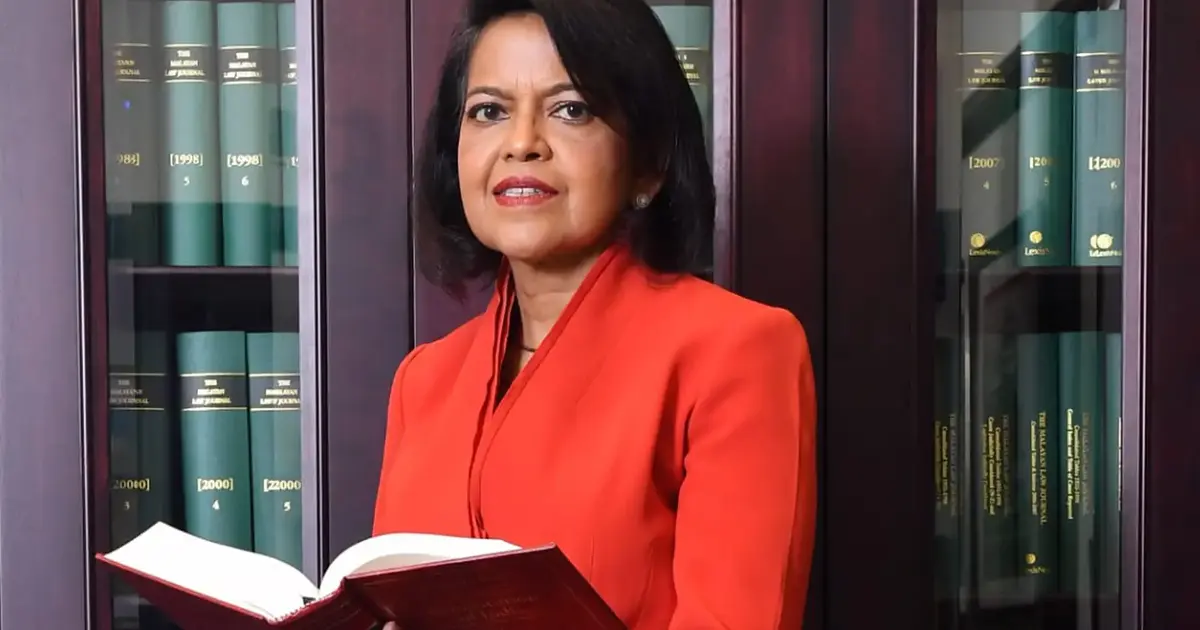
The Malaysian Media Council has appointed Nallini Pathmanathan, a retired Federal Court judge, to serve as its chairman, signalling a shift toward judicial expertise in steering the country's media self-regulation landscape. Pathmanathan's background in constitutional and administrative law brings institutional credibility to an organisation tasked with maintaining editorial standards and addressing complaints across the country's diverse media outlets.
Pathmanathan's judicial career spanned years on Malaysia's highest court, where she developed extensive experience in interpreting constitutional provisions and navigating complex legal frameworks. Her appointment reflects the council's recognition that leading a media regulatory body during turbulent times demands someone with deep understanding of the law, judicial reasoning, and the delicate balance between press freedom and public interest—issues that consistently arise in her former courtroom.
The Malaysian Media Council, which functions as an industry self-regulatory mechanism rather than a statutory body, has faced mounting pressure as traditional media confronts digital disruption, misinformation proliferation, and evolving audience expectations. By drawing on someone with Pathmanathan's stature and legal credentials, the council appears intent on strengthening its authority and independence from both government interference and commercial pressures that historically compromise editorial judgment.
The appointment timing underscores the urgency surrounding media industry challenges that have become increasingly visible to policymakers and the public alike. Malaysia's media landscape has fragmented across platforms and outlets, each with varying adherence to professional standards. The proliferation of unverified content, particularly on social media and alternative news sites, has created a credibility crisis that traditional broadcasters and newspapers must now address through stronger self-regulation mechanisms.
Pathmanathan's leadership comes as stakeholders increasingly recognise that government regulation alone cannot address the complex ethical and operational questions facing modern journalism. Self-regulatory bodies like the Malaysian Media Council offer an alternative approach—allowing the industry to establish and enforce standards while maintaining editorial autonomy. This balance becomes particularly critical in Southeast Asia, where governments frequently attempt to control media narratives through regulatory apparatus, making industry-led governance structures valuable safeguards.
The council noted that her appointment arrives amid a period when the media industry grapples with numerous interconnected challenges. These extend beyond traditional concerns about accuracy and fairness to encompass digital monetisation struggles, newsroom sustainability, cybersecurity vulnerabilities, and the responsibility to combat false information without becoming arbiters of political truth. These issues demand both legal sophistication and practical understanding of media operations—competencies Pathmanathan must now synthesise in her new role.
For Malaysian readers and media professionals, Pathmanathan's appointment potentially signals renewed commitment to preserving journalistic standards through industry self-governance rather than expanding state control. Southeast Asia has witnessed increasing government encroachment on press freedom through various legislative mechanisms, making robust self-regulatory institutions essential counterweights. A chairman with unquestionable judicial independence and constitutional expertise carries greater weight in resisting external pressure to compromise editorial principles.
The broader implications extend to how Malaysia positions itself within regional media governance frameworks. As neighbouring countries debate press freedom and regulatory approaches, Malaysia's reliance on self-regulation with judicial oversight offers a distinctive model. Pathmanathan's profile—neither a current politician nor a serving government official—reinforces the council's independence, though maintaining genuine autonomy will require demonstrable commitment to investigating complaints fairly regardless of political consequences.
Her appointment also reflects evolving industry understanding that media credibility depends on transparent governance structures and leadership perceived as impartial. Many Malaysian news organisations have suffered reputational damage from accusations of political alignment or commercial bias. A council chaired by someone with Pathmanathan's judicial background carries greater legitimacy when addressing such complaints, potentially helping restore public confidence in media institutions.
The Malaysian Media Council must now navigate several concurrent pressures: enforcing standards across traditional and digital outlets, addressing misinformation without becoming censorial, supporting sustainable journalism amid economic decline, and maintaining genuine independence from both governmental and corporate interests. Pathmanathan's judicial temperament and legal expertise position her to approach these challenges methodically, though success ultimately depends on the council securing adequate resources, meaningful industry participation, and compliance incentives that transcend voluntary adherence.
For the regional media landscape, this appointment carries significance beyond Malaysia's borders. Press freedom organisations and media development experts across Southeast Asia watch how countries balance industry self-regulation with public interest protection. Pathmanathan's leadership provides an instructive case study in how retired judicial figures might strengthen media governance institutions during periods of acute industry transformation and external pressure.

%22%2F%3E%3C%2Fpattern%3E%3C%2Fdefs%3E%3Crect%20width%3D%22100%25%22%20height%3D%22100%25%22%20fill%3D%22url(%23ph2hy9vg)%22%2F%3E%3Crect%20width%3D%22100%25%22%20height%3D%22100%25%22%20fill%3D%22url(%23ph2hy9vp)%22%2F%3E%3Ctext%20x%3D%2250%25%22%20y%3D%2250%25%22%20text-anchor%3D%22middle%22%20dominant-baseline%3D%22central%22%20fill%3D%22rgba(255%2C255%2C255%2C0.95)%22%20font-family%3D%22Georgia%2C%20'Times%20New%20Roman'%2C%20serif%22%20font-weight%3D%22700%22%20font-size%3D%22272%22%20letter-spacing%3D%22-0.02em%22%3EAnwar%3C%2Ftext%3E%3C%2Fsvg%3E)