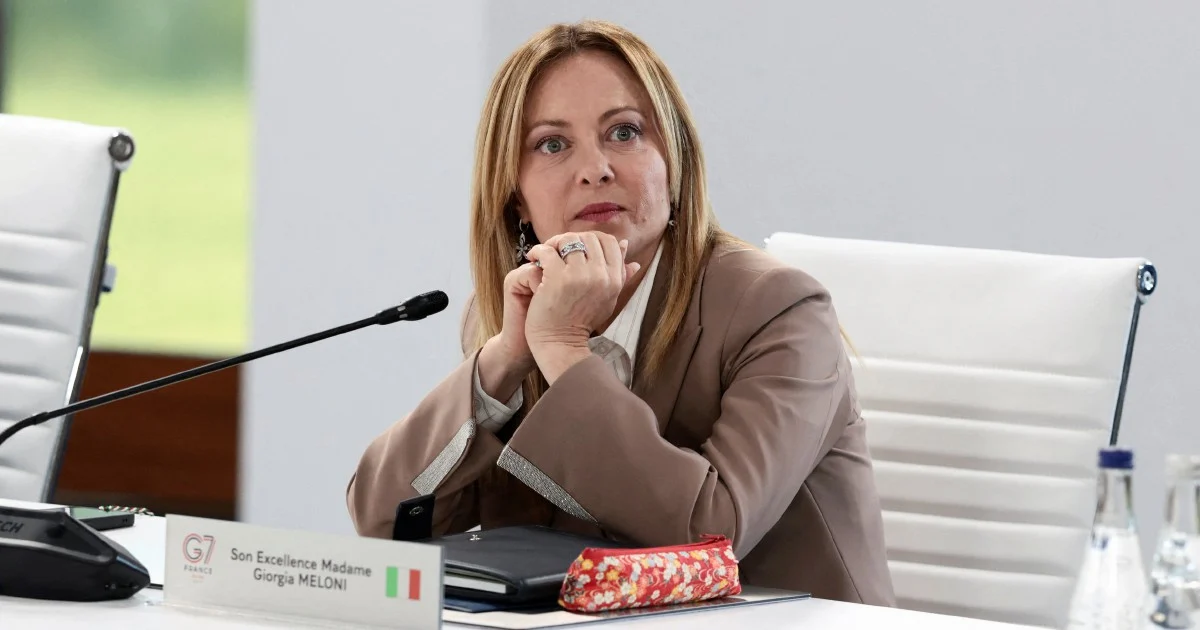
When Donald Trump took the oath of office for his second presidential term in 2025, Italy's Prime Minister Giorgia Meloni stood apart from her European counterparts as the sole continental leader formally invited to Washington for the inauguration. This singular honour seemed to herald a new era of strengthened diplomatic ties between Italy and the United States, positioning Rome as Washington's privileged European partner at a moment when transatlantic relations appeared under strain. The invitation itself carried symbolic weight, suggesting that the Trump administration viewed Meloni's government as a reliable ally capable of advancing mutual strategic interests across the Atlantic.
Meloni's early positioning relative to Trump reflected a calculated alignment with American conservatism. As a right-wing populist who had risen to power championing Italian sovereignty and traditional values, she appeared to share common ideological ground with Trump's America First doctrine. Her presence at the inauguration was intended to signal that despite differing national contexts, Italy and the United States could find common cause under her leadership. The optics of that moment suggested the beginning of a privileged relationship that might grant Italy greater influence over American foreign policy decisions affecting Europe and the Mediterranean region.
However, this honeymoon period has proven remarkably brief. Within months of the inauguration, Meloni has adopted an increasingly critical public posture toward Trump's policies and positions. This transformation marks a notable reversal from her initial role as what observers characterised as a Trump whisperer—a European leader capable of maintaining close personal relations with the American president while potentially moderating his more controversial impulses. Instead, Meloni has emerged as an outspoken challenger to various Trump administration decisions, particularly those affecting European interests.
The sources of friction between Rome and Washington appear multifaceted. Trump's trade policies, including tariff proposals that threaten Italian exports and broader European economic stability, have drawn Meloni's ire. Additionally, the American president's unpredictable approach to international alliances and security commitments has created anxiety in European capitals, with Italy particularly vulnerable given its strategic position in the Mediterranean and its reliance on NATO frameworks. Meloni's criticisms likely reflect not merely personal disagreement but pressure from her coalition partners and the broader Italian political establishment to defend national economic interests.
This dramatic policy pivot also reflects the constraints of European political reality that Meloni could not fully anticipate from her advantageous position at the inaugural ceremony. As a leader of a major Group of Seven economy and European Union member state, she must balance multiple competing constituencies and international obligations. While courting Trump might initially have seemed advantageous for advancing an anti-immigration, sovereignty-focused agenda, the practical costs to Italian workers and businesses of American trade protectionism cannot be dismissed or concealed from the electorate.
The shift also highlights the inherent tensions within the populist-conservative international movement. Despite ideological affinities between right-wing leaders in Europe and Trump's Republican platform, national interests frequently diverge when translated into actual policy. Italy's economy depends significantly on export markets, particularly within Europe and North America, making it vulnerable to tariff regimes that prioritise America's domestic manufacturing sector at the expense of foreign competition. What unites Meloni and Trump philosophically can be quickly overwhelmed by commercial realities.
Moreover, Meloni's evolution from Trump supporter to Trump critic may reflect learning from her initial miscalculation of Washington's receptiveness to European input. The ceremonial respect shown through her inauguration invitation apparently did not translate into substantive influence over American decision-making. If Meloni believed her attendance and apparent alignment with Trump would grant Italy a seat at the table during policy formulation, the subsequent unilateral nature of Trump administration actions must have proven disillusioning. Europe's consistent powerlessness to shape American actions on matters from trade to security cooperation has become increasingly apparent.
For Southeast Asian observers and policymakers, Meloni's trajectory offers cautionary lessons regarding alignment with Washington under the current American administration. The Italian experience suggests that geographic proximity to Trump and ideological compatibility provide limited protection against policies that contradict fundamental national interests. Regional governments contemplating closer alignment with the United States must calculate whether the benefits of association outweigh potential economic costs. Meloni's case demonstrates that even senior Western leaders cannot count on privileged access translating into actual policy influence.
The rupture between Meloni and Trump also signals broader instability within Western alliance structures. At a time when Europe faces significant external security challenges and internal political fragmentation, the inability of a conservative European leader ideologically sympathetic to Trump to maintain productive relations with Washington raises questions about the durability of transatlantic partnerships. If alignment on values and ideology proves insufficient to bridge policy differences, the foundations of Western cooperation appear shakier than official rhetoric suggests.
Looking forward, Meloni's public criticism of Trump represents a calculated recalibration designed to protect Italian interests while maintaining formal diplomatic relations. She must navigate the delicate position of opposing specific American policies without creating an irreversible breach that could isolate Italy from Washington influence. This balancing act exemplifies the predicament facing smaller Western democracies attempting to preserve agency in an international system increasingly characterised by unpredictability and transactional calculations. Her transformation from Trump whisperer to Trump basher ultimately reflects not personal pique but the hard reality that European nations cannot subordinate their economic wellbeing to the imperatives of American political leadership, regardless of ideological alignment.