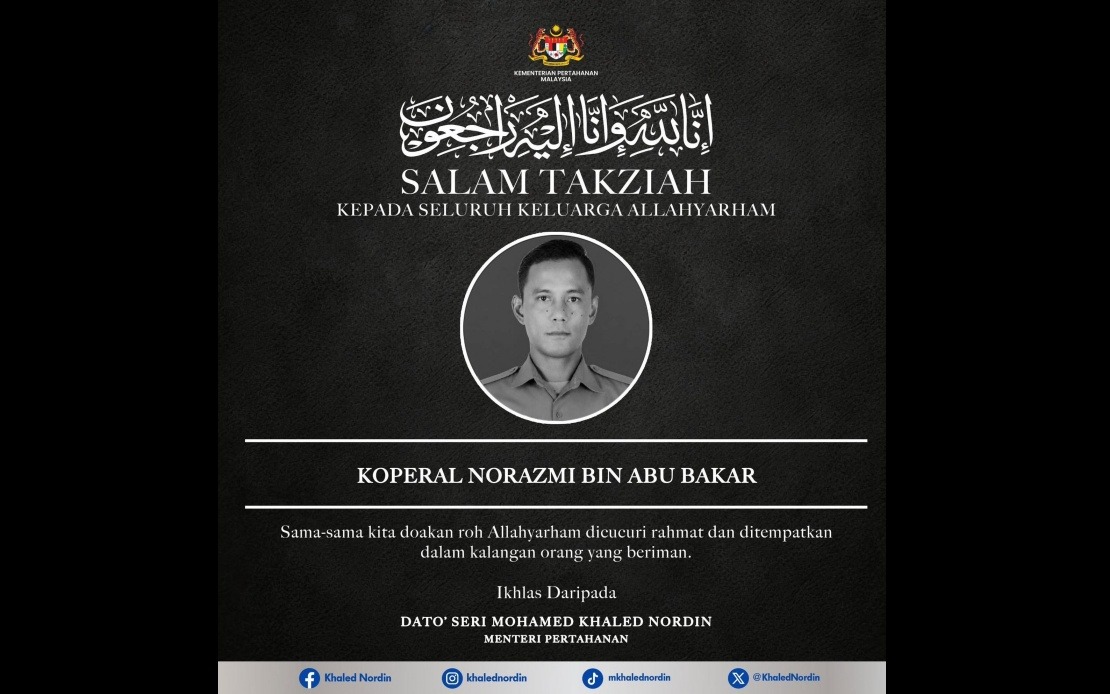
The Malaysian government and Defence Ministry have conveyed their deepest sympathies to the families of Corporal Norazmi Abu Bakar and Private Siti Khadijah Sungip, who were fatally injured in a blast during a grenade-throwing exercise in Kedah. The incident, which occurred at the Hobart Camp firing range in Gurun, represents a tragic loss within the armed forces and has prompted an immediate departmental response at the highest levels.
Defence Minister Datuk Seri Mohamed Khaled Nordin issued a formal statement expressing the government's profound sorrow over the deaths. The Minister emphasised that both the Defence Ministry and the broader government structure stand unified in their grief, and prayed that the bereaved families would find the emotional fortitude necessary to navigate the difficult period ahead. His public acknowledgment underscores the significance of the incident and the military's commitment to honouring those who have fallen in service.
Corporal Norazmi served with the 6th Battalion, Royal Malay Regiment, while Private Siti Khadijah was attached to the 1st Squadron, Royal Army Engineers Regiment. Both personnel sustained severe injuries during the 10.57 am incident and were immediately transported to Sultan Abdul Halim Hospital in Sungai Petani. Despite emergency medical intervention during the journey, both servicemen were pronounced deceased upon arrival, marking a devastating outcome for the training exercise that had been designed to enhance military readiness and capability.
In his social media statement, Defence Minister Datuk Seri Mohamed Khaled Nordin offered Islamic prayers for the deceased, requesting divine mercy and forgiveness for their souls. The minister's invocation reflects the predominantly Muslim composition of Malaysia's armed forces and demonstrates the personal nature of the loss felt across the military hierarchy. Such public expressions of faith during moments of tragedy serve to unite the military community and provide a framework for collective grieving.
The training accident raises significant questions about safety protocols and risk management within military exercises. Grenade-throwing drills are essential components of infantry training, designed to prepare personnel for combat scenarios and ensure operational proficiency. However, the incident at Hobart Camp demonstrates that even routine training exercises carry inherent dangers that demand constant vigilance and adherence to established safety procedures. The location at a designated firing range suggests that the exercise was being conducted at an appropriate venue with proper infrastructure, yet tragedy still occurred.
In response to the incident, Army Chief General Tan Sri Azhan Md Othman has mandated a comprehensive investigation to establish the precise circumstances and underlying causes of the explosion. This directive reflects standard military protocol following fatal incidents and demonstrates the leadership's commitment to identifying any systemic failures or procedural lapses that may have contributed to the accident. Such investigations are crucial not only for understanding what went wrong but also for implementing corrective measures to prevent similar occurrences in the future.
The deaths of these two personnel represent a sobering reminder of the occupational hazards faced by military personnel in their daily duties. While combat-related casualties receive significant public attention, training accidents often occur with less fanfare but carry equally profound consequences for affected families and military units. The loss of Corporal Norazmi and Private Siti Khadijah will undoubtedly impact their respective battalions and squadrons, creating vacancies in operational structures and emotional voids within their immediate teams.
For Malaysia's military establishment, incidents of this nature prompt broader reflection on how best to balance the necessity of rigorous training with the paramount duty of care toward personnel. The Defence Ministry will likely undertake a review of existing safety measures and training protocols across all units to identify areas where additional safeguards might be implemented. Such measures could include enhanced supervision, updated equipment, revised procedural guidelines, or modifications to training intensity levels.
The incident also carries implications for military morale and recruitment. Training accidents that result in fatalities can influence public perception of military service and affect the willingness of potential recruits to enlist. The armed forces will need to communicate transparently about the investigation findings and any remedial actions taken, thereby demonstrating commitment to soldier welfare and safety. This transparency is essential for maintaining public confidence in the military institution and ensuring that families continue to support their relatives' service commitments.
The families of Corporal Norazmi Abu Bakar and Private Siti Khadijah Sungip will receive formal military support through established grievance and compensation mechanisms. Malaysian military tradition typically includes funeral honours, death benefits, and ongoing support for surviving dependents. These provisions recognise the sacrifice made by service personnel and their families in contributing to national defence.
As the investigation proceeds under the direction of Army Chief General Tan Sri Azhan Md Othman, the findings will likely be communicated to relevant stakeholders and may inform changes to training protocols across the Malaysian Armed Forces. The outcome of this investigation will be particularly important for establishing accountability, if appropriate, and ensuring that lessons learned are systematically applied to prevent recurrence.


%22%2F%3E%3C%2Fpattern%3E%3C%2Fdefs%3E%3Crect%20width%3D%22100%25%22%20height%3D%22100%25%22%20fill%3D%22url(%23ph2hy9vg)%22%2F%3E%3Crect%20width%3D%22100%25%22%20height%3D%22100%25%22%20fill%3D%22url(%23ph2hy9vp)%22%2F%3E%3Ctext%20x%3D%2250%25%22%20y%3D%2250%25%22%20text-anchor%3D%22middle%22%20dominant-baseline%3D%22central%22%20fill%3D%22rgba(255%2C255%2C255%2C0.95)%22%20font-family%3D%22Georgia%2C%20'Times%20New%20Roman'%2C%20serif%22%20font-weight%3D%22700%22%20font-size%3D%22272%22%20letter-spacing%3D%22-0.02em%22%3EAnwar%3C%2Ftext%3E%3C%2Fsvg%3E)