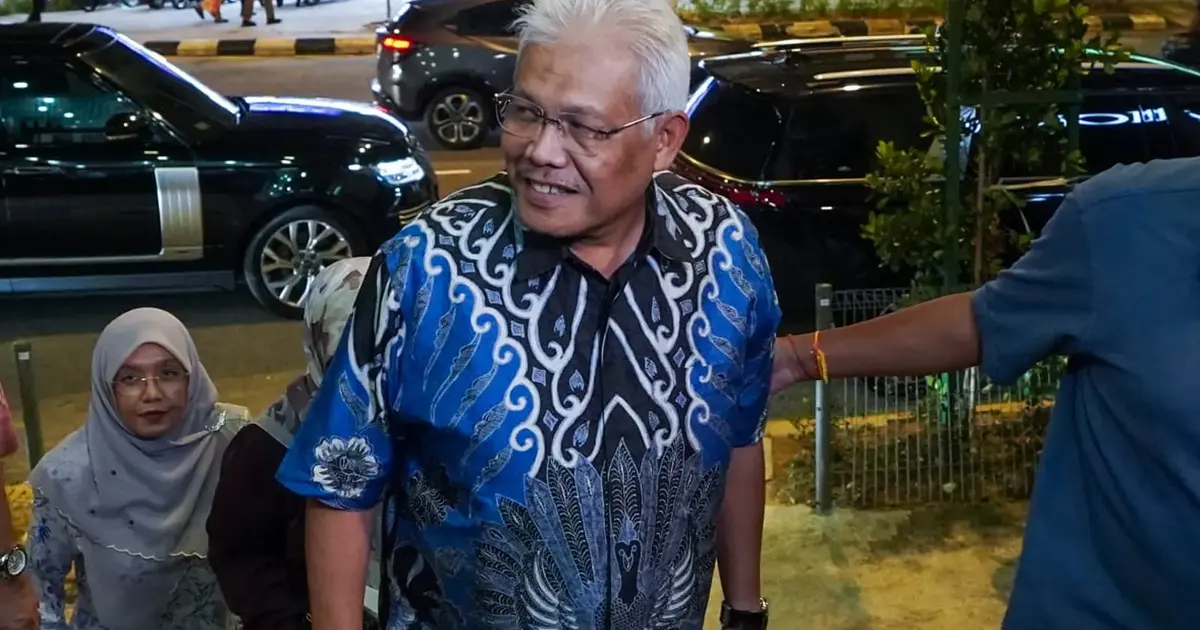
Senior opposition MPs, among them Hamzah, have made notable appearances at PAS headquarters in recent days, triggering speculation about shifting political alignments and the trajectory of Malaysia's fractious parliamentary landscape. The meetings underscore the volatile nature of Malaysian coalition politics, where partnerships frequently recalibrate in response to strategic pressures and leadership ambitions.
These gatherings arrive at a particularly fraught moment for Perikatan Nasional, the opposition coalition that has served as the primary political counterweight to the ruling Anwar Ibrahim administration. The timing is crucial: PAS, the dominant Islamist party within the alliance, took the dramatic step last week of formally ending its partnership with Bersatu, the party founded and previously led by former Prime Minister Muhyiddin Yassin. This rupture represents a significant fracturing of what had been presented as a unified oppositional force.
The decision by PAS to abandon Bersatu reflects mounting tensions over party leadership, ideological direction, and resource distribution within Perikatan Nasional. For observers of Malaysian politics, the move signals that personal rivalries and strategic calculations within opposition ranks may be overriding any unified anti-government messaging. Bersatu, which has struggled to maintain relevance beyond its core support base and lacks the grassroots networks that PAS commands through its Islamic party machinery, finds itself increasingly isolated.
Hamzah's presence at PAS headquarters carries particular weight given his standing within opposition circles and his historical influence over political coalitions. As a seasoned political operator with cross-party connections, his participation in these meetings suggests discussions of considerable substance rather than routine consultations. His involvement may signal attempts to broker arrangements or secure positions within a reconfigured opposition structure, or alternatively, to position himself and his supporters advantageously as alliances reshape.
The current political ferment extends beyond simple factional disputes. It reflects deeper questions about what Perikatan Nasional's purpose will be moving forward. Without a cohesive narrative or shared governmental agenda, opposition coalitions risk fragmenting into competing interest groups focused primarily on resource acquisition rather than providing credible electoral alternatives. For Malaysian voters, this creates a troubling scenario in which opposition politics becomes indistinguishable from the transactional wheeling-and-dealing that many citizens criticise in governing coalitions.
PAS's departure from Bersatu fundamentally alters the numerical and political composition of opposition ranks. PAS brings substantial parliamentary representation and deep organisational capacity, particularly in rural constituencies and states where Islamic sentiment carries electoral weight. The party's decision to operate independently, or to pursue alternative alignments, thus carries real consequences for the opposition's capacity to challenge government initiatives in parliament and to mount a credible electoral challenge in future general elections.
For Southeast Asian watchers of Malaysian politics, these manoeuvres underscore the region's broader challenges with institutional stability and party cohesion. Unlike systems where coalition arrangements are anchored by formal agreements and institutional safeguards, Malaysian politics often operates through personalised networks and shifting interests. This fluidity can create unpredictability and instability, complicating long-term planning for both investors and policy makers who prefer predictable political environments.
The involvement of multiple opposition MPs in these PAS headquarters discussions indicates that factional realignment extends well beyond the party leadership. Backbench MPs, sensing shifts in political winds, may be repositioning themselves for advantage or seeking clarity about their parliamentary futures. Such movements often precede larger realignments, including potential defections or mergers that reshape the legislative balance of power.
Government observers will be monitoring these developments closely, as significant shifts in opposition composition could affect legislative dynamics around budgets, bills of supply, and governance initiatives. An opposition weakened by internal division may prove less effective at scrutinising government policy, though paradoxically, a more unified but smaller opposition might prove more formidable on particular issues where it commands consensus.
The broader context involves Malaysia's transition toward more competitive multi-party politics following the 2018 general election. The collapse of UMNO-led dominance created space for new political configurations, but stable alternatives have proven elusive. The current ferment within Perikatan Nasional reflects ongoing uncertainty about what post-traditional Malaysian politics will ultimately look like and which parties or leaders will emerge as sustainable forces in parliamentary competition.
As these discussions proceed at PAS headquarters, the trajectory will likely depend on whether party leaders can construct workable arrangements around specific objectives, or whether factionalism continues to override collaborative impulses. The involvement of figures like Hamzah suggests that senior opposition figures retain hope of forging functional alliances, even as structural incentives push toward continued fragmentation and competition for diminishing resources and political relevance in an increasingly complex Malaysian political environment.

%22%2F%3E%3C%2Fpattern%3E%3C%2Fdefs%3E%3Crect%20width%3D%22100%25%22%20height%3D%22100%25%22%20fill%3D%22url(%23ph2hy9vg)%22%2F%3E%3Crect%20width%3D%22100%25%22%20height%3D%22100%25%22%20fill%3D%22url(%23ph2hy9vp)%22%2F%3E%3Ctext%20x%3D%2250%25%22%20y%3D%2250%25%22%20text-anchor%3D%22middle%22%20dominant-baseline%3D%22central%22%20fill%3D%22rgba(255%2C255%2C255%2C0.95)%22%20font-family%3D%22Georgia%2C%20'Times%20New%20Roman'%2C%20serif%22%20font-weight%3D%22700%22%20font-size%3D%22272%22%20letter-spacing%3D%22-0.02em%22%3EAnwar%3C%2Ftext%3E%3C%2Fsvg%3E)