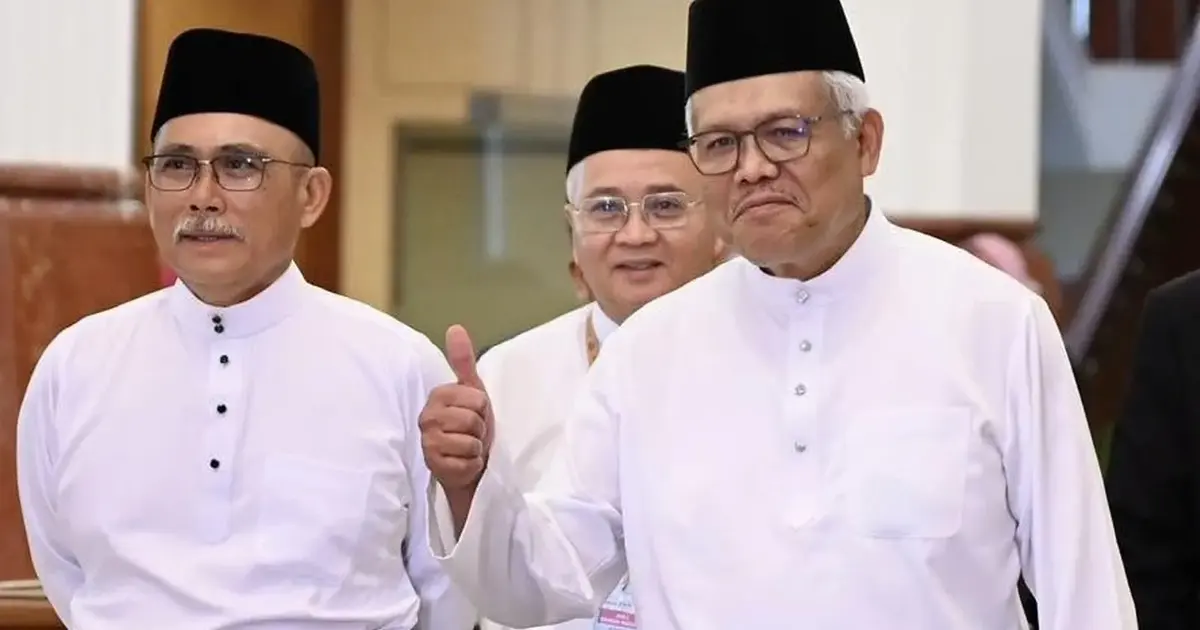
Hamzah Zainudin's designation as opposition leader reflects a coalition consensus that emerged from negotiations among Malaysia's main opposition factions, according to a senior Bersatu figure who defended the arrangement in recent comments. The Larut MP secured the position through backing that extended across party lines, uniting support from both PAS and a significant contingent of Bersatu parliamentarians—a configuration that carries implications for how the opposition intends to structure its challenge to the government.
Kiandee, who holds the position of suspended vice-president within Bersatu, made these remarks in explanation of the decision-making process that culminated in Hamzah's appointment. His account suggests that the choice was not arbitrary but rather the outcome of careful assessment regarding which figure could command sufficient parliamentary numbers to anchor the opposition's institutional presence in the Dewan Rakyat. The emphasis on demonstrable support underscores the extent to which Malaysian opposition leadership has become contingent on hard numbers rather than purely ideological considerations.
The backing from PAS, delivered as a unified bloc, represents a notable alignment given the party's trajectory since the 2020 general election. Historically, PAS had maintained a more independent posture within opposition circles, but this consolidated endorsement signals a willingness to operate within a structured opposition framework. For observers tracking Malaysia's political realignments, this cohesion among the Islamist party and its opposition partners indicates a stabilisation of anti-government sentiment across different political traditions.
Within Bersatu itself, the majority support for Hamzah among its parliamentary members constitutes a significant statement of intent from the party's representatives. Bersatu has navigated considerable internal turbulence in recent years, transitioning between coalition arrangements and opposition status. That a majority of its MPs rallied behind Hamzah suggests the party's legislative members see value in concentrating opposition resources around a single leadership figure, even as internal party structures remain contested.
The invocation of Kiandee's suspended status adds texture to these endorsements. Despite his suspension from formal party roles, Kiandee's willingness to explain and defend the decision indicates ongoing informal influence within Bersatu circles. His public articulation of the logic underlying Hamzah's appointment serves multiple purposes: it legitimises the process as democratic and consensus-driven, rather than imposed from above, while also signalling that even sidelined party figures retain stake in broader opposition narratives.
For the Malaysian electorate and political observers, Hamzah's ascension to the opposition leadership role carries specific weight. As the MP for Larut, he represents a constituency in Perak, a state that has swung between different political coalitions in recent electoral cycles. His positioning as opposition leader potentially strengthens opposition outreach in Perak while also drawing attention to the peninsular centre as a crucial battleground for future electoral contests.
The emphasis on secured majority support also reflects lessons learned from previous attempts to establish unified opposition leadership. Malaysian opposition politics has historically struggled with fragmentation and competing claims to leadership authority. By grounding Hamzah's appointment in demonstrable parliamentary support, the opposition coalition projects an image of disciplined coordination that contrasts with perceptions of disunity that have sometimes plagued anti-government movements.
Regionally, Malaysia's opposition configuration attracts attention from neighbouring democracies navigating their own coalition politics. The manner in which different parties—with varying ideological foundations—can consolidate around shared parliamentary objectives offers case study material for how Southeast Asian democracies manage internal opposition dynamics. The success or failure of this particular arrangement will inform broader conversations about multi-party opposition coordination in the region.
Looking ahead, Hamzah's leadership will be tested by the need to maintain this coalition consensus across diverse party interests. The support from PAS and Bersatu MPs provides immediate parliamentary legitimacy, but sustaining that backing through policy positions, legislative strategy, and media positioning presents ongoing challenges. Kiandee's explanation essentially stakes a claim that this decision was grounded in pragmatic assessment rather than personality-driven appointment, yet maintaining that pragmatic focus will require continuous navigation of competing interests within the opposition ecosystem.

%22%2F%3E%3C%2Fpattern%3E%3C%2Fdefs%3E%3Crect%20width%3D%22100%25%22%20height%3D%22100%25%22%20fill%3D%22url(%23ph2hy9vg)%22%2F%3E%3Crect%20width%3D%22100%25%22%20height%3D%22100%25%22%20fill%3D%22url(%23ph2hy9vp)%22%2F%3E%3Ctext%20x%3D%2250%25%22%20y%3D%2250%25%22%20text-anchor%3D%22middle%22%20dominant-baseline%3D%22central%22%20fill%3D%22rgba(255%2C255%2C255%2C0.95)%22%20font-family%3D%22Georgia%2C%20'Times%20New%20Roman'%2C%20serif%22%20font-weight%3D%22700%22%20font-size%3D%22272%22%20letter-spacing%3D%22-0.02em%22%3EAnwar%3C%2Ftext%3E%3C%2Fsvg%3E)