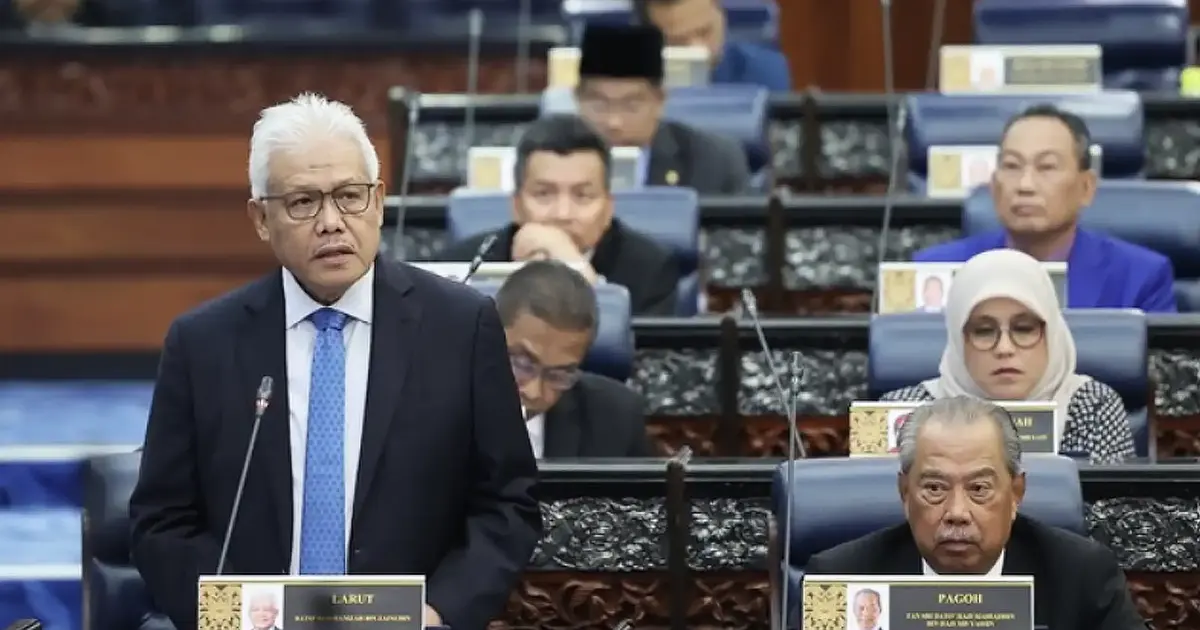
Datuk Seri Hamzah Zainudin has reassumed his post as opposition leader on the front bench of the Dewan Rakyat, marking a significant shift in the seating arrangements that reflect changing dynamics within Malaysia's political opposition. The repositioning has seen Bersatu president Muhyiddin Yassin displaced from his previous seat adjacent to the opposition leader, now sitting eight places further down the front row. This rearrangement serves as a tangible representation of evolving power structures within the opposition bloc and signals potential adjustments to parliamentary alliances ahead of what could prove to be a consequential session.
The separation of Hamzah and Muhyiddin on the parliamentary front bench underscores the complex relationship between the two figures and their respective political vehicles. Hamzah's restoration to the opposition leader's seat reflects his continued leadership of the Pakatan Harapan coalition, while Muhyiddin's demotion suggests either a deliberate recalibration of seating hierarchy or a response to shifting coalition dynamics. Such physical arrangements in parliament, though often appearing ceremonial to outsiders, carry considerable symbolic weight in Malaysian politics, where proximity to the opposition leader can signify political standing and influence within the broader opposition movement.
Muhyiddin, who leads Bersatu, has long maintained an ambiguous position within Malaysian opposition politics. The party has oscillated between collaboration and tension with the Pakatan Harapan coalition, at times working alongside it while also pursuing independent strategic interests. His placement alongside Hamzah suggested a period of closer coordination or at least acceptance of aligned positioning. The current repositioning may reflect either a cooling of relations or a formal clarification of the respective roles played by Bersatu and Hamzah's faction within opposition ranks.
The shift also arrives at a moment when Malaysian opposition politics faces significant questions about cohesion and strategic direction. The broad coalition that mobilised against the government requires careful management of competing interests and ambitions among its constituent parties. Seating arrangements, while seemingly minor details of parliamentary procedure, often mirror these deeper strategic calculations. The movement of Muhyiddin from the immediate vicinity of the opposition leader's seat could indicate that discussions about coalition positioning and parliamentary strategy have resulted in a clearer demarcation of roles.
For Malaysian observers following parliamentary dynamics, such changes warrant attention as early indicators of potential shifts in opposition unity. Political coalitions often face tests when their component parts begin to assert distinct identities or when leadership hierarchies undergo recalibration. The eight-seat gap between Hamzah and Muhyiddin, while numerically modest, represents a qualitative difference in parliamentary positioning that may become meaningful if opposition divisions widen during contentious legislative sessions.
Hamzah's reassertion of his position as opposition leader comes as he continues to navigate the complex task of maintaining coalition coherence while addressing the divergent concerns of Pakatan's constituent parties. His return to the front-row seat nearest the government bench carries practical implications for parliamentary procedure and symbolic importance for opposition morale and positioning. The opposition leader's seat carries responsibility for directing parliamentary opposition strategy and serving as the primary voice challenging government positions from the opposition benches.
Bersatu's positioning within opposition politics has proven consistently complicated since its formation. The party has attempted to forge a distinct identity while simultaneously seeking relevance within broader anti-government movements. Muhyiddin's background as former Prime Minister gives him considerable personal stature, yet his party's parliamentary representation and coalition standing remain subject to negotiation. The current seating adjustment may reflect pragmatic recognition of these realities, establishing clearer lines of leadership and followership within the opposition benches.
The implications for Malaysian parliamentary operations extend beyond symbolic gesture. Effective opposition requires coordinated strategy, clear messaging, and unified direction during parliamentary sittings. The physical arrangement of opposition members on the front bench influences visibility during television coverage of parliamentary proceedings and affects the practical ability of opposition leaders to coordinate their members during votes and debates. Hamzah's reclaimed proximity to the Speaker's chair positions him more effectively to direct opposition interventions on government legislation.
Observers of Malaysian politics should monitor whether this seating rearrangement proves indicative of broader shifts in opposition coalition dynamics. Such changes occasionally precede significant political realignments or signal adjustments to coalition strategies ahead of anticipated parliamentary business. The coming weeks and months will reveal whether the repositioning represents merely a housekeeping adjustment or signals substantive changes to how the opposition organises itself for engagement with government legislation and initiatives.
The broader context of Malaysian opposition politics suggests that maintaining coalition unity remains an ongoing challenge. Different parties bring distinct constituencies, ideological concerns, and strategic interests that occasionally conflict. Hamzah's position as opposition leader requires him to articulate positions acceptable across this diverse coalition while maintaining his authority to direct opposition strategy. Muhyiddin and Bersatu's placement within this hierarchy continues to evolve as coalition partners calibrate their respective influence and roles.

%22%2F%3E%3C%2Fpattern%3E%3C%2Fdefs%3E%3Crect%20width%3D%22100%25%22%20height%3D%22100%25%22%20fill%3D%22url(%23ph2hy9vg)%22%2F%3E%3Crect%20width%3D%22100%25%22%20height%3D%22100%25%22%20fill%3D%22url(%23ph2hy9vp)%22%2F%3E%3Ctext%20x%3D%2250%25%22%20y%3D%2250%25%22%20text-anchor%3D%22middle%22%20dominant-baseline%3D%22central%22%20fill%3D%22rgba(255%2C255%2C255%2C0.95)%22%20font-family%3D%22Georgia%2C%20'Times%20New%20Roman'%2C%20serif%22%20font-weight%3D%22700%22%20font-size%3D%22272%22%20letter-spacing%3D%22-0.02em%22%3EAnwar%3C%2Ftext%3E%3C%2Fsvg%3E)