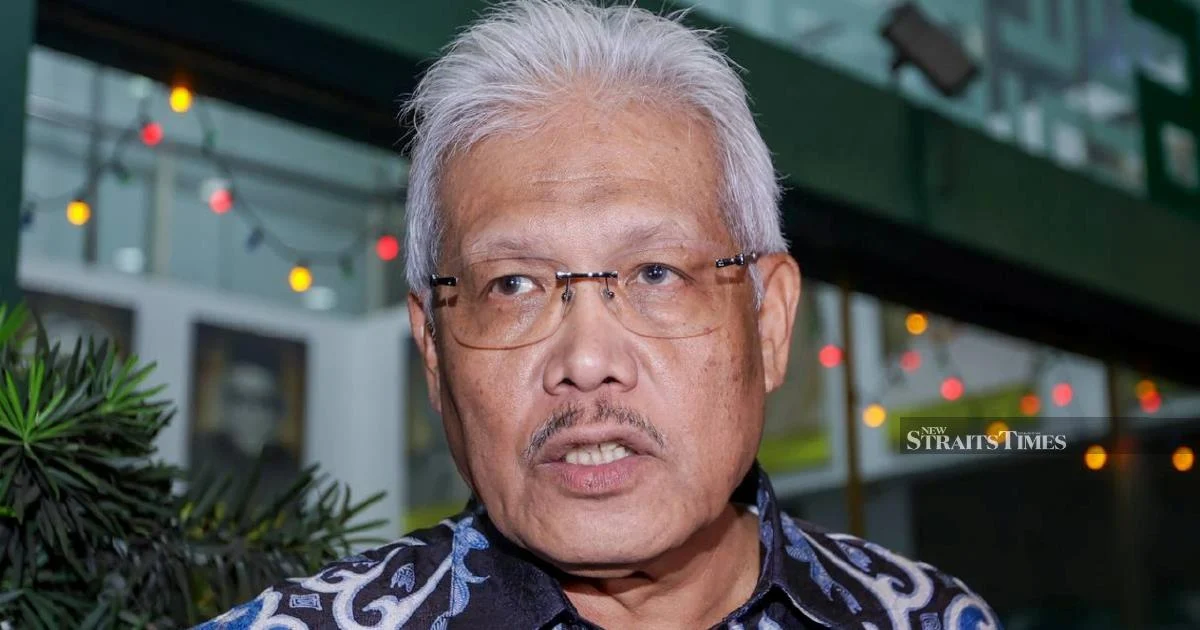
The process to formally recognise Datuk Seri Hamzah Zainudin as the nation's opposition leader will soon reach its final administrative step, with officials announcing that a formal notification will be lodged with the Dewan Rakyat Speaker before parliament's next sitting. This procedural move marks the culmination of earlier political developments and will officially cement his position within Malaysia's parliamentary system.
The announcement, made in Kota Baru, signals that the bureaucratic machinery supporting Malaysia's constitutional framework is moving to formalise what has already been determined through political processes. While the exact timing of the next parliamentary sitting remains subject to the legislative calendar, the commitment to submit the notice beforehand ensures that Hamzah's appointment will be formally documented in parliamentary records.
Hamzah's assumption of the opposition leader role represents a significant shift in Malaysia's political landscape, reflecting broader realignments within the opposition bloc. His appointment carries implications for how the opposition will function as a check on government policies and legislative proposals. As opposition leader, he will assume responsibility for coordinating opposition responses to government initiatives, leading parliamentary questioning of ministers, and articulating the opposition's policy platform to the public and media.
The formal notification process exists to ensure transparency and institutional clarity within parliament. The Dewan Rakyat Speaker, who maintains records of parliamentary leadership positions, requires official documentation to update parliamentary records and procedures. This notification will establish Hamzah's standing in parliamentary customs and determine his access to resources, speaking privileges, and ceremonial recognition afforded to opposition leaders.
In Malaysia's parliamentary democracy, the opposition leader holds significant constitutional and procedural importance. Beyond their role in parliamentary debates, the opposition leader traditionally serves as the focal point for alternative governance and policy critique. Media, civil society, and the electorate look to this figure to articulate concerns about government performance and propose competing visions for national direction. Hamzah's position thus elevates his platform for shaping public discourse on key national issues.
The timing of this announcement comes amid ongoing discussions about Malaysian politics' direction following recent electoral developments and coalition restructuring. The opposition bloc's internal dynamics have undergone changes, with various political parties realigning their alliances and priorities. Hamzah's appointment reflects these evolving arrangements and demonstrates attempts to establish clearer leadership structures within the opposition parliamentary contingent.
For Malaysian observers and political analysts, Hamzah's formal recognition as opposition leader will enable clearer assessment of opposition effectiveness and coherence. The opposition's ability to function as a united force depends substantially on having recognised leadership capable of managing diverse political interests and articulating a comprehensive alternative platform. The notification process ensures this leadership is institutionally legitimised.
The submission of formal notice also carries practical implications for parliamentary scheduling and debate procedures. Opposition leaders receive specific time allocations for questioning ministers, moving motions, and addressing parliamentary business. Official recognition through notification ensures Hamzah receives these procedural entitlements and that parliamentary staff can appropriately coordinate with his office regarding opposition business.
From a Southeast Asian perspective, Malaysia's commitment to formalising opposition leadership within established procedures reflects the region's general democratic conventions. While political systems across Southeast Asia vary considerably in democratic robustness, most maintain some institutional recognition of opposition roles. Hamzah's forthcoming formal recognition demonstrates Malaysia's adherence to parliamentary norms that, despite occasional tensions, generally acknowledge opposition legitimacy within the constitutional framework.
Looking forward, Hamzah's tenure as opposition leader will significantly influence parliamentary debates surrounding economic policy, governance reform, and social issues. His effectiveness in this role will partly determine whether the opposition strengthens its public support base ahead of future electoral cycles. The formal notification, while appearing procedural, thus represents a substantive institutional development shaping Malaysian politics' immediate future.